
Xyleborus pumilus
Xyleborus pumilus
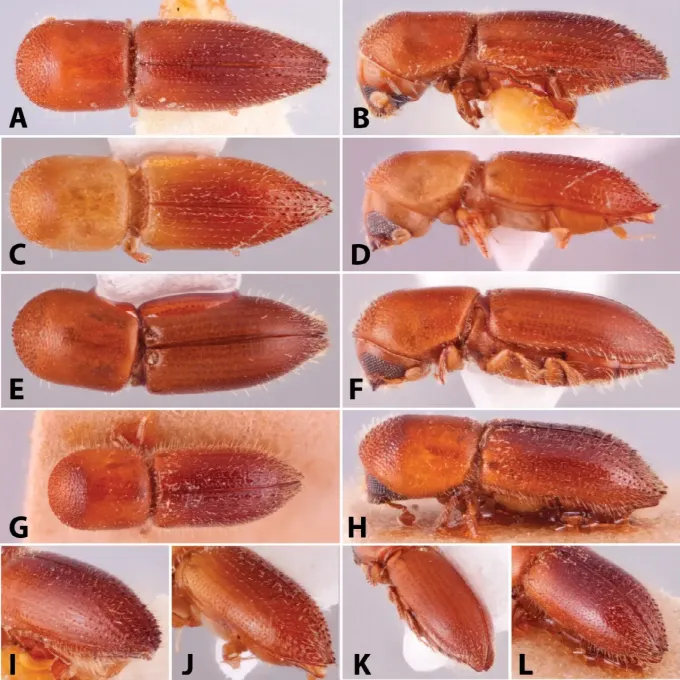
Description
How to identify
Xyleborus pumilus is a small beetle belonging to the Curculionidae family, specifically within the Scolytinae subfamily. Adult beetles typically measure between 2 and 3 mm in length.
These insects are known as ambrosia beetles, characterized by their symbiotic relationship with specific fungi. Unlike wood-boring insects that feed on wood, these beetles cultivate fungi inside their galleries for nourishment.
The body of the beetle is cylindrical and dark brown or black, adapted for life within deep wood tunnels. Females possess functional wings, enabling them to migrate and infest new host trees.
Larvae are legless, white grubs with a yellowish head capsule. They live within communal galleries, clustered in areas prepared by the parent generation, and feed exclusively on fungal mats.
Taxonomically, the species is classified under the order Coleoptera. It is a specialist pest often found in regions where environmental conditions favor the growth of its symbiotic fungi.
What it damages
The primary hosts of Xyleborus pumilus include various deciduous and fruit trees. The beetle preferentially targets trees that are physiologically stressed, weakened by drought, or recovering from mechanical injury.
The beetles bore intricate tunnels into the xylem, physically disrupting the vascular tissues of the tree. This process interferes with the tree's ability to transport water and essential nutrients effectively.
A critical aspect of the damage is the introduction of symbiotic fungi into the wood. The mycelium grows inside the galleries, clogging the conductive vessels and causing tissue necrosis.
Mass infestations can result in the rapid decline and death of the host tree. Furthermore, the presence of the beetle significantly reduces the timber quality, making the wood unsuitable for commercial use.
In managed orchards, the damage manifests as decreased fruit yield and overall tree vigor, necessitating early intervention to prevent economic losses.
When it appears
Adult activity typically begins during the spring as temperatures rise, signaling the start of the colonization season. During this time, female beetles emerge to search for suitable host trees.
The reproductive cycle is continuous throughout the warmer months. Depending on the local climate, multiple generations can occur annually, increasing the risk of infestation in vulnerable areas.
Peak infestation periods often coincide with extreme environmental stress, such as prolonged summer heat waves or water shortages, which lower the tree's chemical defenses.
Overwintering occurs primarily as adult beetles within their galleries, protected inside the tree bark. Some larval stages may also survive the winter in deeper wood sections.
Environmental conditions play a major role in population dynamics. High humidity levels inside the tree can occasionally hinder the development of the fungal colonies, thereby limiting the beetle's success.
Signs of infestation
The earliest indicator of an infestation is the appearance of tiny entry holes, approximately 1 mm in diameter, on the surface of the bark. These holes are often accompanied by fine, light-colored boring dust.
Sap flow or gumming at the entry sites is a common defensive response from the host tree. This sticky exudate can sometimes effectively trap the invading beetle.
As the galleries proliferate, the tree exhibits signs of distress, including leaf yellowing and crown dieback. This is a clear signal that the vascular system is severely compromised.
Dissection of infested branches or trunks reveals dark, stained tunnels. These galleries are often lined with a layer of dark fungal mycelium, which is diagnostic for ambrosia beetles.
Secondary symptoms include the loosening of bark and the arrival of other wood-decay organisms, which further accelerate the deterioration of the tree’s structural integrity.
Control measures
Effective management begins with maintaining high tree vigor. Healthy trees are better equipped to resist initial attacks through the production of resin and sap.
- Perform regular sanitary pruning to remove and destroy infested wood.
- Remove and dispose of severely weakened or dead trees to prevent the spread of beetles.
- Deploy pheromone traps to monitor adult beetle activity and population levels.
- Apply systemic insecticides to high-value trees during periods of peak infestation risk.
Regular surveillance is essential for early detection. Prompt removal of infested material often serves as the most effective control measure in both forest and orchard settings.
Ongoing research into biological control agents, such as entomopathogenic fungi, offers a sustainable path for managing Xyleborus pumilus populations without heavy chemical reliance.
Taxonomy
- Latin name
- Xyleborus pumilus
- Order
- Coleoptera (beetles)
- Family
- Curculionidae
- EPPO code
- XYLBPU
Discussion
No discussions yet — be the first.