
Xyleborus lewisi
Xyleborus lewisi
Description
How to identify
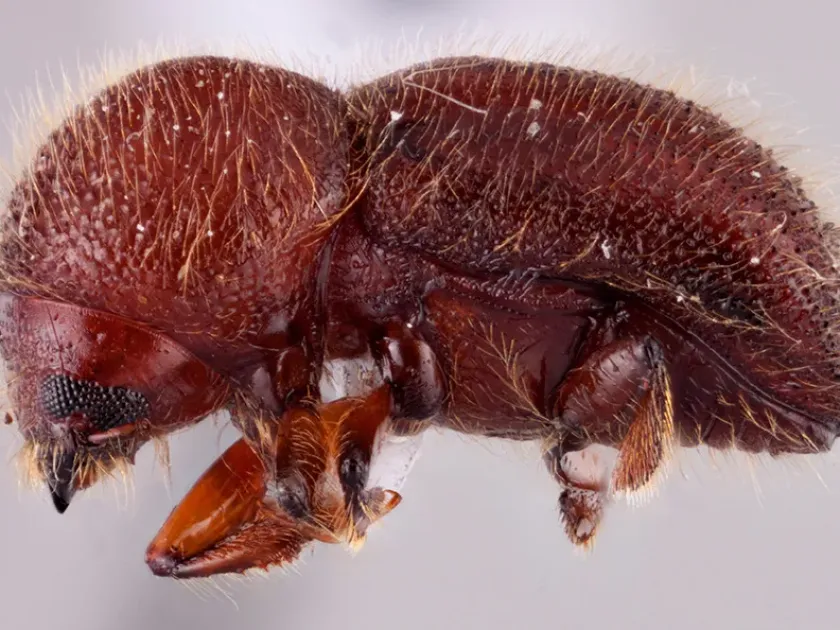
Xyleborus lewisi is a species of bark beetle belonging to the subfamily Scolytinae. These small beetles, typically measuring 2–3 mm in length, are known as ambrosia beetles because of their symbiotic relationship with specific fungi.
The beetle possesses a cylindrical, dark-colored body adapted for drilling into dense wood. They carry fungal spores in specialized organs called mycangia, which allows them to introduce these fungi into the host tree's vascular system.
Identifying this pest in the field is challenging due to its minute size and secretive habits. They spend most of their life cycle inside galleries within the sapwood, leaving only for short periods during the mating and dispersal season.
The biological cycle consists of eggs, larvae, pupae, and adults. Both the larvae and adults rely on the fungal mycelium growing on the walls of their galleries for food, rather than consuming the woody tissue itself.
Due to their cryptic behavior, monitoring usually relies on identifying external symptoms on the tree trunk rather than spotting the adult beetles themselves, which are active mainly during late afternoon and night.
What it damages
Xyleborus lewisi targets a variety of deciduous trees, with a strong preference for stressed or weakened host plants. Fruit trees, including apple, cherry, and pear, are frequently affected, leading to reduced yield and tree mortality.
The primary damage is caused by the fungal pathogens introduced by the beetle. These fungi colonize the tree's xylem, obstructing water and nutrient transport, which ultimately causes wilting and branch death.
In cases of severe infestation, the tree's vascular system becomes so compromised that the plant is unable to sustain its foliage. This can lead to the rapid decline and death of the entire tree within one or two growing seasons.
Mechanical damage is secondary, as the numerous galleries weaken the structural integrity of the wood. This makes the tree susceptible to breakage during windstorms and serves as an entry point for additional secondary pests and infections.
The presence of these beetles can lead to significant economic losses in commercial orchards, necessitating costly sanitation measures or the complete removal of infected trees to prevent the spread to adjacent healthy plantings.
When it appears
Activity generally begins in early spring, as temperatures rise consistently above 15°C. This is when overwintering females emerge from their galleries to find new, suitable hosts for establishing new colonies.
During the summer months, the beetles are most active, with multiple generations possible depending on the climate. The heat of the summer can stress trees, making them more vulnerable to initial colonization.
As autumn approaches, the beetles prepare for winter. They retreat deeper into the galleries or beneath the bark of host trees to enter a state of diapause, effectively surviving the colder months until the next spring cycle.
Effective scouting should occur from late spring through mid-summer when the beetles are most likely to be searching for new host trees. This is the critical window for applying preventive control measures.
Warm, long-growing seasons provide the ideal environment for population explosions, particularly in neglected orchards where there is an abundance of dead or stressed wood for the beetles to utilize.
Signs of infestation
The most visible sign of an Xyleborus lewisi attack is the appearance of tiny, circular entry holes in the bark, typically about 1–1.5 mm in diameter. These holes are often surrounded by fine, white or tan wood dust (frass).
In certain tree species, especially stone fruits, sap or gum exudation is commonly observed around the entry points. This is a typical defensive response of the tree as it attempts to flush out the invading beetle.
General symptoms include the yellowing of leaves, premature leaf drop, and the wilting of specific branches. If these symptoms are observed on otherwise healthy-looking trees, it is a strong indicator of internal damage.
A cross-section of an infested branch will reveal dark, fungal-stained streaks or channels deep within the wood. These marks are diagnostic features of ambrosia beetle activity and the accompanying fungal colonization.
- Tiny, round entry holes (approx. 1 mm in diameter).
- Frass (wood dust) piling up at the base of the tree or in bark crevices.
- Sap or gum oozing from the entry sites.
- Flagging (wilting branches) during the growing season.
- Dark fungal discoloration in the woody tissue of cut branches.
Control measures
The foundation of control is tree health. Well-irrigated and adequately fertilized trees are far less likely to be successfully colonized by these beetles, as they have better internal defenses.
Sanitation is paramount. All infested or dead branches should be pruned out and immediately destroyed by burning to reduce the local population of the beetles and prevent further spread.
Chemical control can be difficult due to the beetle's protected life inside the tree. Systemic insecticides can provide some protection by making the tree tissues toxic to the beetles, but application must be timed with the peak flight period.
Monitoring with ethanol-baited traps is a highly effective way to track beetle activity and determine the timing for targeted applications. These traps can also help in mass-trapping to suppress local population levels.
Avoiding unnecessary wounding of trees and protecting them from sunscald are simple yet effective strategies to minimize entry points. Maintaining a clean orchard environment is essential for long-term management.
Taxonomy
- Latin name
- Xyleborus lewisi
- Order
- Coleoptera (beetles)
- Family
- Curculionidae
- EPPO code
- XYLBLE
Discussion
No discussions yet — be the first.