
Xyleborus intrusus
Xyleborus intrusus
Description
How to identify
Xyleborus intrusus is a species of ambrosia beetle belonging to the subfamily Scolytinae within the Curculionidae family. These insects are known for their complex relationship with specific fungi, which they cultivate within their galleries.
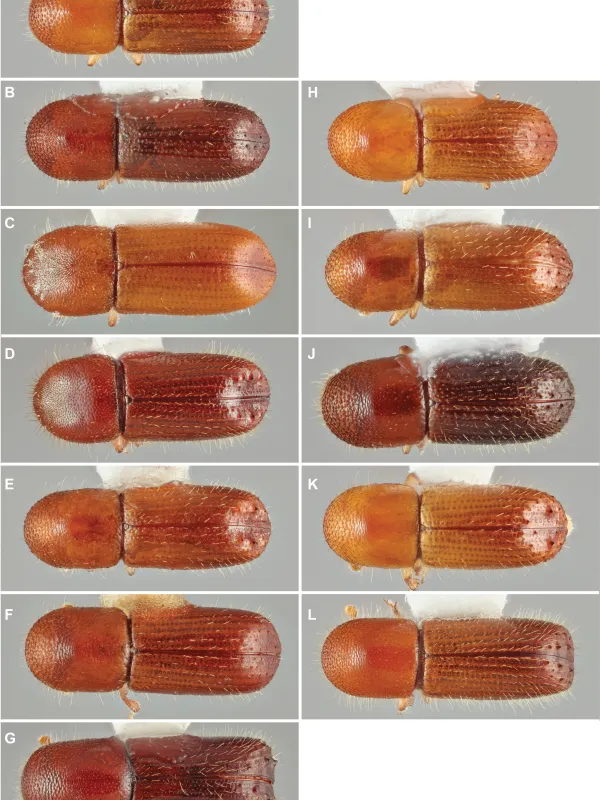
Adult beetles possess a cylindrical body structure, typically dark brown or black in color. Their small size allows them to penetrate deeply into the wood tissue of host trees, making them difficult to detect from the outside.
The larval stage consists of legless, white grubs with well-defined head capsules. They develop entirely within the tunnels, where they feed on the fungal mycelium introduced by the parent beetles.
Accurate identification of the species usually requires examining the morphology of the adult beetle, particularly the shape of the pronotum and elytra, along with a laboratory analysis of the fungal symbionts found in the galleries.
These beetles typically thrive in environments where tree defenses are weakened, though high-density infestations can occasionally affect seemingly healthy specimens when population pressures are extreme.
What it damages
Xyleborus intrusus primarily attacks various broadleaf tree species. While they prefer stressed or recently felled trees, they can also infest living trees experiencing environmental or physical stress.
Damage is caused by the tunneling activity of both adults and larvae. These tunnels penetrate deep into the xylem, disrupting the tree's vascular system and hindering the transport of water and nutrients.
Beyond mechanical damage, the introduction of fungal spores into the wood triggers internal decay, which further compromises the tree's structural integrity and overall health.
The combined impact of physical tunneling and fungal infection leads to rapid canopy dieback and can eventually cause the death of the tree if the infestation is severe.
Economic damage is significant in forestry and orchard management, as the internal tunneling renders timber unusable for high-value applications and permanently reduces the productivity of fruit-bearing trees.
Signs of infestation
The most reliable sign of an infestation is the presence of small, circular entry holes on the bark, usually accompanied by fine wood dust, known as frass, appearing near the entrance.
The frass is light in color, resembling freshly ground sawdust, and is pushed out of the galleries by the beetles as they excavate their tunnels. This is often the primary indicator for arborists and foresters.
Internal galleries are frequently stained black due to the growth of ambrosia fungi. This discoloration is a key diagnostic feature when examining logs or branches that have been opened.
Visual symptoms on the tree include sudden wilting of leaves, premature leaf drop, or the yellowing of the crown, which occurs as the tree's vascular system becomes increasingly compromised.
Upon removing the bark, one can observe the characteristic network of tunnels that penetrate deep into the sapwood and heartwood, which differs from many surface-feeding bark beetles.
Control measures
Effective management begins with strict sanitation practices, including the prompt removal and destruction of infested wood to prevent the beetles from spreading to healthy trees in the vicinity.
Enhancing tree vitality through proper irrigation, fertilization, and site maintenance is critical for increasing the tree's natural resistance and preventing initial colonization by the pests.
Protective insecticide treatments applied to tree trunks during the beetles' flight period can act as a preventative measure, stopping adults from successfully boring into the bark.
Monitoring populations using pheromone or alcohol-based traps is highly effective for determining the timing of control measures and assessing the risk level in nurseries or plantations.
- Conducting routine forest health surveys to detect early symptoms.
- Using attractant traps to monitor adult beetle flight activity.
- Destroying heavily infested material to disrupt the life cycle.
Taxonomy
- Latin name
- Xyleborus intrusus
- Order
- Coleoptera (beetles)
- Family
- Curculionidae
- EPPO code
- XYLBIT
Discussion
No discussions yet — be the first.