
Xyleborus insidiosus
Xyleborus insidiosus
Description
How to identify
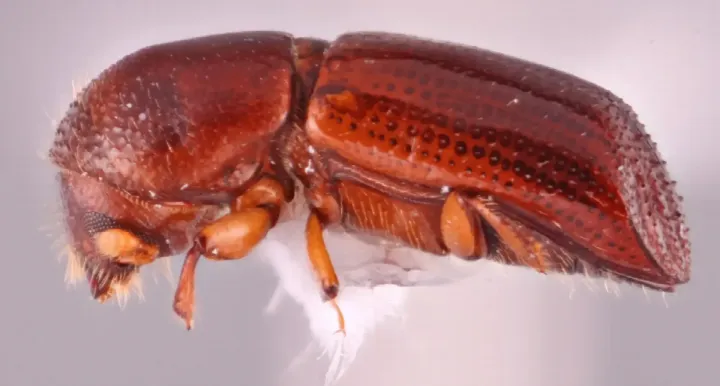
Xyleborus insidiosus is a small species of wood-boring beetle belonging to the Curculionidae family, specifically the ambrosia beetle tribe (Xyleborini).
Adult beetles are tiny, typically measuring between 2 to 3 mm in length, with a cylindrical, dark brown to black body structure adapted for boring tunnels.
The larvae are legless, white, and inhabit the galleries bored by adults, where they feed primarily on specialized ambrosia fungi cultured by the parents.
These beetles possess mycangia, specialized structures for carrying fungal spores, which they introduce into the tree galleries to establish their food source.
The life cycle involves the colonization of the xylem, where the beetles and their fungal partners create a complex system of tunnels inside the host tree.
What it damages
Xyleborus insidiosus is a polyphagous pest that affects a variety of broad-leaved trees, targeting primarily stressed or weakened individuals.
Economic damage occurs in orchards, forest stands, and nurseries, where the beetle compromises the structural integrity and health of fruit and hardwood species.
The boring activity physically disrupts the plant's vascular tissue, while the associated fungal colonization restricts water and nutrient transport, leading to tree decline.
Under heavy infestation, the cumulative effect of tunnelling and fungal infection causes dieback of branches and can lead to the death of the entire tree.
In addition to physiological damage, the presence of these beetles degrades the aesthetic and timber value of the affected trees, necessitating urgent intervention.
Signs of infestation
One of the primary indicators of infestation is the appearance of tiny entry holes on the bark, accompanied by fine frass (wood dust) pushed out by the beetles.
Trees may exhibit localized wilting of leaves or branches, which serves as a visible clue that the internal vascular system has been compromised.
Sap or gum exudation at the sites of attack is a common defensive response from the tree, resulting in dark, moist stains on the bark surface.
Upon removing a section of the bark or cutting an infested branch, the interior reveals intricate dark tunnels stained by the growth of ambrosia fungi.
The presence of necrotic patches around the holes suggests that the fungal infection is spreading, further weakening the tree's resistance against the pest.
Control measures
Good silvicultural and horticultural practices, such as proper irrigation and fertilization, are critical to maintaining tree vigor and reducing susceptibility to attacks.
Sanitation is vital; infested branches or trees should be promptly pruned, removed from the site, and destroyed to prevent the emergence of a new generation.
Chemical control involving contact insecticides can be applied to trunks during peak beetle flight periods to deter initial colonization and boring.
Monitoring programs using pheromone or ethanol-based lures are highly effective for detecting the presence of the beetle and timing necessary applications.
Biological control strategies focus on preserving natural predators and utilizing beneficial entomopathogenic fungi to suppress beetle populations in the landscape.
Taxonomy
- Latin name
- Xyleborus insidiosus
- Order
- Coleoptera (beetles)
- Family
- Curculionidae
- EPPO code
- XYLBIS
Discussion
No discussions yet — be the first.