
Xyleborus hirsutus
Xyleborus hirsutus
Description
How to identify
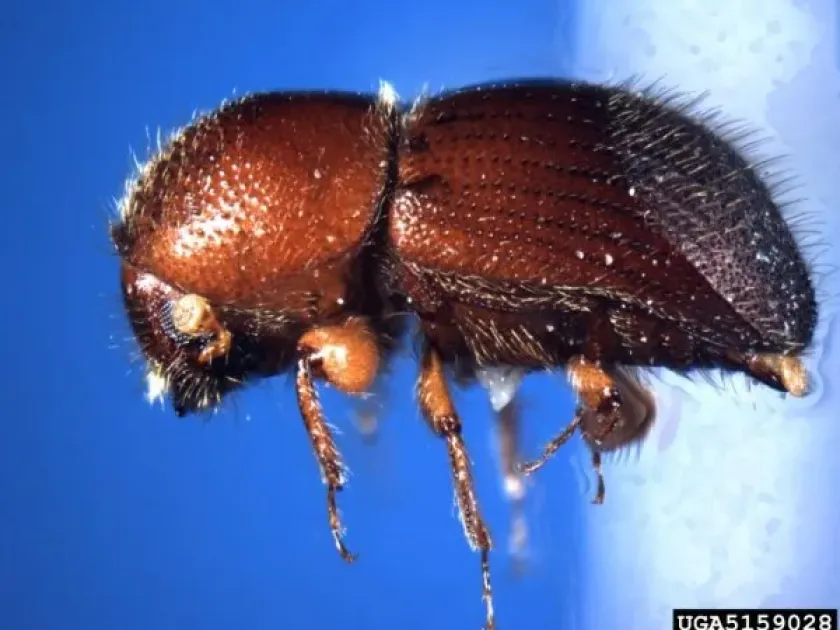
Xyleborus hirsutus is a species of beetle belonging to the family Curculionidae, subfamily Scolytinae. As its name implies, the adult beetle is characterized by dense hairs on its body, distinguishing it from other bark beetle species.
The adult form is cylindrical, with a dark brown to black coloration. This shape is an adaptation for tunnel boring, allowing the beetle to navigate efficiently within the wood of its host tree.
Larvae are legless, white, and possess a distinct dark head capsule. They rely on symbiotic fungi, which adults introduce into the galleries, to provide essential nutrients for their growth and development.
Sexual dimorphism is common in this species, where females are larger and capable of flight for dispersal, while males are significantly smaller and often remain within the maternal gallery system.
The beetle functions as a recycler of wood, but in managed environments like orchards or plantations, it is classified as a significant pest due to its impact on the host's vitality.
What it damages
Xyleborus hirsutus primarily attacks hardwood species. It shows a preference for stressed or weakened trees, which have lower chemical defenses against boring insects, although it can attack healthy trees during outbreaks.
Targeted hosts include fruit-bearing trees such as apples, pears, and stone fruits. It also impacts various deciduous forest trees, including oaks, beeches, and birches, causing degradation of wood quality.
The damage is twofold: physical disruption of the vascular system by larval tunnels and the introduction of pathogenic fungi. These fungi cause staining and block the tree's sap conduction channels.
Young trees are particularly vulnerable. When a sapling is infested, the interruption of water and nutrient transport can lead to rapid wilting and, if left untreated, the death of the entire tree.
In orchards, infestation leads to reduced fruit production and can compromise the structural integrity of branches, making them susceptible to wind breakage and secondary infections.
When it appears
The activity of Xyleborus hirsutus begins in early spring, once temperatures are consistently warm. This is when overwintered females emerge to search for suitable host trees to initiate new colonies.
Flight activity can continue throughout the growing season, with peaks corresponding to warm spells. Depending on the local climate, the beetle may produce multiple generations per year.
Winter is typically spent in the adult stage within the galleries inside the wood. This hibernation protects the population from freezing temperatures and ensures rapid colonization once spring arrives.
Larval development is synchronized with the sap flow of the host tree, as the moisture levels during the active growth period are optimal for the growth of the fungi they consume.
As autumn approaches and tree growth slows, the beetles conclude their reproductive cycles and retreat into deeper parts of the galleries to enter a state of dormancy until the next spring.
Signs of infestation
The most reliable indicator of an infestation is the presence of small circular holes on the bark, roughly 1–2 mm in diameter. These are entrance points created by the female beetle.
Fine wood dust, often called "frass" or boring dust, may accumulate near the entrance holes or at the base of the tree. This is a clear sign that the beetles are actively excavating their galleries.
Leaf yellowing or branch dieback occurring during the growing season is a symptom of internal damage. It suggests that the beetle tunnels have successfully disrupted the tree's water supply.
In some species, staining or sap oozing from the entry points serves as a visible sign of the tree's reaction to the tunneling process and the introduced fungal infection.
- Entry holes on trunks or branches
- Boring dust (frass) on the bark
- Wilting of individual canopy branches
- Dark staining around entry holes
- Premature yellowing of foliage
Control measures
Sanitation is the primary control strategy. Removing and destroying infested wood or heavily damaged trees prevents the population from spreading to healthy trees in the vicinity.
Cultural practices that promote tree health are vital. Ensuring adequate irrigation, proper fertilization, and protection from physical trauma helps trees maintain the defenses needed to repel bark beetles.
Pheromone traps are effective for monitoring beetle presence and timing control measures. Placing these traps before the main flight season allows for targeted management.
Chemical control involving systemic insecticides may be applied if a high risk of infestation is identified. Timing is critical, as applications are only effective while adults are on the bark surface.
Research into biological controls, such as beneficial fungi or parasitic nematodes, continues to develop, offering hope for long-term sustainable management of wood-boring pests.
Taxonomy
- Latin name
- Xyleborus hirsutus
- Order
- Coleoptera (beetles)
- Family
- Curculionidae
- EPPO code
- XYLBHI
Discussion
No discussions yet — be the first.