
Redbay ambrosia beetle
Xyleborus glabratus
Description
How to identify
The Redbay ambrosia beetle (Xyleborus glabratus) is a small wood-boring insect belonging to the Curculionidae family and Scolytinae subfamily. Adults are roughly 2–3 mm in length.
The beetle possesses a cylindrical body shape and a smooth, shiny reddish-brown to black exoskeleton. This appearance is distinct and helps in distinguishing it from native wood-boring species.
Females are responsible for the spread of the disease as they carry spores of the symbiotic fungus Raffaelea lauricola in specialized structures called mycangia.
Males are significantly smaller than females, flightless, and remain inside the gallery systems throughout their entire lives, where they mate with females.
As an invasive species, the Redbay ambrosia beetle has caused widespread damage in North America, particularly to ecosystems where susceptible plant species are present.
What it damages
The primary hosts of this pest include members of the Lauraceae family, such as the redbay (Persea borbonia) and the commercially significant avocado (Persea americana).
Other trees, including sassafras and various spice bushes, are also vulnerable to attack, making this pest a major threat to both natural forests and agricultural plantations.
The direct damage caused by the beetle's tunneling is minimal compared to the impact of the fungus it transmits. Once introduced, the fungus Raffaelea lauricola colonizes the xylem.
This colonization triggers a condition known as Laurel Wilt, which effectively plugs the tree's vascular system, preventing water and nutrient transport throughout the plant.
The rapid death of trees, sometimes within just a few weeks, presents a significant challenge for forest management and the avocado industry worldwide.
Signs of infestation
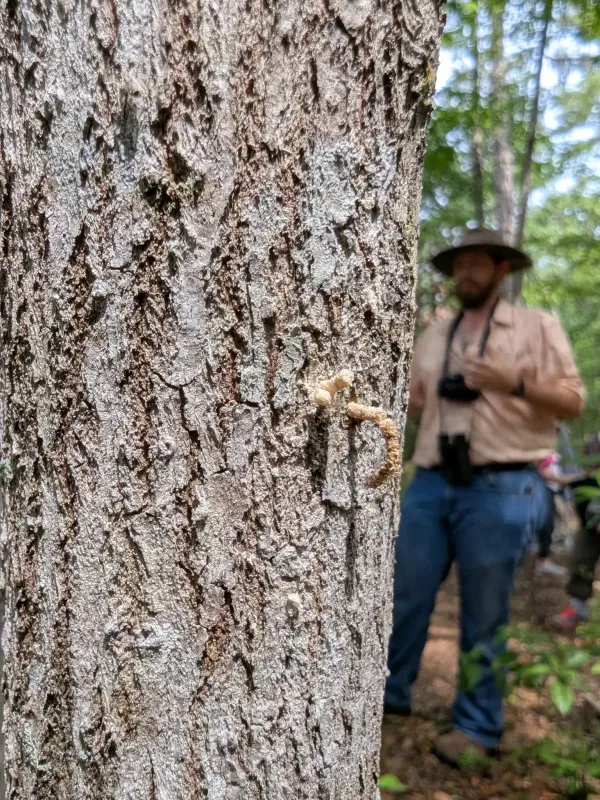
One of the earliest signs of an infestation is the presence of small entry holes in the bark of the trunk, often accompanied by fine, powdery wood dust.
Infested trees often display "frass toothpicks" — thin, dense strands of sawdust extruded from the beetle's entrance tunnels, which are a highly characteristic indicator.
Leaves on infested trees quickly transition from green to yellow, then brown, as the tree loses its ability to circulate water effectively, leading to rapid wilting.
When the bark of an infested tree is peeled back, dark, charcoal-like staining is usually visible in the sapwood, caused by the colonization of the fungus.
A cross-section of the trunk or branches reveals the beetle's radial tunnels, which are the focal points of the dark fungal discoloration spreading through the tree's tissue.
Control measures
Quarantine measures are the first line of defense, strictly regulating the movement of wood products, firewood, and nursery stock to prevent the spread of the beetle to new areas.
Monitoring programs using pheromone-baited traps are essential for early detection, allowing landowners to identify new outbreaks and take immediate action.
Sanitation involves the rapid removal, chipping, or burning of infested trees to eliminate the population and prevent the beetle from emerging to infest neighboring trees.
Trunk injections with systemic fungicides have shown some success in protecting high-value trees, though this requires consistent maintenance and is not a permanent cure.
Ongoing research is focused on developing biological control agents and identifying tree cultivars that may possess natural resistance to the Laurel Wilt fungus.
Taxonomy
- Latin name
- Xyleborus glabratus
- Order
- Coleoptera (beetles)
- Family
- Curculionidae
- EPPO code
- XYLBGR
Discussion
No discussions yet — be the first.