
Oak borer
Xyleborus dryographus
Description
How to identify
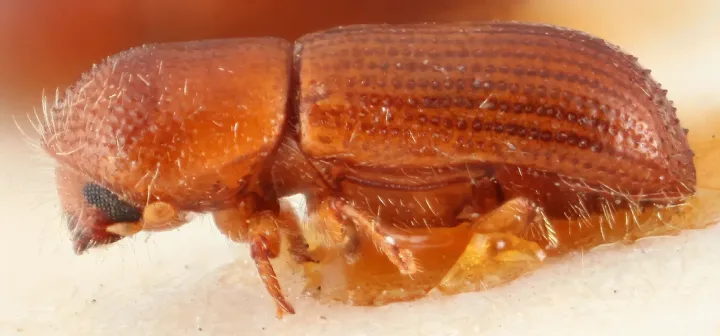
The oak borer (Xyleborus dryographus) is a small beetle belonging to the Curculionidae family and Scolytinae subfamily. Adults typically measure between 2.5 and 3.2 mm in length and possess a dark brown to black cylindrical body.
The pronotum of the beetle is convex and covered in small tubercles, which provide the necessary traction for moving through narrow tunnels deep within the tree’s wood.
Larvae are legless, white grubs with a curved body shape and a distinct brown head. They live exclusively in tunnels and rely on symbiotic fungi for their nutrition.
Adults are capable fliers, which allows them to migrate long distances to locate suitable host trees for reproduction during the warm season.
As an ambrosia beetle, the female carries fungal spores in specialized structures called mycangia, introducing them into the tunnels she excavates for her brood.
What it damages
While oaks are the primary host, this beetle also infests other deciduous species, including hornbeam, beech, and chestnut, particularly when these trees are stressed.
The pest generally attacks weakened or dying trees, but in high-population densities, it may also infest seemingly healthy trees that have been physiological compromised.
Environmental stressors such as prolonged drought, soil compaction, or excessive air pollution make trees significantly more susceptible to successful colonization.
The galleries excavated by the beetles penetrate deep into the sapwood and heartwood, disrupting the tree’s internal transport system for water and nutrients.
Extended infestations lead to branch dieback, crown thinning, and, in severe cases, the eventual death of the entire tree over several growing seasons.
When it appears
Adult activity begins in the spring when temperatures consistently reach 15–18 degrees Celsius, often correlating with the onset of oak leaf development.
The beetle can produce multiple generations per year depending on regional climatic conditions, keeping it active throughout the summer months.
Beetles exhibit peak flight and searching activity during the twilight hours, preferring to remain hidden within the safety of their galleries during the heat of the day.
Reproductive cycles are closely tied to the host tree's moisture content, as the fungal "gardens" required for larval development thrive in specific damp conditions.
Overwintering occurs primarily in the adult stage, with the beetles remaining tucked inside their established galleries or buried in the leaf litter at the base of the trunk.
Signs of infestation
The most reliable indicator of an active infestation is the presence of fine frass—wood dust—accumulating on the bark or in bark crevices below the entry holes.
Small, perfectly circular entry holes about 1–1.5 mm in diameter are visible on the trunk surface, serving as the primary evidence of the beetle's initial penetration.
Crown symptoms such as yellowing, premature wilting, or drying leaves indicate that the tree's vascular system has been compromised by beetle galleries.
When the bark is removed, the interior shows complex branching galleries often stained dark by the growth of ambrosia fungi introduced by the adults.
In cases of chronic infestation, the bark may begin to loosen, and the wood may show signs of staining and structural decay caused by the fungal growth associated with the pest.
Control measures
Effective management focuses on forest hygiene, primarily the prompt removal and disposal of infested trees before the next generation of beetles can emerge.
Leaving downed logs or logging slash in the forest provides breeding grounds, so these materials must be cleared or debarked to destroy the beetles.
- Monitor beetle populations using pheromone or attractant-baited funnel traps.
- Apply systemic insecticides to high-value trees during peak flight periods in outbreak areas.
- Maintain tree vigor through proper irrigation during drought years to discourage infestation.
- Encourage natural predators, such as woodpeckers and predatory wasps, to help regulate beetle populations.
An integrated approach combining sanitation, monitoring, and silvicultural practices is necessary to manage this pest, as chemical controls alone are often limited in effectiveness.
Taxonomy
- Latin name
- Xyleborus dryographus
- Order
- Coleoptera (beetles)
- Family
- Curculionidae
- EPPO code
- XYLBDR
Discussion
No discussions yet — be the first.