
Xyleborus
Xyleborus
Description
How to identify
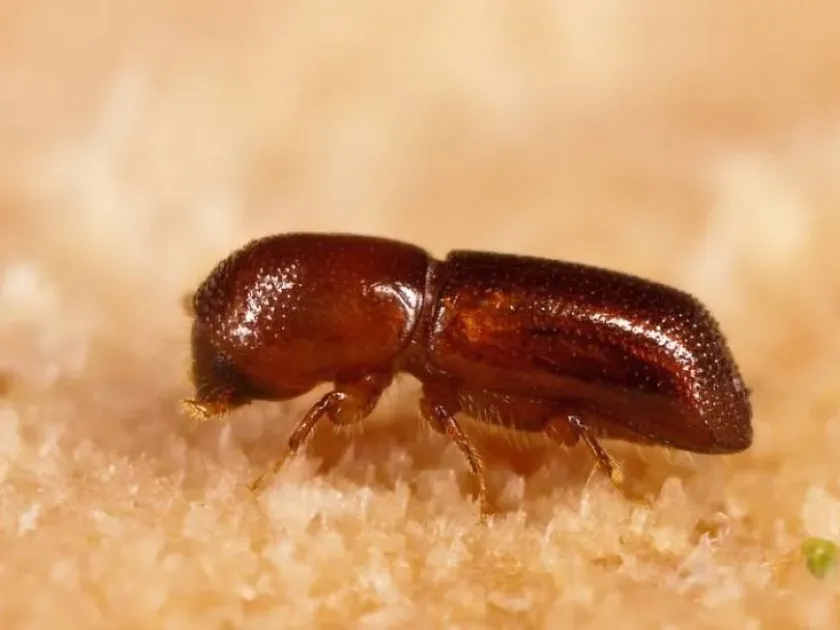
Xyleborus is a genus of wood-boring beetles in the family Curculionidae, subfamily Scolytinae. These small insects, commonly known as ambrosia beetles, typically measure between 2 and 4 mm in length and feature a cylindrical body shape.
The female beetles are larger and possess wings for flight, whereas males are smaller, flightless, and remain inside the gallery systems for their entire lives. Their appearance is generally dark brown to black, often covered with fine hair.
What defines this genus is their symbiotic relationship with ambrosia fungi (e.g., Ambrosiella). Unlike other bark beetles that consume wood tissues, Xyleborus beetles cultivate fungi within their tunnels, which serves as the primary food source for their larvae and adults.
The entire life cycle occurs within the galleries, protected by the tree's wood. This unique biology makes them exceptionally resistant to standard surface-applied insecticides, as the insects rarely emerge from their protected chambers.
Visual identification of the adult is difficult for the average grower. Observation usually relies on detecting the aftermath of their colonization process rather than spotting the insects themselves.
What it damages
Xyleborus is a highly polyphagous pest capable of attacking a vast array of hardwood and fruit trees, including apple, pear, peach, plum, and various forest species like oaks and beeches. They target stressed or weakened trees that cannot produce enough resin or sap to flush the intruders out.
The primary damage is caused by the galleries bored deep into the heartwood, which physically compromise the structural integrity of the branches. However, the most lethal impact comes from the fungi introduced by the beetle during colonization.
The fungi quickly spread through the vascular tissues of the tree, clogging the xylem vessels. This causes the tree to lose its ability to transport water and nutrients, leading to rapid wilting, branch dieback, and eventually, the death of the tree.
In high-density infestations, a tree can be riddled with hundreds of entry holes within a few weeks, severely hindering its physiological health. Such trees rarely recover and act as reservoirs for further spread in orchards and forests.
Economic damage includes significant loss of crop yield, degradation of timber quality, and the high cost associated with the removal and disposal of infested trees.
When it appears
Adult flight usually begins in early spring, as temperatures consistently exceed 15-18°C. This is the critical window when females exit their galleries to seek out new, suitable hosts for nesting.
Depending on the climatic region, Xyleborus can produce multiple generations throughout the growing season. Warm, temperate regions often experience intense activity from late spring through autumn.
The peak activity period usually occurs in late May and June. During these months, monitoring efforts should be heightened, especially if the orchard has previously experienced infestations.
The beetles spend the winter in the galleries as larvae, pupae, or adults. This life strategy ensures survival in cold climates, as they are well-insulated within the wood tissues.
In late summer or early autumn, there may be a secondary flight period when new adults disperse. Monitoring for this event is crucial for timely orchard management and intervention.
Signs of infestation
The most reliable sign of a Xyleborus attack is the presence of small, circular entry holes in the bark, usually about 1-2 mm in diameter. These holes are often accompanied by "frass" — fine, sawdust-like powder ejected by the beetles.
In many cases, frass collects in the form of thin, protruding strands, often called "toothpicks," extending from the entry holes. These are very fragile and break off easily, but their presence is a definitive diagnostic indicator of active tunneling.
Affected trees often show symptoms of distress, such as leaf wilting, yellowing, or browning in the canopy, even if water and nutrients are provided adequately. This is a direct consequence of the vascular blockage caused by the symbiotic fungi.
If you peel back the bark on suspicious-looking patches, you will find intricate galleries boring into the wood. The walls of these tunnels will often be stained black or grey, indicating the presence of the ambrosia fungus.
Sudden branch dieback without any signs of other obvious pathogens is a strong reason to inspect the lower trunk and main branches for Xyleborus activity.
Control measures
The first line of defense is maintaining tree vigor. Proper irrigation, nutrient management, and regular pruning reduce tree stress and enable the plant to naturally resist beetle attacks through effective sap pressure.
Sanitation is paramount. Infested branches or whole trees must be removed and destroyed (burned or chipped) immediately to prevent the infestation from spreading to healthy trees in the vicinity.
Ethanol-baited traps are highly effective for monitoring the flight of adult beetles. By placing these traps in the orchard, growers can detect the onset of beetle activity and time their protective measures accordingly.
Chemical control is notoriously difficult due to the beetles' internal lifestyle. Systemic insecticides may be used in the very early stages of an attack, but once the gallery is well-established, chemical treatment often fails to reach the colony.
- Remove and destroy infested wood promptly.
- Use ethanol-based traps for early detection.
- Promote overall tree health via fertilization and irrigation.
- Maintain orchard cleanliness by removing stumps and debris.
- Apply white-wash to trunks to potentially discourage female landing.
Taxonomy
- Latin name
- Xyleborus
- Order
- Coleoptera (beetles)
- Family
- Curculionidae
- EPPO code
- XYLBSP
Discussion
No discussions yet — be the first.