
Xyleborinus saxesenii
Xyleborinus saxesenii
Description
How to identify
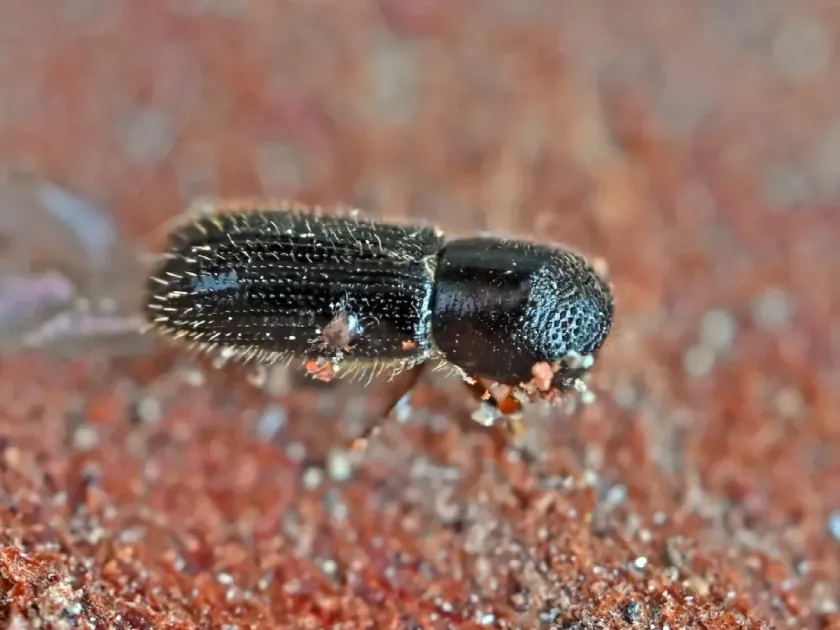
Xyleborinus saxesenii is a species of ambrosia beetle belonging to the Scolytinae subfamily. These beetles are extremely small, usually ranging from 2.0 to 2.5 mm in length.
Their bodies are cylindrical and dark brown or black in color. The surface of the elytra is covered with fine hairs, which is a distinctive feature of the genus.
The larvae are white, legless, and have a yellowish head. They develop deep within the tree, living in galleries and feeding on symbiotic fungi cultivated by their parents.
These beetles are polyphagous, meaning they can attack a wide variety of deciduous and coniferous trees, making them a significant threat in diverse orchards.
Adult beetles are capable of strong flight, which enables them to spread rapidly throughout an orchard and colonize new, susceptible host trees.
What it damages
The beetle primarily attacks fruit trees such as apple, pear, cherry, plum, and peach. It also colonizes various forest tree species, including oak and beech.
While Xyleborinus saxesenii is often associated with stressed or weakened trees, it is also capable of attacking and killing healthy trees under high population pressure.
The damage is caused by the construction of extensive gallery systems within the xylem, which severely disrupts the tree's vascular system and nutrient transport.
As the conductive tissues are severed, affected branches or entire trees begin to wilt, lose foliage, and eventually suffer from dieback.
The introduction of ambrosia fungi into the wood further compromises the tree's health, often leading to secondary infections and rapid decline of the affected plant.
When it appears
The flight period for these beetles typically begins in the spring, once temperatures consistently exceed 15-18 degrees Celsius.
Peak activity usually occurs during and immediately after the fruit tree blossom period, when beetles are actively seeking new hosts.
Multiple generations can occur throughout the growing season, which complicates control efforts due to the overlapping life cycles of the insect.
During late summer and autumn, new adults may emerge or remain active as they prepare for overwintering within the wood of their host plants.
Overwintering occurs primarily at the adult stage within the wood, which provides them with excellent protection against harsh winter conditions.
Signs of infestation
The most visible sign of infestation is the presence of small, round entry holes on the bark, approximately 1 mm in diameter.
The production of fine, pale-colored boring dust (frass) around these entrance holes is a clear indicator of active beetle activity inside the tree.
Foliage on infested branches often shows early symptoms of chlorosis, wilting, and premature browning before the entire branch begins to die back.
If the bark is carefully removed, distinct dark galleries created by the beetles can be observed penetrating deep into the sapwood.
In cases of severe infestation, the tree may show signs of overall decline, with thinning foliage and stunted growth compared to healthy trees in the vicinity.
Control measures
Effective management begins with maintaining high orchard vigor through proper pruning, irrigation, and fertilization to prevent tree stress.
Sanitation is critical; all heavily infested branches or dying trees should be removed and destroyed by burning to reduce the local beetle population.
Using ethanol-baited traps is a highly effective method for monitoring beetle arrival and timing insecticide applications correctly.
Systemic insecticides can be applied during the period of peak adult flight to prevent successful colonization of the tree trunk and main branches.
Regular maintenance of wound protection and the application of trunk whitewash can act as a minor deterrent for the initial stages of beetle attack.
Taxonomy
- Latin name
- Xyleborinus saxesenii
- Order
- Coleoptera (beetles)
- Family
- Curculionidae
- EPPO code
- XYLBSA
Discussion
No discussions yet — be the first.