
Xyleborinus andrewesi
Xyleborinus andrewesi
Description
How to identify
Xyleborinus andrewesi is a species of beetle belonging to the order Coleoptera and the family Curculionidae, specifically the subfamily Scolytinae. This small insect is a known wood-borer that spends the majority of its lifecycle sheltered within the tissues of host trees.
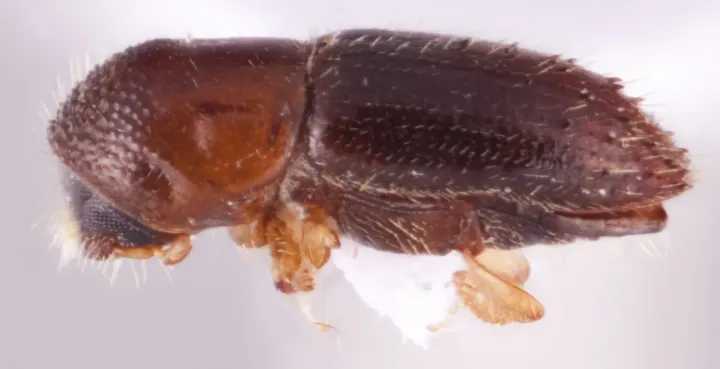
The adult beetle is cylindrical in shape with a dark brown to black coloration. It typically measures between 2 and 3 mm in length. Its head is partially concealed under the pronotum, a common structural trait among many bark and ambrosia beetles.
Positive identification of this species often requires professional morphological analysis, as it shares many physical characteristics with other members of the Xyleborinus genus. Examination of the elytral structures is usually necessary for accurate classification.
These beetles are highly mobile during their dispersal phase, using flight to locate suitable hosts. Their success as a pest is largely attributed to their ability to colonize trees independently and establish symbiotic relationships with fungi.
The lifecycle includes a brood-rearing process where the female initiates the gallery system. Males are significantly smaller and often remain within the maternal gallery, emphasizing the beetle's sedentary reproductive strategy inside the wood.
What it damages
Xyleborinus andrewesi attacks a wide variety of trees, including various hardwoods and fruit-bearing species. It is particularly problematic in tropical and subtropical regions where it targets stressed or compromised woody plants.
While the beetle prefers weakened trees, high population densities can lead to colonization of seemingly healthy specimens. The primary damage is caused by the construction of extensive gallery systems within the xylem and sapwood.
These galleries disrupt the tree's natural transport of water and nutrients. Over time, this leads to physiological decline, characterized by leaf yellowing, branch dieback, and, in severe cases, the death of the entire plant.
The economic impact is significant, particularly in agricultural settings where fruit yield is compromised. Furthermore, the timber quality of infested trees is severely degraded, rendering the wood unsuitable for commercial use.
The introduction of ambrosia fungi is a critical component of the damage. As these fungi colonize the galleries, they can clog the vascular tissue, effectively choking the tree and accelerating the deterioration process started by the beetles.
When it appears
The activity of Xyleborinus andrewesi is highly dependent on ambient temperature and humidity. In warm climates, the beetle can remain active throughout the year, with multiple generations possible within a single growing season.
The life cycle encompasses egg, larval, pupal, and adult stages. Females lay eggs within the galleries, and larvae feed exclusively on the fungal gardens cultivated by the mother, rather than on the wood itself.
Development time is relatively short, often taking only a few weeks under optimal conditions. This rapid turnover allows populations to expand quickly, especially when host availability is high following weather-related stress like drought.
Dispersal and colonization occur during the swarming phase. Beetles are attracted to the volatile organic compounds released by stressed trees, allowing them to locate and infest vulnerable hosts over long distances.
Once a suitable host is found, the beetle drills into the wood. The absence of competition inside the gallery environment allows for high survival rates, further contributing to the rapid increase of local populations.
Signs of infestation
Detection of Xyleborinus andrewesi is often delayed until the infestation has become established. The most reliable sign is the presence of small, circular entrance holes on the surface of the bark, typically about 1 mm in diameter.
- Small, round entry holes on the tree trunk or branches.
- Fine, powdery sawdust or "frass" accumulating at the base of the tree or in branch crotches.
- Premature yellowing, wilting, or dropping of leaves.
- Localized necrotic spots or sap leakage around the entry points.
- Gradual thinning of the canopy and dieback of individual limbs.
Sap exudation (gummosis) is a common defensive response by the tree, but it is rarely effective against mass attacks. Persistent sap flow often indicates the site of successful gallery initiation.
Inside the wood, galleries are often stained dark due to the presence of symbiotic fungi. These fungal patches are a distinct indicator of ambrosia beetle activity and distinguish their damage from other types of borers.
Structural integrity may become compromised over time. Heavy infestation makes branches and trunks brittle, increasing the risk of mechanical failure during storms or periods of high wind.
Control measures
The most effective management strategy focuses on maintaining tree vigor through proper irrigation, fertilization, and site maintenance. Healthy, stress-free trees are far less likely to be successfully colonized.
Sanitation is paramount: infested branches or trees should be promptly pruned, removed, and destroyed. Burning or chipping the infested wood is necessary to eliminate the resident beetle population and prevent further spread.
Chemical control can be utilized as a preventative measure. Systemic insecticides applied to the bark during peak flight periods can help deter the beetles from initiating galleries, though timing is critical for success.
Pheromone traps serve as an essential tool for monitoring beetle activity. By tracking the population levels, growers can identify when to implement protective measures, thereby reducing unnecessary pesticide usage.
Avoid leaving logging debris or pruned wood near active orchards or forests. These materials serve as breeding grounds for Xyleborinus andrewesi and must be cleared to break the lifecycle of the pest.
Taxonomy
- Latin name
- Xyleborinus andrewesi
- Order
- Coleoptera (beetles)
- Family
- Curculionidae
- EPPO code
- XYBIAN
Discussion
No discussions yet — be the first.