
Xyleborinus
Xyleborinus
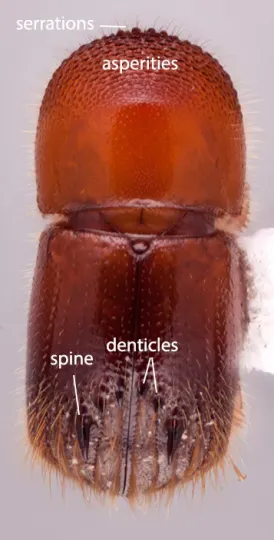
Description
How to identify
Xyleborinus is a genus of ambrosia beetles belonging to the subfamily Scolytinae. These insects are small, typically measuring between 2 to 3 mm in length, and possess a robust, cylindrical body often dark brown or black in color.
These beetles are distinguished by their unique symbiotic relationship with fungi. They carry fungal spores in specialized structures known as mycangia, introducing them into the galleries they excavate within the tree wood.
The life cycle involves an intimate association with these fungi, which serve as the primary food source for both the adult beetles and their developing larvae, rather than the wood itself.
Sexual dimorphism is significant in this genus. Females are typically larger and winged, capable of flight to colonize new hosts, while males are often wingless and remain within the parental galleries throughout their lives.
Identification at the species level usually requires expert entomological examination of morphological features, such as the shape of the pronotum and the specific patterns of the elytral declivity.
What it damages
Xyleborinus species infest a wide range of woody hosts, including various deciduous fruit trees such as apples, pears, and plums, as well as forest trees like oak, beech, and maple.
The beetles primarily target stressed or weakened trees. Factors such as drought, frost damage, improper planting, or existing diseases make trees more susceptible to successful colonization by these borers.
In nurseries and young orchards, infestations can lead to significant tree mortality. By tunneling into the sapwood and heartwood, the beetles disrupt the tree's vascular system, hindering the transport of water and nutrients.
The introduced symbiotic fungi can cause wood discoloration and decay, further compromising the structural integrity of the tree and its overall health over time.
The economic impact is substantial, involving the loss of productivity, the cost of removing infested trees, and the potential need for regional quarantine measures to prevent further spread.
When it appears
The active flight period for Xyleborinus typically begins in early spring, as temperatures rise consistently above 15°C (59°F). Females emerge from overwintering sites to seek suitable host trees.
Peak activity and colonization often occur during the late spring and early summer months. Depending on the local climate, the beetle may complete one or several generations within a single growing season.
As autumn approaches, activity levels decline. The beetles generally overwinter as adults within the galleries they have excavated, or within other protective woody debris, waiting for the return of favorable temperatures.
In warmer climates, development may continue for a longer duration, increasing the pressure on orchards and woodlots throughout the summer and into the early autumn months.
Monitoring the flight period is essential for timing control strategies, and it is commonly achieved through the use of alcohol-baited or pheromone traps placed throughout the site.
Signs of infestation
The most reliable sign of an infestation is the presence of tiny, circular entry holes in the bark, often accompanied by fine, light-colored or white "frass" (sawdust) pushed out of the tunnels.
In some cases, especially with stone fruits, the tree may respond to the boring activity by producing sap or gum exudates near the entry points, which serves as a visible marker of the attack.
Dissection of infested branches or trunks reveals intricate tunnel systems. These galleries are often stained black or dark brown due to the growth of the symbiotic fungi introduced by the beetles.
Affected trees often show symptoms of decline, including premature yellowing of leaves, wilting of individual branches, or dieback of the crown as the internal damage progresses.
In advanced stages, the structural damage caused by the gallery systems can make the tree prone to breakage during high winds, posing a safety risk in managed landscapes or orchards.
Control measures
Cultural management is the first line of defense. Maintaining tree vigor through proper irrigation, fertilization, and sanitation helps the tree defend itself against initial beetle entry.
Promptly removing and destroying infested material, ideally through burning or chipping, is crucial to reduce the local population and prevent the spread to adjacent healthy trees.
- Apply systemic insecticides to trunks during the early spring flight period to deter colonization.
- Use trap trees or alcohol-baited lures to monitor and potentially trap beetles away from high-value plantings.
- Maintain orchard hygiene by removing deadwood and drought-stressed branches regularly.
Chemical control is inherently difficult because the beetles spend the majority of their life cycle protected deep within the wood, meaning timing is critical for any contact-based sprays.
In forest environments, encouraging natural predators and parasitoids can contribute to the long-term suppression of Xyleborinus populations, maintaining a natural balance within the ecosystem.
Taxonomy
- Latin name
- Xyleborinus
- Order
- Coleoptera (beetles)
- Family
- Curculionidae
- EPPO code
- XYBISP
Discussion
No discussions yet — be the first.