
African clawed frog
Xenopus laevis
Description
How to identify
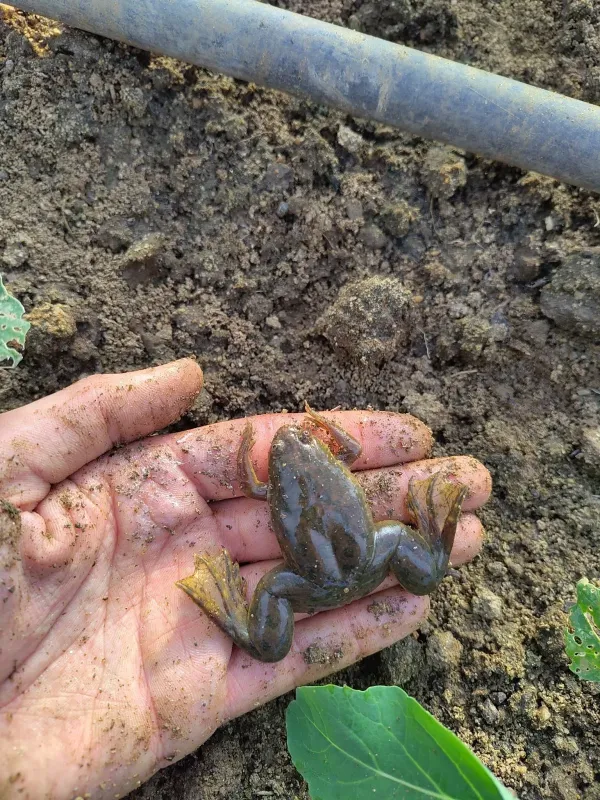
The African clawed frog (Xenopus laevis) belongs to the Pipidae family. It is a strictly aquatic amphibian characterized by a flat body and the absence of a tongue.
A distinctive feature is the presence of three sharp black claws on the inner toes of the hind feet, which are used to tear apart prey.
The coloration ranges from olive-gray to brown with mottled patterns on the back, providing excellent camouflage in murky water habitats.
Adults reach 10–12 cm in length and possess powerful hind limbs that allow them to make rapid, sudden movements through the water column.
Tadpoles are easily identified by their transparent bodies and long sensory barbels (tentacles) near the mouth, which are absent in many other species.
What it damages
In agricultural settings, particularly in aquaculture, the African clawed frog is a significant predator that threatens the production of fry and fingerlings.
The primary damage occurs through the consumption of fish eggs and larvae, which can lead to severe losses in fish farm profitability.
These frogs can also damage root systems in hydroponic installations and interfere with water circulation and filtration systems in recirculating aquaculture.
As opportunistic feeders, they outcompete commercial fish species for food resources, including plankton and small invertebrates.
Furthermore, Xenopus laevis acts as a natural reservoir for the chytrid fungus Batrachochytrium dendrobatidis, posing health risks to other aquatic fauna.
When it appears
The activity level of the African clawed frog is highly temperature-dependent, with peak activity observed during warmer months of the year.
The breeding season can extend over several months, posing a continuous threat to fish larvae during the spring and summer development cycle.
In winter, activity decreases, but in deep or temperature-controlled reservoirs, the frogs can remain active throughout the entire year.
Migratory movements between water bodies are most frequent during periods of heavy rainfall, allowing the frogs to traverse land damp with moisture.
In climate-controlled aquaculture facilities, the breeding cycle can become continuous, necessitating year-round monitoring and population control.
Signs of infestation
A primary indicator of infestation is a sharp, unexplained decline in the survival rate of young fish in rearing ponds.
The presence of distinct underwater clicking or croaking sounds during the night is a reliable sign of an established colony.
Detection of numerous tadpoles with characteristic long sensory barbels during routine netting is a clear signal of population reproduction.
Physical damage to perimeter protective fencing or torn aquatic vegetation suggests the activity of these aggressive predators.
Finding fish carcasses with signs of tissue trauma or lacerations often points to an attack by the claws of this specific amphibian.
Control measures
Effective management involves installing fine-mesh physical barriers around the perimeter of ponds to prevent frog migration and colonization.
Regular trapping programs using specialized aquatic traps are essential to maintain low population levels in the managed area.
Draining and sanitizing ponds during the off-season is the most effective method for destroying egg clutches and larvae in bottom sediments.
- Deployment of light traps for nocturnal monitoring.
- Clearing emergent vegetation along the shoreline to reduce cover.
- Active removal of specimens during wet weather migration events.
Chemical control is generally avoided due to the extreme sensitivity of fish species to most pesticides and potential ecological toxicity.
Taxonomy
- Latin name
- Xenopus laevis
- Family
- Pipidae
- EPPO code
- XNOPLA
Discussion
No discussions yet — be the first.