
African clawed frog
Xenopus
Description
How to identify
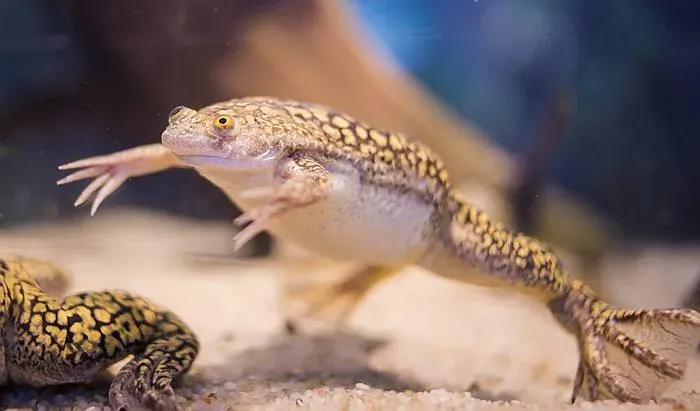
The African clawed frog (Xenopus laevis) is a member of the Pipidae family. It is a strictly aquatic amphibian characterized by powerful hind legs equipped with black claws, which are used to shred food and defend against threats.
Adult frogs typically measure between 10 and 12 centimeters in length. They feature a flattened body with smooth, slippery skin ranging in color from greenish-gray to brownish with dark mottling.
One of the most distinct biological features is the absence of a tongue and eyelids. Instead, they rely on a highly developed lateral line system to detect movement and pressure changes in the water, allowing them to hunt effectively in complete darkness.
Reproduction involves laying thousands of eggs on aquatic plants. The tadpoles are suspension feeders, which allows them to thrive in various aquatic environments by exploiting diverse food sources.
These frogs are remarkably hardy, surviving in a wide range of water temperatures and oxygen levels. This adaptability makes them one of the most successful invasive species in aquatic ecosystems globally.
What it damages
The African clawed frog is a significant pest in aquaculture, primarily because it preys on fish fry and small fingerlings, causing substantial economic losses in commercial fish ponds.
By consuming large quantities of insects, crustaceans, and other aquatic life, the frog outcompetes native species for essential food resources, leading to a collapse in local biodiversity.
The species acts as a vector for various pathogens, including the Chytrid fungus, which can devastate amphibian populations and potentially affect the health of fish stocks in controlled environments.
Their burrowing and foraging behaviors can alter the turbidity of pond water, reducing light penetration and negatively impacting the growth of beneficial algae and primary producers.
In irrigation systems, the presence of these frogs can lead to the clogging of intake pipes and filtration systems, causing operational downtime and increased maintenance costs for farmers.
Control measures
Mechanical exclusion is the primary method of control; installing fine-mesh screens on all water inlets and outlets prevents frogs from entering or leaving designated fish-rearing areas.
Periodic draining and liming of ponds can effectively eliminate existing populations of frogs, tadpoles, and egg masses, providing a clean slate for the next production cycle.
Integrated pest management includes the regular removal of emergent aquatic vegetation, which is essential for the frog’s breeding and shelter, thereby reducing the suitability of the habitat.
Trapping programs using baited funnel traps can be used to monitor and reduce populations in areas where other methods are not feasible or would harm the fish stock.
Strict biosecurity protocols should be implemented to prevent the accidental transfer of eggs or larvae between water bodies, ensuring that the pest does not spread to new locations.
Taxonomy
- Latin name
- Xenopus
- Family
- Pipidae
- EPPO code
- XNOPSP
Discussion
No discussions yet — be the first.