
Webbia pabo
Webbia pabo
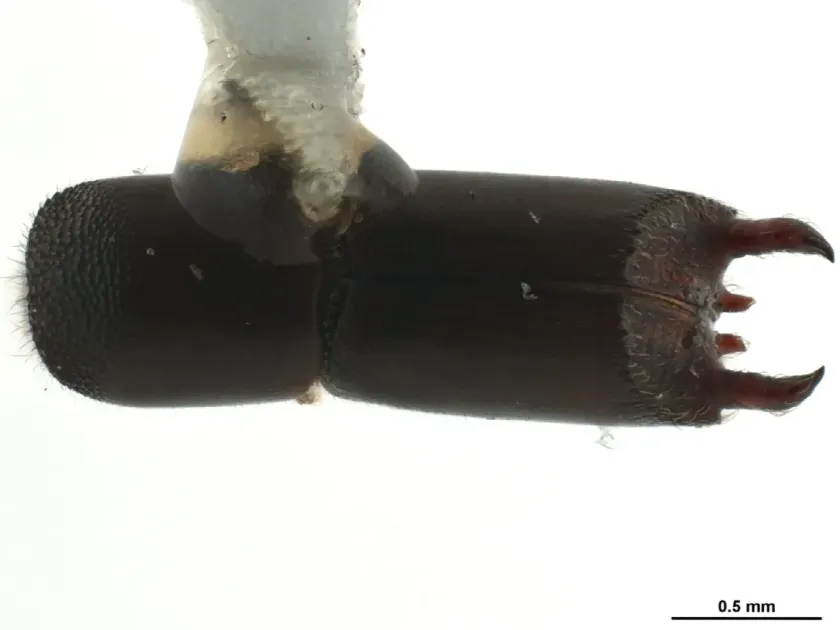
Description
How to identify
Webbia pabo is a species belonging to the family Curculionidae, specifically the subfamily Scolytinae (bark beetles). These are small, highly specialized insects that have evolved to live within the tissues of trees.
Adult beetles possess a cylindrical body shape typical of most bark beetles, with hard, dark-colored chitinous coverings that protect them as they move through wood tunnels.
The larvae are legless, white or yellowish, and are well-adapted to boring into wood, which provides them with both nutrition and protection from environmental stress and predators.
The life cycle involves complete metamorphosis, allowing the species to adapt to seasonal variations by overwintering at different life stages under the bark.
Due to their small size and cryptic lifestyle, identifying Webbia pabo in the field requires a thorough inspection of the trunk and surrounding areas for subtle signs of colonization.
What it damages
This species primarily targets weakened or stressed trees, often infesting plants that have suffered from drought, mechanical damage, or previous disease infections.
Larval feeding creates extensive galleries in the cambium and xylem, which disrupts the tree’s vascular system and impedes the transport of water and nutrients.
While often considered a secondary pest, it can significantly contribute to the rapid decline of trees in shelterbelts and forests if conditions are favorable for its population growth.
Repeated infestation can weaken the structural integrity of the tree, making it prone to breakage and eventual death if not managed properly.
The severity of damage is proportional to the beetle density, with mass infestations capable of causing widespread canopy death within a short period.
When it appears
The peak activity of Webbia pabo occurs during the spring and early summer, triggered by rising temperatures that signal the start of adult flight.
Egg-laying and larval development generally take place throughout the active growing season, ensuring that the larvae have access to nutrient-rich tree sap.
Depending on the climatic zone and environmental factors, the species may produce one or more generations per year, affecting its total impact on the host plants.
As autumn approaches, the beetles prepare for winter, typically by reaching a dormant stage under the bark, which provides insulation against freezing temperatures.
Regular monitoring during the spring flight period is essential for detecting the initial entry points and preventing the pest from establishing a significant population.
Signs of infestation
The primary symptom of an infestation is the appearance of small, circular entry holes on the bark surface, indicating where adult beetles have entered the trunk.
The presence of boring dust—fine wood shavings mixed with waste—around the base of the tree or within bark fissures is a clear indicator of active larval feeding.
External signs include premature yellowing or wilting of the foliage, which occurs because the damage interferes with the tree's ability to maintain hydration.
Inspecting under the bark often reveals intricate winding tunnels, confirming the presence of larvae and identifying the extent of the vascular damage.
In coniferous trees, heavy infestations are often marked by resin flow as the tree attempts to defend itself against the invaders.
Control measures
The cornerstone of control is practicing good forest hygiene, which involves the rapid removal and disposal of dead or infested trees to eliminate breeding sites.
Maintaining tree health through proper irrigation, fertilization, and site management helps reduce the tree's susceptibility to bark beetle colonization.
Application of systemic or contact insecticides during the peak flight period can be effective in reducing the number of adult beetles colonizing new hosts.
Pheromone traps are an excellent tool for monitoring beetle density, allowing for better timing of interventions and more sustainable pest management.
Integrated strategies combining cultural practices and biological control, such as promoting natural predators, offer the best long-term solution for managing the pest.
Taxonomy
- Latin name
- Webbia pabo
- Order
- Coleoptera (beetles)
- Family
- Curculionidae
- EPPO code
- WEBBPA
Discussion
No discussions yet — be the first.