
Vogtia malloi
Vogtia malloi
Description
How to identify
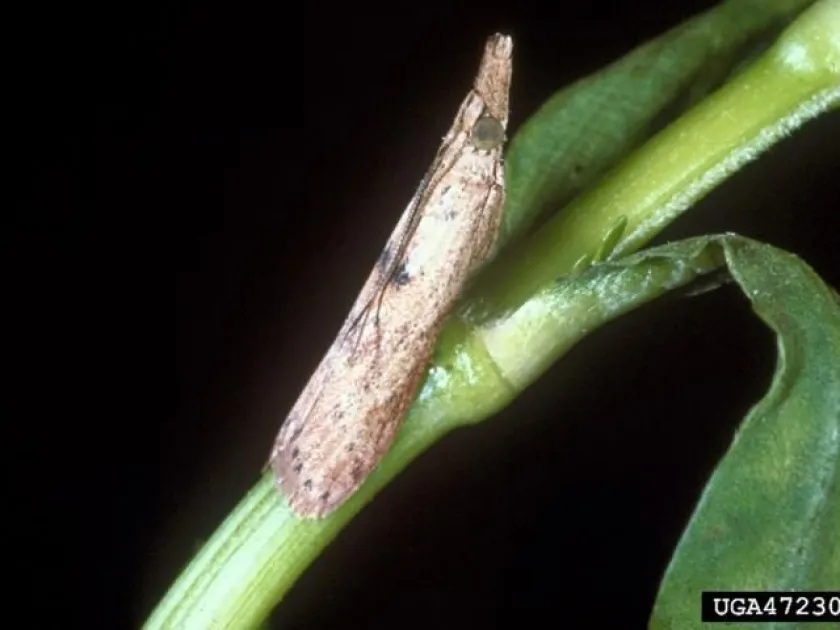
Vogtia malloi is a species of snout moth belonging to the family Pyralidae. The adult moth is a nocturnal insect with cryptic coloration designed to blend perfectly with its aquatic environment.
The larval stage is the primary active agent for plant damage. Larvae are characterized by a cylindrical body and specialized mouthparts adapted for tunneling into aquatic plant tissues.
The life cycle begins with eggs deposited on the surface of the host plant. Upon hatching, the young larvae immediately begin to burrow into the petioles, ensuring protection from environmental hazards.
Pupation occurs within the plant tissue or in the surrounding organic debris. The duration of each developmental stage is strictly regulated by ambient temperature and moisture levels.
This species is highly adapted to the specific ecological niche occupied by its host, making it a specialized insect rather than a generalist pest.
What it damages
The primary host plant for Vogtia malloi is the water hyacinth (Eichhornia crassipes). The insect feeds exclusively on this plant, causing significant structural damage.
Larvae create intricate tunnels within the plant stems and petioles, which severely disrupts the internal nutrient and water transport systems of the host plant.
This internal tunneling leads to widespread tissue necrosis. Furthermore, the damage facilitates the entry of secondary pathogens, which further weaken and accelerate the death of the plant.
In high concentrations, the damage caused by these larvae can significantly reduce the buoyant capacity and overall growth rate of water hyacinth mats.
The pest status of Vogtia malloi is unique, as it is widely regarded as a beneficial agent in biological weed control programs to manage invasive aquatic species.
Control measures
Management strategies focus on the mass rearing and release of Vogtia malloi populations in regions where water hyacinth poses an invasive threat.
Successful control depends on matching the release timing with the peak growth phase of the aquatic weed, ensuring that larvae have an abundant food source.
No chemical pesticides are recommended for this species, as the main goal is to maintain and encourage the presence of these moths to suppress unwanted vegetation naturally.
Monitoring involves inspecting plant stems for entry holes and assessing the presence of larval frass to determine population establishment.
- Strategic release of adults for infestation
- Continuous evaluation of weed density
- Avoidance of broad-spectrum insecticide usage
Taxonomy
- Latin name
- Vogtia malloi
- Order
- Lepidoptera (butterflies)
- Family
- Pyralidae
- EPPO code
- VOGTMA
Discussion
No discussions yet — be the first.