
Vitula
Vitula
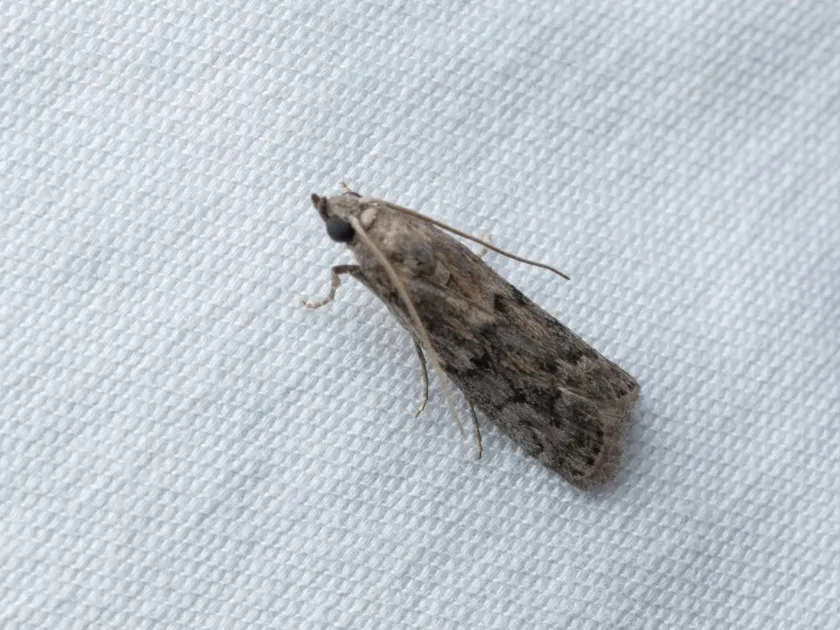
Description
How to identify
The insect Vitula belongs to the family Pyralidae, order Lepidoptera. It is a small moth that shares morphological characteristics with other members of the subfamily Phycitinae.
Adult moths have a wingspan of approximately 20–25 mm. The forewings are typically greyish-brown with indistinct cross-lines that act as camouflage.
Larvae pass through several instars, their color shifting from light beige to dark grey depending on their host plant or stored product.
The larva has a well-developed chewing mouthpart, allowing it to penetrate both plant tissues and processed grains effectively.
Identification of the specific species usually requires microscopic examination of the genitalia, as many pyralid moths look similar to the naked eye.
What it damages
The primary damage is caused by the larvae, which feed on the reproductive parts of plants and various agricultural stored products.
Common targets include flowers, developing fruits, and seeds of various crops, often leading to total loss of the infested part.
In warehouses, larvae can bore into stored grains, dried fruits, and nuts, contaminating the product with webs and frass.
Mass infestations can result in significant yield reductions and predispose the plants to opportunistic fungal infections.
Because the larvae prefer internal or sheltered feeding sites, the damage often remains hidden until it has reached a severe stage.
When it appears
Adult Vitula moths are typically active from late spring until the onset of autumn cooling.
Depending on the climatic conditions and the availability of food sources, the pest may complete one or two generations per year.
Overwintering usually occurs in the pupal or larval stage, protected within silken cocoons in soil or storage crevices.
In greenhouses or climate-controlled warehouses, the pest may continue its development year-round if temperatures remain stable.
Moderate temperatures combined with high humidity are the most favorable conditions for the rapid multiplication of this moth.
Signs of infestation
The earliest signs of infestation include the presence of silk webbing on plant inflorescences or stored commodities.
Accumulations of frass (larval excrement) near the feeding sites serve as a clear indicator of the presence of the pest.
In stored grain, clumping of the product held together by silken threads is a classic diagnostic feature of pyralid activity.
External damage to fruit appears as entry holes or small tunnels, which often become sites for secondary decay and rot.
Wilting of specific twigs or flowering stalks often indicates that larvae are feeding inside and disrupting the plant's vascular system.
Control measures
Effective management begins with robust cultural practices, such as crop rotation and the thorough removal of crop residues.
Storage hygiene is critical; regular cleaning and the maintenance of controlled atmospheres are essential to prevent outbreaks.
Biological control agents, such as formulations of Bacillus thuringiensis, are highly effective when applied against young larvae.
Chemical insecticides should only be used as a last resort, following established economic threshold monitoring.
- Deployment of pheromone traps for population monitoring.
- Fumigation of storage facilities as a preventative measure.
- Mechanical pruning of highly infested shoots to reduce larval load.
Taxonomy
- Latin name
- Vitula
- Order
- Lepidoptera (butterflies)
- Family
- Pyralidae
- EPPO code
- VITUSP
Discussion
No discussions yet — be the first.