
Komodo dragon
Varanus komodoensis
Description
How to identify
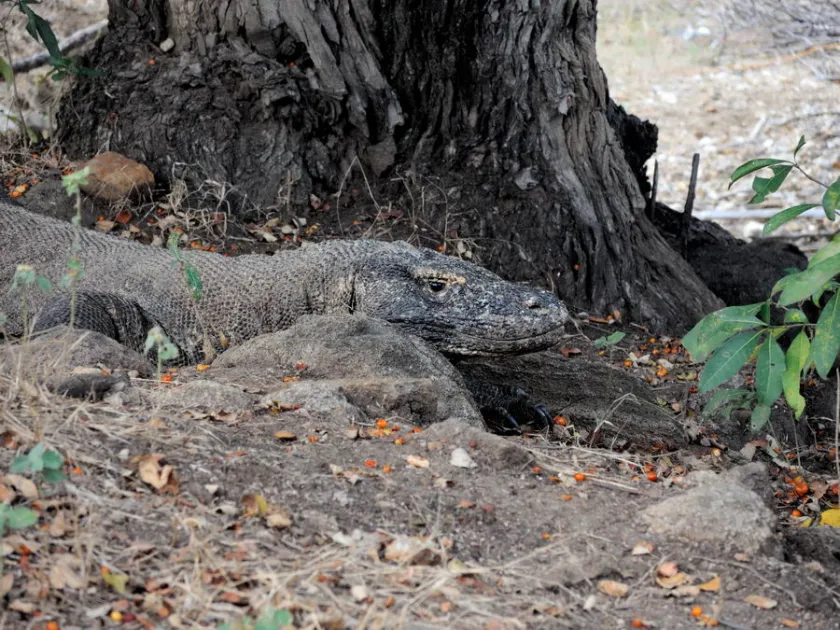
The Komodo dragon (Varanus komodoensis) is the world's largest lizard, belonging to the Varanidae family. Adults can reach lengths of up to 3 meters and weigh over 70 kilograms.
Their bodies are covered with thick, armored scales that provide excellent protection. They possess powerful limbs with sharp, curved claws, enabling them to move across rough terrain effectively.
The skull is elongated, housing massive jaws with serrated teeth designed for tearing flesh. A long, forked tongue is used as a highly sensitive sensory organ to detect chemical signals.
Their skin color is generally a dark, muddy brown or grey, which serves as a camouflage against the volcanic landscapes of their native Indonesian habitats.
As intelligent predators, they exhibit cautious behavior and can adapt their activity levels depending on environmental conditions and human presence.
What it damages
While the Komodo dragon is primarily a carnivore and does not consume crops, it causes mechanical damage to agriculture by trampling plants during its traversal of fields.
The digging of large burrows for shelter or egg-laying disrupts soil structure and can damage the root systems of trees and commercial vegetable crops.
Due to their significant body mass, Komodo dragons can accidentally break structural elements, irrigation pipes, or low-hanging branches in orchards.
Their presence on farmland often attracts secondary pests or scavenging animals, which may further exacerbate damage to the cultivated plants.
In cases of nursery plantations, the sheer activity of these lizards can disturb soil layers, leading to moisture loss and poor development of young plant specimens.
When it appears
Activity is heavily influenced by ambient temperature; dragons are most active during warm, sunny periods when they emerge to bask and regulate their body temperature.
During the breeding season, which occurs in the warmer months, individuals increase their movement patterns, leading to more frequent sightings in agricultural zones.
In drought conditions, Komodo dragons may migrate toward water sources or irrigated agricultural lands, significantly increasing the risk of mechanical damage to fields.
Juveniles are often more elusive and semi-arboreal, while large adults tend to stay near the ground, which affects the type of damage they cause to crops.
Seasonal shifts require farmers to stay vigilant, particularly during the transition between dry and wet seasons when reptile movement is at its peak.
Signs of infestation
The primary indicators of a Komodo dragon's presence include wide, distinct tail-drag marks left in soft soil or muddy paths across the property.
Large, deep entrance holes to burrows, often 50 to 80 centimeters in diameter, indicate that an individual has established a home range nearby.
Finding scat containing bone fragments and hair within or near the fields confirms that the area is being used as a foraging site by these large reptiles.
Scuff marks or claw damage on the trunks of trees or wooden fence posts provide evidence that a dragon has been investigating or scaling obstacles.
Broken perimeter fencing or flattened vegetation paths are common physical clues left behind after these animals pass through cultivated lands.
Control measures
The most effective strategy is to install robust perimeter fencing made of heavy-duty metal mesh, buried at least 50 centimeters deep to prevent tunneling.
Clearing dense scrub and removing debris piles from the perimeter of farmland significantly reduces the attractiveness of the site as a potential hiding spot.
Using non-harmful acoustic or motion-activated devices can help deter lizards from approaching sensitive areas without causing them injury.
If frequent sightings persist, coordination with local environmental agencies is essential for the professional and humane relocation of the animal.
It is vital to prioritize non-lethal management, as the Komodo dragon is a protected species and plays a crucial role in maintaining regional ecosystem health.
Taxonomy
- Latin name
- Varanus komodoensis
- Family
- Varanidae
- EPPO code
- VARNKO
Discussion
No discussions yet — be the first.