
Monitor lizard
Varanus
Description
How to identify
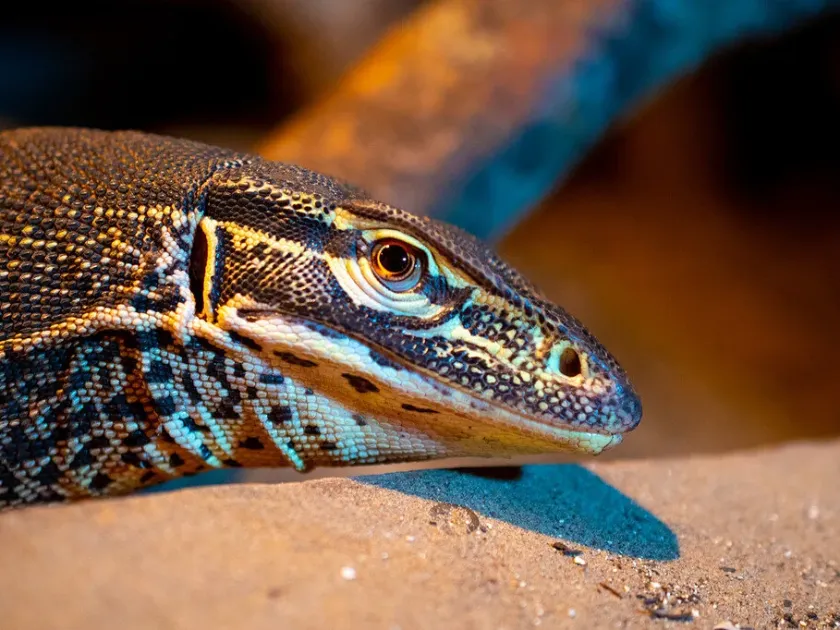
Monitor lizards (genus Varanus) are large carnivorous reptiles that, while not typical crop-eating pests, can pose challenges in agricultural settings. They are characterized by their strong, muscular build, sharp claws, and long, forked tongues used to detect sensory information.
These reptiles are known for their intelligence and agility. Their skin is covered in coarse scales, often with patterns that provide excellent camouflage in grass, shrubs, or near water sources, which are their preferred habitats on farm lands.
Unlike insects, monitor lizards are predators. They do not consume plant material directly; however, their presence on farmland is often due to the availability of rodents, which are attracted to stored grains or crops, thus creating a complex ecosystem interaction.
Monitor lizards can be identified by their distinctive silhouette, often observed basking in the sun during the warmer parts of the day. They have a tendency to flee rapidly when approached, seeking cover in burrows, rock crevices, or thick vegetation.
As ectothermic animals, their activity is strictly regulated by environmental temperatures. Farmers often notice them near irrigation canals or ponds, where the humidity and temperature provide ideal conditions for these reptiles.
What it damages
The damage caused by monitor lizards is primarily mechanical. Due to their significant size, they can trample crops, especially in fields with dense young seedlings, leading to reduced plant density and uneven stands.
They are known to dig burrows for shelter or egg-laying. This digging activity can undermine the soil structure and cause damage to the root systems of perennial plants, fruit trees, or orchards, which can lead to plant stress or death.
Monitor lizards can indirectly harm agriculture by preying on beneficial fauna. By reducing the population of snakes, birds of prey, or other insect-eating creatures, they can disrupt the natural balance that keeps insect pest populations in check.
On farms with livestock, specifically poultry, monitor lizards can cause economic losses by hunting chicks or raiding nests for eggs, necessitating additional security measures for farm buildings and pens.
Their physical presence can also cause disruption to agricultural labor, as workers may be wary of interacting with large reptiles, which can slow down tasks such as manual harvesting or weeding.
When it appears
Monitor lizard activity is highly seasonal and climate-dependent. They are most active during the warmer months when the ambient temperature allows them to reach their optimal physiological performance levels.
During spring and summer, which often coincide with peak crop growth, monitor lizards are frequently seen moving across fields. This is when they are most likely to interact with agricultural structures and crops.
As the weather cools, monitor lizards move into a state of reduced activity or hibernation, sheltering in deep underground burrows. During this time, their impact on agricultural operations is virtually non-existent.
Daily activity cycles are also a key factor. They typically emerge during the early morning and late afternoon to bask and forage, which is exactly when field workers are most active, leading to frequent encounters.
In tropical and subtropical regions, monitor lizards can be active throughout the year, meaning that pest management strategies must be consistently applied rather than seasonal.
Control measures
Physical barriers are the most effective method for controlling monitor lizards in agricultural areas. Installing durable mesh fencing around the perimeter, buried to a depth of at least 30 cm, effectively blocks their entry into sensitive crop areas.
Habitat management is crucial. Removing brush, tall weeds, and debris piles from the edges of fields eliminates the hiding spots and nesting sites that attract these reptiles, making the area less hospitable for them.
While various repellents exist, they are often ineffective for long-term control as monitor lizards quickly become accustomed to non-lethal stimuli. Integrated pest management, focusing on exclusion, remains the industry standard.
In cases where a monitor lizard is causing significant issues, it is recommended to contact local wildlife services for professional, humane trapping and relocation to a non-agricultural environment.
- Secure perimeter fencing
- Clearing weeds and brush near fields
- Habitat modification
- Humane relocation by professionals
Taxonomy
- Latin name
- Varanus
- Family
- Varanidae
- EPPO code
- VARNSP
Discussion
No discussions yet — be the first.