
Uroobovella marginata
Uroobovella marginata
Description
How to identify
Uroobovella marginata is a mite belonging to the Urodinychidae family within the Mesostigmata order. These mites are primarily found in soil, compost, and decaying organic matter, but can become significant pests in horticultural settings.
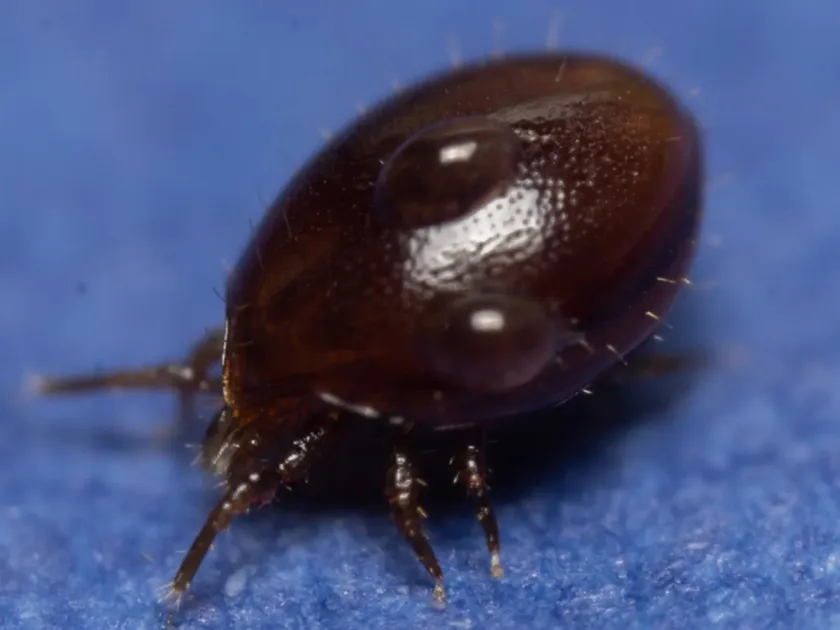
Adult mites have a rounded, sclerotized body protected by a hard shield. Their color ranges from light yellow-brown to dark brown. A distinctive marginal line around the perimeter of the shield is the defining morphological characteristic.
The life cycle encompasses egg, larva, protonymph, deutonymph, and adult stages. They are elusive creatures that prefer high-humidity environments, making them well-suited for greenhouse conditions.
These mites are often associated with insects via phoresy, using them as vehicles for transport across the growing area. This mobility allows them to colonize new plots or pots efficiently.
The population density is heavily influenced by the moisture content of the growing medium. High organic content and consistent humidity provide the best conditions for their survival and multiplication.
What it damages
This mite typically affects vegetable crops and ornamental plants grown in greenhouses. Seedlings and young plants are at the highest risk due to their delicate root systems and stems.
The mites feed on plant tissues, often targeting the root area and the root collar. This feeding behavior disrupts nutrient and water uptake, causing the plant to weaken or exhibit stunted growth.
Damaged tissues often develop necrotic lesions, which serve as entry points for secondary infections such as fungi and bacteria, leading to further root rot and overall plant decay.
Economic losses arise not only from direct plant mortality but also from the overall reduction in crop quality and vigor, which is critical for the commercial success of seedling production.
The impact is most severe when irrigation is managed improperly or when contaminated soil media, rich in organic matter, are used without prior sterilization.
When it appears
Activity is closely tied to humidity levels and temperature conditions. In greenhouse environments where stable conditions are maintained, these mites can reproduce throughout the year.
During the spring, as temperatures rise and irrigation schedules intensify, the mite population typically experiences a significant surge, coinciding with the peak of the seedling season.
Summer months provide the most favorable environment for rapid population growth. Regular irrigation creates the necessary moisture, allowing for frequent generations and high concentrations of mites in the upper soil layers.
In autumn, activity may slightly decline if the growing medium dries out, but in heated facilities, the development process remains constant, leading to year-round pest pressure.
During winter, these mites persist as adults or nymphs within plant debris or cracks in the greenhouse structure, waiting for favorable conditions to resume active feeding and reproduction.
Signs of infestation
The first indicator of an infestation is a general decline in seedling health. Plants may look wilted or lose their turgor pressure despite having adequate soil moisture levels.
Visual inspection of the soil surface may reveal tiny, moving brown dots. A closer look at the base of the plant stem often reveals physical damage to the epidermis where the mite has fed.
Growth retardation is a common symptom. When compared to healthy plants, infested individuals exhibit delayed leaf development and a significantly weaker root system that may appear discolored.
- General wilting despite sufficient watering.
- Presence of tiny brown mites on the soil surface.
- Necrotic lesions at the root collar area.
- Developmental delays in seedling growth.
- Increased incidence of root rot and damping-off diseases.
With the use of a magnifying glass or a hand lens, one can observe aggregations of mites near the base of the stems, where they tend to congregate to escape light and remain in humid microclimates.
Control measures
The most important preventative measure is good horticultural practice. Maintaining proper drainage and avoiding excessive moisture in the growing medium minimizes the habitat available for the mites.
Sterilizing the growing medium through heat treatment or steaming is the most effective way to eliminate eggs and nymphs before planting, ensuring a clean start for the crops.
Biological control, such as the use of predatory mites or entomopathogenic fungi like Beauveria bassiana, can effectively suppress Uroobovella marginata populations without the use of harsh chemicals.
Chemical control should be considered a last resort. If necessary, select acaricides that are approved for greenhouse use and compatible with integrated pest management (IPM) strategies.
Strict sanitation protocols, including the removal of dead plant material and regular disinfection of equipment and greenhouse surfaces, significantly reduce the risk of recurring infestations.
Taxonomy
- Latin name
- Uroobovella marginata
- Order
- Mites
- Family
- Uropodidae
- EPPO code
- UROOMA
Discussion
No discussions yet — be the first.