
Hoopoe
Upupa
Description
How to identify
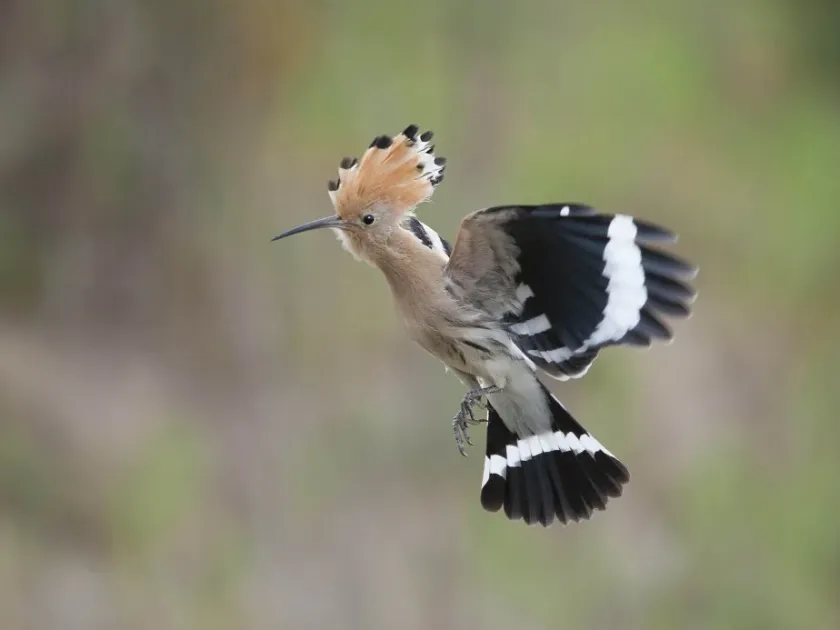
The Hoopoe (Upupa epops) is a distinct bird belonging to the order Coraciiformes and the family Upupidae. It is easily identified by its unique plumage, featuring a sandy-brown body and striking black and white striped wings.
The most iconic feature of the Hoopoe is its large, fan-shaped crest, which it expands when landing or excited. The bird possesses a long, slender, slightly curved bill, specifically adapted for probing into the ground.
Typically measuring about 25–30 centimeters in length, the bird is a frequent visitor to open landscapes, pastures, and garden edges. It moves quickly along the ground, using its bill to extract insect larvae and other invertebrates.
Its flight is notably undulating and slow, resembling the irregular flapping of a large butterfly. This movement, combined with its colorful appearance, makes it relatively easy to spot in an open field or vegetable plot.
From an agronomic perspective, while the Hoopoe acts as a predator of harmful soil insects, its foraging method can become problematic for young, delicate crop plantations.
What it damages
The primary agricultural damage caused by the Hoopoe is mechanical injury to the root systems of young vegetables and seedlings. As the bird probes the soil to find grubs and wireworms, it disrupts the earth around delicate root structures.
In many cases, the bird’s feeding activity leads to the uprooting of young plants, causing them to wither and die rapidly. This is particularly frequent in plots with freshly sprouted bulbs or small-seeded crops.
The Hoopoe also disturbs mulch layers, scattering organic matter in its search for prey. This displacement exposes the soil, leading to increased evaporation and potential root stress for the protected plants.
While the Hoopoe consumes potential pests like lawn grubs, the excessive probing can result in a high density of holes, which creates pathways for further pests or soil pathogens to reach the weakened roots.
In high-intensity farming, where plant spacing is dense, the presence of these birds can cause significant visual and developmental damage to high-value ornamental or edible nursery crops.
When it appears
Hoopoe activity on agricultural land is most pronounced during the spring and summer months, which align with the breeding season and the peak growth phase of many vegetable crops.
In early spring, when the soil is soft after winter rains, the birds are highly active as they seek out larvae that have migrated toward the surface. This period poses the greatest risk for young seedlings.
Throughout the summer, the need to feed developing fledglings increases the frequency of foraging. The birds become more methodical in surveying fields, leading to repeated disturbances of the topsoil.
As autumn approaches, activity declines as the birds migrate to warmer regions, leaving the farmland undisturbed until the next breeding cycle commences.
Monitoring should be most intense during the early morning and late afternoon, as these are the peak hours for their ground-based feeding behavior.
Signs of infestation
The most common sign of Hoopoe presence is the appearance of small, conical probe holes in the soil, typically 5–7 centimeters deep, created by their long, specialized bills.
Visible damage includes dislodged or withered seedlings, with evidence of "digging" around the base of the plant. The soil around the affected areas appears disturbed, often with exposed root segments.
The birds themselves are key indicators; their bright orange-tan color and distinct crest are highly visible against low-growing crops or bare garden beds.
During the mating season, the male’s low-pitched, repetitive "hoop-hoop-hoop" call serves as a strong auditory marker of their presence in the vicinity.
Freshly turned earth patches, accompanied by the sight of a bird walking rapidly while bobbing its head, confirm that the area is being used as a foraging site.
Control measures
To protect vulnerable crops, physical exclusion is the most effective strategy. Installing fine-mesh bird netting over young seedling beds prevents the birds from accessing the ground surface.
Visual deterrents, such as reflective holographic tape, mirrors, or realistic predator decoys (e.g., owls or hawks), can discourage birds from landing in high-risk areas.
A proactive agronomic approach involves managing the population of soil pests like wireworms. By using biological or chemical treatments to reduce the insect food supply, the site becomes less attractive to foraging Hoopoes.
Ultrasonic bird repellents can be deployed to create a nuisance zone that discourages the birds from lingering in specific garden areas without the need for physical barriers.
- Use of garden whirligigs to create noise and motion.
- Application of horticultural fleece or netting to cover vulnerable crops.
- Regular hoeing and soil cultivation to disrupt insect larvae and deter bird interest.
Taxonomy
- Latin name
- Upupa
- Family
- Upupidae
- EPPO code
- UPUPSP
Discussion
No discussions yet — be the first.