
Black stem weevil
Tyloderma nigrum
Description
How to identify
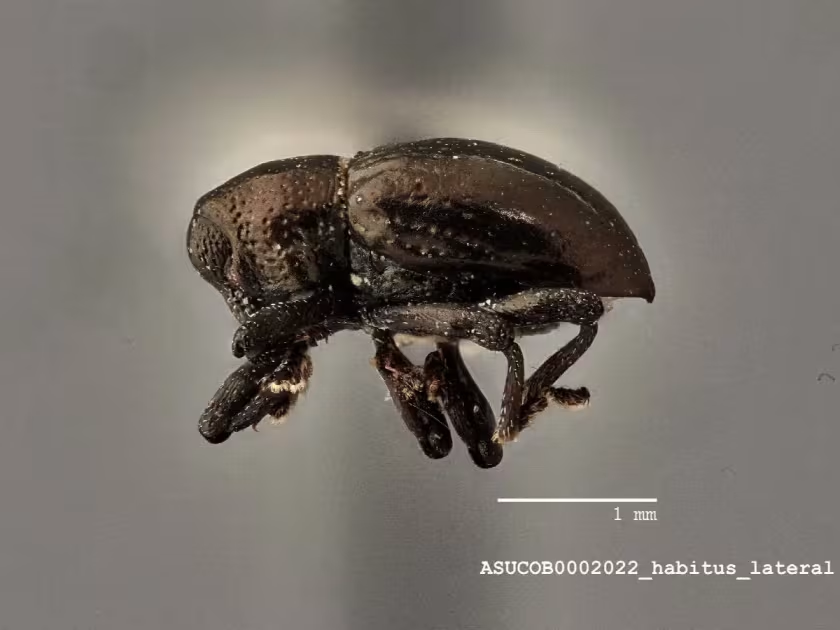
The black stem weevil (Tyloderma nigrum) is a member of the Curculionidae family. It is a small insect characterized by its dark, almost black appearance and the elongated snout typical of weevils.
Adult insects are only a few millimeters long, with bodies often covered in small scales or bristles that provide camouflage on host plant stems.
The larvae are typically legless, white to cream-colored with a darkened head, and are specialized for feeding within the internal tissues of plants.
Pupation occurs within the plant stem inside a specially prepared chamber, where the insect undergoes transformation before emerging as an adult.
Identification is often based on the observation of adult beetles during their mating season or by examining damaged plant tissues for the presence of larvae.
What it damages
The primary damage is caused by larvae that tunnel through the internal tissues of the stem, disrupting nutrient transport and severely weakening the plant structure.
Various crops can be affected, with the most severe damage occurring in younger, more succulent plants that are unable to withstand internal structural degradation.
Adult weevils also contribute to the damage by feeding on the external surfaces of leaves and stems, which creates small lesions and invites opportunistic pathogens.
Heavy infestations can lead to lodging, where the stem breaks under its own weight or due to wind, resulting in significant yield losses for farmers.
In addition to direct physiological damage, the loss of hydraulic conductivity in the stem negatively impacts overall plant vigor and seed development.
When it appears
Adults emerge from hibernation sites in early spring as temperatures rise, beginning their active phase and searching for suitable host plants for oviposition.
Egg-laying is synchronized with the vegetative stage of host plants. Females chew small holes in the stems to deposit eggs, ensuring a protected environment for the developing offspring.
Larval development takes place during the summer, during which time they feed extensively within the stem, causing progressive symptoms of plant decline.
Pupation typically occurs in late summer or early autumn, followed by the emergence of a new generation of adults that feed briefly before preparing for winter.
The insects hibernate as adults, seeking refuge in the soil, among plant debris, or at the base of weeds to survive the cold winter months.
Signs of infestation
The presence of small, precise holes on the stem surface, caused by adult feeding or egg-laying, is one of the earliest signs of an infestation.
Plants often exhibit signs of stress, including premature yellowing of foliage or wilting, particularly during hot periods when water transport is restricted by larval tunneling.
Dissecting the stem reveals internal galleries filled with larval frass, and often the larvae or pupal remnants can be recovered from these tunnels.
Stems may show localized swelling or malformation as the plant attempts to repair the tissue damaged by the internal activity of the larvae.
Increased fragility of the stem is a critical indicator of heavy damage, as the structural integrity of the plant is significantly compromised by the larval galleries.
Control measures
Effective management begins with sanitation, specifically the removal and destruction of crop residues that serve as overwintering sites for the beetle.
Crop rotation is essential to disrupt the life cycle of the weevil, preventing the buildup of pest populations in fields where susceptible crops are grown consecutively.
Systemic insecticides may be used to protect crops during the critical period when adults emerge and before they successfully lay eggs inside the stems.
Managing weed hosts around field margins is a vital cultural practice to minimize the available refugia for the pests during the off-season.
- Deep plowing to bury overwintering adults in the soil.
- Use of pheromone traps for monitoring and population threshold determination.
- Integration of biological controls if available in the specific region.
Taxonomy
- Latin name
- Tyloderma nigrum
- Order
- Coleoptera (beetles)
- Family
- Curculionidae
- EPPO code
- TYLODE
Discussion
No discussions yet — be the first.