
Cabbage curculio
Tyloderma brassicae
Description
How to identify
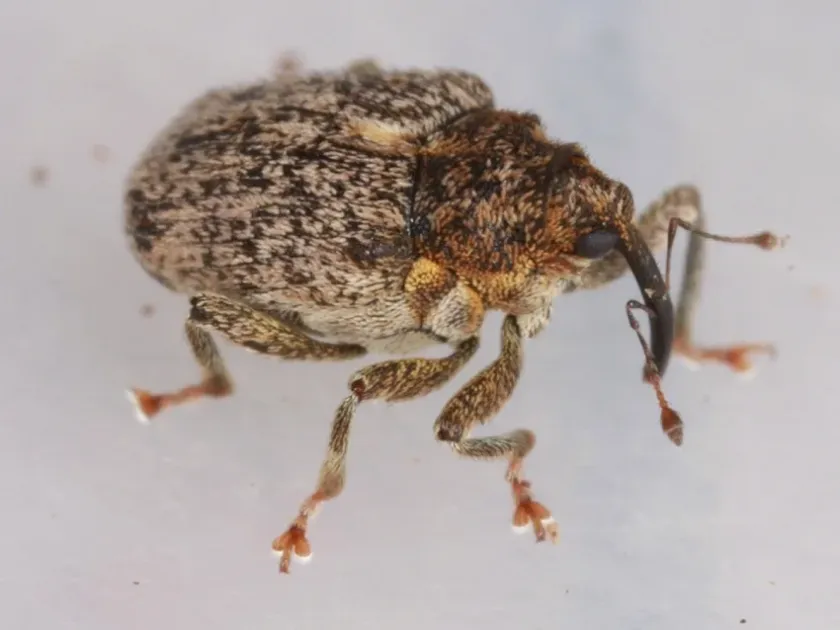
The cabbage curculio, often associated with the Ceutorhynchus species, is a significant beetle pest within the family Curculionidae. These beetles are typically 2.5–3 mm long, characterized by their dark color and elongated, curved snouts used for feeding and egg-laying.
Larvae are legless, grub-like, and cream-colored with a brown head. Because they feed internally within leaf petioles and stems, they remain protected from many environmental factors and predators.
Adult beetles overwinter in the soil or under plant debris. They emerge in early spring as temperatures rise, typically coinciding with the early growth stages of brassica crops in gardens and fields.
Females deposit eggs by chewing small holes into the plant tissue, specifically targeting the leaf stalks. A single female can lay numerous eggs, leading to localized but intense infestations.
The lifecycle includes complete metamorphosis: egg, larva, pupa, and adult. The pupal stage occurs in the soil, where mature larvae migrate after finishing their development within the host plant.
What it damages
This pest primarily attacks members of the Brassicaceae family, including cabbage, cauliflower, broccoli, Brussels sprouts, radish, and turnip. These crops are highly susceptible to larval feeding.
The primary damage is caused by the larvae mining the interior of leaf petioles and stems. This tunneling disrupts nutrient and water transport, causing stunted growth and weakened plant structure.
As larvae feed, they create cavities inside the plant tissues, which often leads to rotting, especially in humid conditions. This decay can facilitate secondary infections by bacteria or fungi.
If the growing point (the central bud) is damaged, the plant may fail to form a head or perish entirely. This results in significant yield reduction and loss of market quality for cabbage producers.
Infested plants show clear signs of distress and reduced vigor, making them unable to compete with weeds or recover from other environmental stresses.
When it appears
Activity begins in early spring, usually as soon as soil temperatures reach 8–10°C. This is a critical time for monitoring early-season transplants that are most vulnerable.
The peak egg-laying period generally occurs in late spring and early summer. Regular field scouting during this time is essential to catch infestations before they cause irreversible damage.
Larval development within the plant lasts for several weeks. Once fully developed, larvae exit the plant tissues and burrow into the soil to pupate during mid-summer.
A new generation of adults emerges in late summer. These beetles feed on available brassica foliage to build energy reserves before finding suitable overwintering sites in the soil.
Timely intervention during the spring planting window is the most effective way to prevent the establishment of a large pest population for the remainder of the season.
Signs of infestation
The first indicator of an infestation is the presence of small, round puncture marks on the leaves, known as "shot-hole" feeding marks made by adult beetles.
Visible scarring or longitudinal dark lines on the petioles suggest internal larval tunneling. As the plant tries to heal, these scars become more prominent.
Plants may show unexplained wilting or drooping despite adequate soil moisture, which often indicates that the internal vascular system has been compromised by larval mining.
Examining the base of the leaves or cutting open a petiole may reveal the larval tunnel and the presence of frass (insect excrement) inside the plant tissue.
- Puncture marks on leaf blades.
- Dark, scarred streaks on leaf stalks.
- Stunted or wilted plant appearance.
- Presence of internal cavities in stems.
Control measures
Crop rotation is the most effective cultural practice. Avoid planting brassicas in the same area for at least three to four years to break the pest's lifecycle.
Fall plowing or deep tilling of the soil after harvest helps expose overwintering pupae and larvae to frost and natural predators, significantly reducing the population for the next season.
Sanitation is vital; remove and destroy all wild mustard and other brassica weeds that act as alternative hosts for the beetle during the off-season.
In cases of severe infestation, targeted application of approved systemic insecticides can provide control by treating the plant tissues where the larvae feed internally.
Using physical barriers like floating row covers or insect netting over young transplants effectively excludes adult beetles and prevents them from laying eggs on the crop.
Taxonomy
- Latin name
- Tyloderma brassicae
- Order
- Coleoptera (beetles)
- Family
- Curculionidae
- EPPO code
- TYLOBR
Discussion
No discussions yet — be the first.