
Tydeus interruptus
Tydeus interruptus
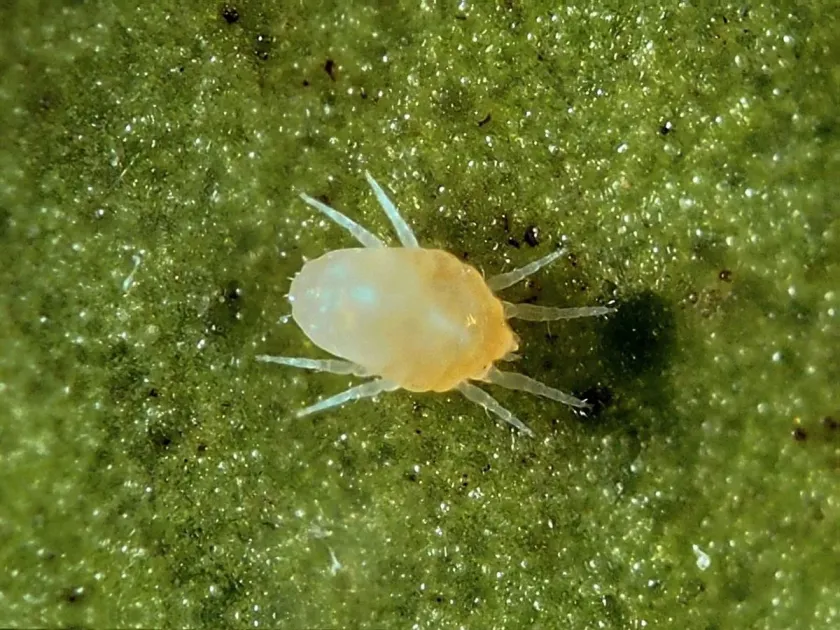
Description
How to identify
Tydeus interruptus is a tiny mite belonging to the family Tydeidae, within the order Trombidiformes. These mites are extremely small, often appearing as microscopic specks that are difficult to identify without proper magnification.
The adult mites typically have elongated, soft bodies that range in color from translucent white to pale yellow or pink. Their cuticular surface features unique microscopic patterns which serve as a primary taxonomic marker for species identification.
These mites are generally secretive, preferring habitats with high humidity. They are most commonly found on the undersides of leaves, especially along the leaf veins where micro-environmental moisture is consistently maintained.
The life cycle proceeds through egg, larva, two nymphal stages (protonymph and deutonymph), and the adult stage. Reproduction is temperature-dependent and can be quite rapid, allowing populations to explode under optimal conditions.
While many members of the Tydeidae family are known to be mycophagous (feeding on fungal spores), Tydeus interruptus is frequently documented in association with damaged plant tissues, acting as a direct pest.
What it damages
Tydeus interruptus infests a wide range of agricultural crops, including various vegetables, fruit trees, and ornamental plants. Greenhouse environments are particularly vulnerable due to their controlled climate, which is highly conducive to mite proliferation.
Damage is primarily caused by piercing the epidermal cells and extracting cellular fluids. This process interferes with the plant’s ability to photosynthesize, leading to reduced metabolic efficiency and overall weakening of the host plant.
Young, succulent foliage is usually the primary target due to higher nutrient availability. Severe infestations often cause premature leaf senescence, leading to yellowing and subsequent drop of foliage.
Beyond direct physical injury, the feeding sites serve as infection courts for secondary pathogens. Bacteria and fungi can easily penetrate the damaged cuticle, causing further disease complications.
In high-intensity greenhouse production, the mites can also infest flowers and flower buds, negatively impacting the marketability and quality of the final harvest.
Signs of infestation
The earliest symptom of an infestation is the appearance of small, pale stippling or spotting on the leaf surface, indicating areas where cells have been emptied of their contents.
As the mite population grows, leaves may exhibit mild distortion or curling at the margins. Affected areas often develop a chlorotic appearance, showing a distinct loss of green pigment compared to healthy leaves.
Close inspection with a hand lens or microscope reveals active movement of the mites. Unlike spider mites, Tydeus interruptus typically does not produce prominent webbing, which can lead to misdiagnosis.
The presence of fine, dust-like residue on the underside of leaves or near veins is a strong indicator of mite activity. This is often accompanied by the accumulation of mite excrement, which can make the leaf surface look dirty.
If left untreated, the cumulative damage results in significant foliage loss, severely hampering the plant’s growth, flowering capacity, and general yield output.
Control measures
Effective management begins with maintaining proper greenhouse humidity levels. Preventing extreme drought conditions or erratic moisture fluctuations helps to suppress rapid population growth.
Chemical control involving acaricides is often necessary when populations reach economic threshold levels. Rotating different classes of chemicals is crucial to prevent the development of mite resistance.
Biological control is a highly recommended strategy, utilizing predatory mites such as Phytoseiulus persimilis or other phytoseiid species to naturally regulate the population of Tydeidae mites.
Sanitation practices are essential for long-term management. Removing crop debris and controlling weeds in and around the growing area effectively eliminates hidden reservoirs for the mites during the off-season.
Regular monitoring with sticky traps and systematic leaf inspection is vital for early detection. Detecting a localized outbreak allows for spot-treatment, which minimizes the need for widespread pesticide application.
Taxonomy
- Latin name
- Tydeus interruptus
- Order
- Mites
- Family
- Tydeidae
- EPPO code
- TYDSIN
Discussion
No discussions yet — be the first.