
Five-spotted weevil
Tychius quinquepunctatus
Description
How to identify
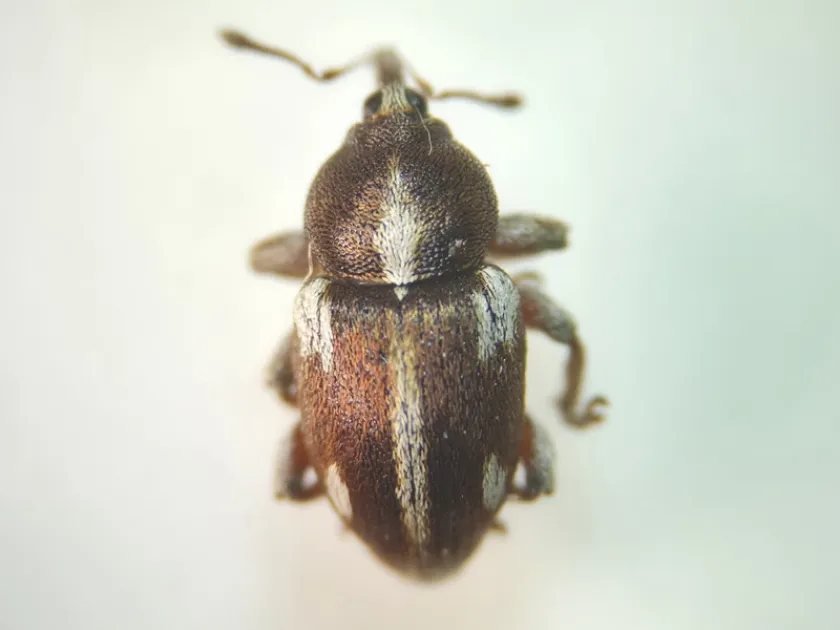
The five-spotted weevil (Tychius quinquepunctatus) is a beetle species belonging to the Curculionidae family. Adult beetles typically measure 3–4 mm in length and exhibit an oval body shape, which is characteristic of the genus Tychius.
The coloration of the insect ranges from grey to brownish-grey, with the body densely covered in scales. The species is named after the five distinct light-colored spots located on the elytra and pronotum, providing a reliable diagnostic feature for field identification.
The rostrum is of moderate length and slightly curved, which is a standard trait for these weevils. The antennae are elbowed and clubbed, located at the anterior part of the snout, serving as a critical morphological indicator during entomological examinations.
Larvae are legless, white, and have a dark head capsule, typical of weevil larvae. They develop internally within the host plant's seeds, making them difficult to detect without opening the pods during the growing season.
The biological cycle of this pest is highly synchronized with the phenology of leguminous plants. Its ability to utilize wild legumes as alternative hosts ensures the survival and presence of the population even in years with lower industrial crop production.
What it damages
The primary hosts for the five-spotted weevil include legumes, with chickpeas being a particularly preferred crop. Both adults and larvae contribute to significant yield loss through feeding on the reproductive parts of the plants.
Adult beetles cause damage to flower buds and blossoms, which often leads to abscission and a decrease in the number of formed pods. This initial damage significantly lowers the yield potential before the seeds even begin to mature.
The larvae hatch inside the pods and feed directly on the developing seeds. Each larva consumes the content of a seed, leaving only a hollow shell, which drastically reduces both the marketable quantity and the planting quality of the harvest.
In addition to direct loss of seed biomass, the feeding activity promotes secondary damage. The physical injuries inflicted on the pods and seeds can serve as entry points for pathogenic fungi, further reducing the overall quality of the grain.
Economic impact is most pronounced during years of high population density. If control measures are not implemented during the critical phases of crop development, the damage to grain quality can result in a significant loss of profitability for farmers.
When it appears
Adult weevils overwinter in the soil or under plant debris in or near fields. As temperatures rise in the spring, the beetles emerge and begin searching for suitable host plants to feed on, mate, and start the next generation.
The emergence period typically coincides with the budding and early flowering phases of legume crops. During this time, the weevils are highly active, feeding on foliage and floral parts, which makes it the optimal window for scouting and population monitoring.
Females lay eggs by boring holes in young pods and placing the eggs directly onto the developing seeds. This transition from external feeding to internal development marks a critical point in the pest's lifecycle, after which they are protected from many contact insecticides.
Larval development occurs throughout the ripening period of the pods. New generation adults emerge by late summer, often remaining in the field or soil before entering diapause to survive the coming winter months.
Climatic factors such as temperature and humidity significantly influence the speed of development. Monitoring the timing of bud formation and the first signs of adult activity is essential for timely intervention and crop protection.
Signs of infestation
Initial signs of infestation appear as tiny, shallow puncture wounds on the surfaces of young pods. These are the oviposition sites made by female weevils, which may sometimes show signs of localized tissue necrosis around the entry point.
As the larvae develop internally, the exterior of the pod may appear largely undamaged until the late stages. However, upon inspection, the seeds will show significant hollowing or total consumption, leaving behind a lightweight, malformed remnant.
Small, perfectly round emergence holes on the surface of mature or harvested pods are clear indicators that the infestation has reached completion and the next generation of weevils has exited the seed.
Increased flower and bud drop is a frequent indirect symptom of high weevil presence on the field. While these symptoms can be caused by other factors, consistent observation of beetles on the blossoms should trigger further investigation.
- Visual presence of beetles on plant flowers.
- Small puncture marks on the exterior of developing pods.
- Hollowed-out or consumed seeds inside the pods.
- Small round exit holes on mature, harvested pods.
- Reduced germination rates and seed quality during analysis.
Control measures
Effective management begins with robust crop rotation practices. Avoiding the cultivation of susceptible legumes on the same field for consecutive years is crucial to break the cycle of the five-spotted weevil population.
Mechanical control through deep fall plowing is highly effective in burying overwintering weevils and plant debris, which significantly reduces the survival rate of the pest population before the spring emergence.
Chemical control should be strategically timed to the budding phase. Applying systemic or contact-stomach insecticides before the females lay eggs is essential to prevent internal infestations that are impossible to treat once the larvae are inside the pods.
Sourcing clean, certified, and pest-free seeds is a fundamental preventative measure. This prevents the introduction of the pest into clean fields and helps ensure a strong, healthy start for the crop.
Integrating cultural practices like timely sowing and balanced fertilization helps the crop reach maturity faster and maintain vigor, making it more resilient to potential pest damage and ensuring higher yields.
Taxonomy
- Latin name
- Tychius quinquepunctatus
- Order
- Coleoptera (beetles)
- Family
- Curculionidae
- EPPO code
- TYCHQU
Discussion
No discussions yet — be the first.