
Clover seed weevil
Tychius flavus
Description
How to identify
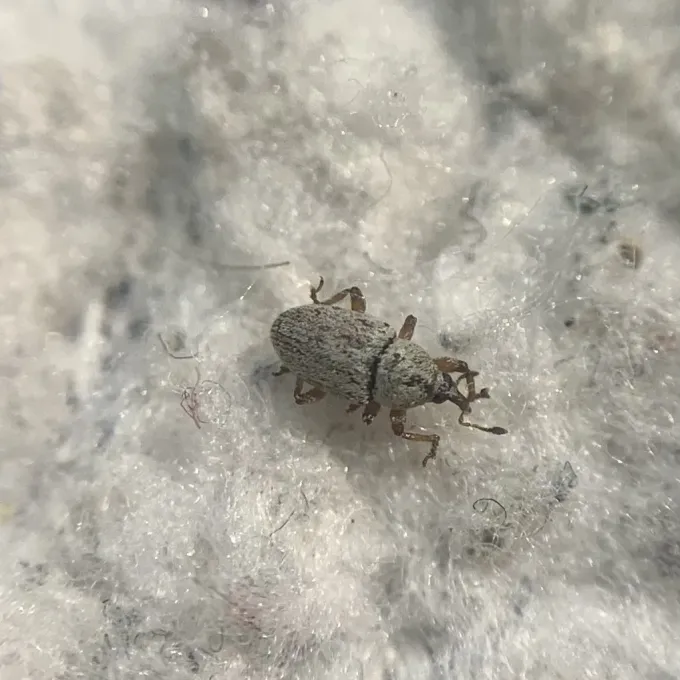
The clover seed weevil (Tychius flavus) is a small beetle belonging to the Curculionidae family, which is a notorious pest of legume seed crops.
Adult beetles typically reach 2–3 mm in length and possess a characteristic elongated rostrum (snout) used for feeding and depositing eggs within the flower ovaries.
The body is covered with dense yellowish-grey scales, providing excellent camouflage against the backdrop of clover foliage and flower heads.
Larvae are legless, C-shaped, and creamy-white with dark heads, adapted for a life cycle entirely contained within the developing seed pods.
Proper identification of Tychius flavus is essential for timely management, usually involving sweep-net sampling during the pre-blooming stage of the clover.
What it damages
This species primarily targets clover crops, specifically the red clover (Trifolium pratense), causing direct damage to the reproductive organs.
The larvae feed on developing seeds inside the pods, effectively hollowing them out and leaving behind only the outer shell, which destroys the plant's yield potential.
Adult beetles also inflict damage by feeding on leaves and flower buds, although this impact is generally secondary compared to the larval destruction of seeds.
Heavy infestations can lead to a drastic reduction in seed viability, purity, and overall harvest quantity, causing significant economic losses for seed growers.
Furthermore, larval feeding holes create entry points for secondary pathogens and fungi, which can degrade the quality of any remaining seeds in the pod.
When it appears
Adults emerge from their overwintering sites in the soil when spring temperatures reach 10–12°C, usually beginning their activity in early spring.
The peak period of activity coincides with the clover budding and early flowering stages, during which females lay eggs directly into the ovaries.
There is typically one generation per year, making the timing of intervention critical, as the larval phase is protected inside the pod.
By late summer, mature larvae drop to the ground to pupate in the soil, where the next generation of adults remains in diapause throughout the winter.
Hot and dry summer conditions are known to favor the development and survival of Tychius flavus, often resulting in higher infestation rates.
Signs of infestation
Early symptoms include small circular feeding punctures on the foliage and the presence of adult beetles on the clover heads during spring.
A key indicator of an infestation is the presence of small exit holes in the seed pods, which larvae create before migrating to the soil to pupate.
- Examination of flower heads revealing shriveled or discolored buds.
- Internal inspection of pods showing larvae or debris of consumed seeds.
- Decreased germination rates when testing harvested seed samples.
In fields with high population density, one might observe premature flower senescence and a patchy appearance in seed production across the plot.
Checking the pods for larval excrement is a definitive method to confirm the presence of this pest during the mid-season growth period.
Control measures
Implementing a strict crop rotation strategy is vital, as it helps break the pest life cycle by creating physical distance from previous year's clover fields.
Early harvesting of the clover crop can prevent a significant portion of the larval population from completing their development and entering the soil.
Deep plowing (tillage) after harvesting is an effective cultural practice that buries and destroys overwintering sites for the beetle pupae.
Chemical control should focus on the pre-flowering stage, applying systemic or contact insecticides when adult populations exceed the economic threshold.
It is crucial to avoid applying insecticides during full bloom to protect essential pollinators, as this is a period where cultural and non-toxic methods should be prioritized.
Taxonomy
- Latin name
- Tychius flavus
- Order
- Coleoptera (beetles)
- Family
- Curculionidae
- EPPO code
- TYCHFL
Discussion
No discussions yet — be the first.