
Tychius
Tychius
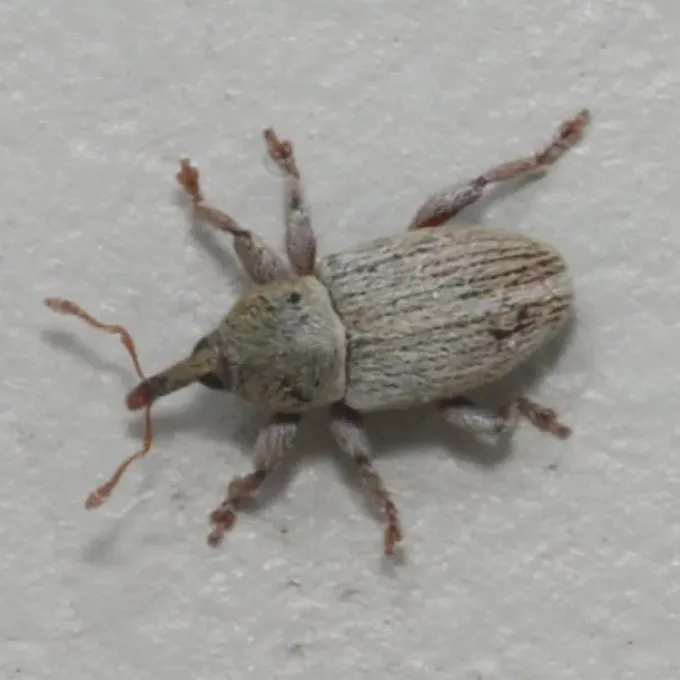
Description
How to identify
Tychius is a genus of seed-feeding weevils belonging to the family Curculionidae. These beetles are relatively small, typically measuring between 2 and 4 mm in length.
Their bodies are often covered in dense scales, which give them a varied appearance ranging from grey to brownish-yellow, helping them blend into the foliage.
The rostrum, or snout, is long and slender, a diagnostic feature of this genus, allowing them to pierce plant tissues for feeding and oviposition.
The larvae are typically C-shaped, legless, and cream-colored with a distinct head capsule, residing entirely within the seed pods of host plants.
Taxonomically, these insects are part of the Coleoptera order, and accurate species identification often requires microscopic examination of the male genitalia.
What it damages
Tychius weevils are specialized pests primarily impacting leguminous crops such as clover, alfalfa, and vetch, causing significant agricultural losses.
The larvae represent the most destructive stage, as they develop inside the seed pods, feeding on and destroying the developing seeds.
This feeding behavior leads to substantial reductions in seed yield and overall crop quality, which is particularly devastating for seed production farms.
In addition to direct seed loss, the physical damage created by larval feeding provides entry points for various fungal infections and pathogens.
High infestation rates can result in yield losses exceeding 40%, making this pest a priority for monitoring in regions with large legume acreages.
When it appears
Tychius weevils overwinter as adults, finding shelter in the soil or within decaying plant debris left on the field from the previous season.
Adult emergence occurs in the spring, typically when soil temperatures reach favorable levels, leading to migration towards host plants.
The most active period for adults is during the host plant's budding and flowering stages, which coincides with the time they lay eggs into the developing pods.
Larval development takes place throughout the spring and early summer, as the larvae consume the seeds from the inside out until they mature.
Once mature, the larvae exit the pod to pupate in the soil, with a new generation of adults emerging later in the season to continue the life cycle.
Signs of infestation
Early symptoms of an infestation include the appearance of tiny, round feeding holes on the leaves, created by overwintered adults.
A closer inspection of the flower heads might reveal stunted development, early wilting of buds, or deformed pods that fail to fill properly.
The presence of circular exit holes on seed pods is a clear indication that the larvae have completed their development and vacated the seed.
In seed-producing fields, uneven ripening and prematurely yellowing pods often signal that the seed crop is being compromised by the larvae.
Sweep netting in the morning is the most reliable method for detecting adult beetle activity before they transition to the reproductive stages of the plants.
Control measures
Effective management begins with cultural practices, such as deep autumn plowing, which disrupts the overwintering sites of the adult weevils.
Crop rotation and maintaining distance between new legume plantings and established fields help minimize the migration of the pest into vulnerable crops.
Early harvesting or mowing of the forage crop before the larvae can complete their development is a successful strategy to reduce local populations.
Chemical control is feasible using systemic or contact insecticides, applied strictly during the budding phase to target adults before egg-laying occurs.
Integrated Pest Management (IPM) focuses on monitoring thresholds and utilizing selective insecticides to protect natural beneficial insects that keep populations in check.
Taxonomy
- Latin name
- Tychius
- Order
- Coleoptera (beetles)
- Family
- Curculionidae
- EPPO code
- TYCHSP
Discussion
No discussions yet — be the first.