
Treeshrew
Tupaia
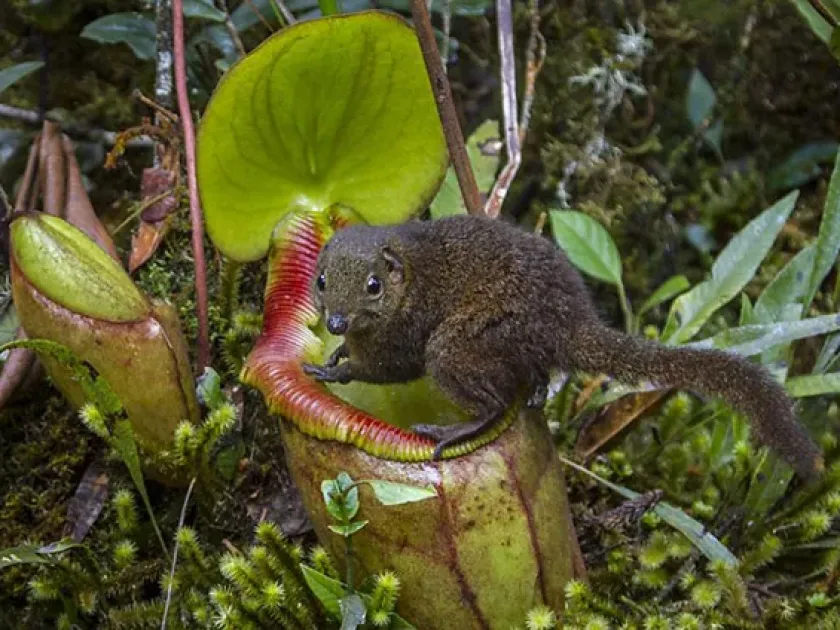
Description
How to identify
Treeshrews (Tupaia) are small mammals belonging to the order Scandentia and the family Tupaiidae. They are physically characterized by a pointed snout, bushy tails, and dexterous claws suited for climbing.
Although they are often compared to squirrels, they are taxonomically distinct and have a broader, omnivorous diet that often includes agricultural produce when natural sources are scarce.
Their biological behavior is defined by high energy levels and rapid agility, allowing them to traverse canopy layers with ease, making manual observation difficult.
They are primarily diurnal, meaning they forage during the day, which exposes them to predators but also maximizes their efficiency in finding ripening fruit.
Understanding their social behavior and territorial patterns is essential for any farm manager dealing with high population densities in tropical regions.
What it damages
Treeshrews pose a significant threat to cocoa, coffee, oil palm, and fruit plantations by feeding on ripening fruits and seeds, which directly reduces yield.
Beyond direct consumption, their habit of gnawing on tender shoots can cause physical stress to the plant, potentially leading to stunted growth.
Their feeding activity often leaves fruit vulnerable to secondary infections, facilitating the entry of fungi and bacteria that cause rot and crop spoilage.
In high-density areas, treeshrews can cause substantial economic loss, particularly in smallholder farms located near tropical forest fringes.
The cumulative damage includes not just the loss of yield but also the degradation of tree health due to repeated bark damage during their movement.
Signs of infestation
Distinctive bite marks on ripening fruit, characterized by precise removal of the pulp, are the most prominent sign of a treeshrew infestation.
Accumulated debris such as fruit peels and seed husks scattered on the ground beneath the trees points to active foraging sites.
Frequent movement within the canopy during early morning hours and distinct chirping or squeaking vocalizations often reveal their presence in a specific sector.
Scratch marks on the bark of younger trees, indicating repeated travel paths, serve as an indicator of the animals' long-term usage of the area.
Observation of fecal matter around feeding grounds or nesting sites in hollow trees further confirms their active status within the crop plantation.
Control measures
Physical exclusion remains the most reliable strategy; fitting metal or plastic bands around tree trunks effectively prevents them from climbing.
Clearing the undergrowth and maintaining a clean orchard floor reduces the attraction for treeshrews to forage in the vicinity of high-value trees.
Protective netting over the canopy of particularly valuable trees can prevent access to ripening fruits during the peak harvesting season.
While deterrents can be used, rotation of methods is necessary to prevent the animals from becoming habituated to static alarms or noise devices.
- Installing anti-climbing collars on tree trunks.
- Sanitation programs to remove fallen fruit from the orchard.
- Canopy netting for high-value cultivars.
- Biological control by encouraging predatory birds.
Taxonomy
- Latin name
- Tupaia
- Family
- Tupaiidae
- EPPO code
- TUPASP
Discussion
No discussions yet — be the first.