
Poplar bark beetle
Trypophloeus populi
Description
How to identify
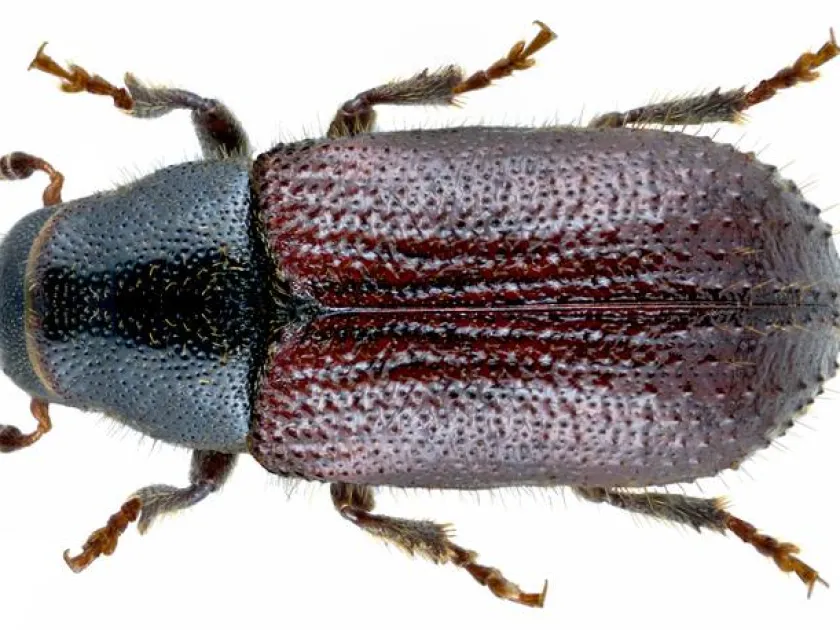
The Poplar bark beetle (Trypophloeus populi) is a small wood-boring insect belonging to the Curculionidae family, subfamily Scolytinae. Adult beetles are typically 1.5 to 2.0 mm long, featuring a cylindrical, dark brown to black body structure.
Larvae are legless, white or cream-colored grubs with a curved body shape and a hardened head capsule. They are exclusively found under the bark of their host plants, completing their developmental stages within the inner bark tissues.
This species is notoriously difficult to identify in the early stages due to its cryptic behavior. Identification usually requires examining the specific gallery patterns etched into the sapwood and the inner bark layer.
The life cycle is closely tied to the physiological state of the host tree. They favor trees that have been weakened by environmental stressors like drought, frost, or physical trauma.
It is widely distributed across Eurasia, where various species of the Populus genus provide a suitable habitat. Their population density can fluctuate significantly depending on forest conditions.
What it damages
This beetle primarily targets poplar species (e.g., Populus nigra, Populus alba) and aspens. The damage is most severe in young, stressed, or poorly managed stands, as well as in mature trees experiencing decline.
Adult beetles and larvae feed on the cambium and phloem. This feeding activity disrupts the flow of nutrients and water within the tree, causing systemic stress that leads to foliage yellowing and crown thinning.
Feeding galleries weaken the structural integrity of the bark. Furthermore, these sites act as entry points for secondary pathogens, including various fungal infections that cause bark necrosis and canker diseases.
Heavy infestations often result in the rapid drying of branches or the death of the entire tree. This poses a significant challenge in urban forestry, parks, and large-scale forest plantations.
Beyond tree death, the presence of these beetles reduces the timber quality and aesthetic value of the trees. Once a tree is colonized, it becomes a reservoir for future infestations in the vicinity.
Signs of infestation
The presence of the pest is indicated by small, circular entrance holes on the bark surface. These holes are often accompanied by reddish-brown boring dust (frass) accumulating in bark crevices.
Foliage symptoms include premature wilting, chlorosis, and the shedding of leaves before the season ends. In some cases, the bark might show localized swelling or vertical fissures as the tree attempts to seal the wounds.
When the bark is peeled back, distinct gallery patterns are visible. The maternal gallery usually runs perpendicular to the bark grain, with larval galleries branching off and expanding outward.
Sap exudation (bleeding) from the bark surface can occur in early stages of infestation. As the galleries expand, the affected bark patches lose their adherence to the underlying wood, becoming brittle.
The exit holes of the new generation of beetles signify the completion of the insect's development cycle, at which point the infestation has likely spread to neighboring susceptible trees.
Control measures
Sanitation is the most effective management strategy. This involves the systematic removal and destruction of infested trees or branches before the new generation of beetles emerges and spreads to healthy trees.
Promoting tree vigor through proper silvicultural practices, such as adequate irrigation during dry spells and appropriate fertilization, helps trees maintain their natural defenses against beetle colonization.
Chemical control, while difficult due to the insect's protected location under the bark, can be utilized during the short adult flight period. Treatments must be timed precisely with monitoring data to be effective.
Reducing the availability of breeding material is critical. Any logs or woody debris from pruning should be promptly cleared, chipped, or burned to prevent the buildup of local beetle populations.
- Monitor tree health regularly, focusing on signs of bark stress.
- Promptly remove infested woody material to break the pest cycle.
- Encourage biodiversity in plantations to create a more resilient ecosystem.
- Use pheromone-baited traps for population surveillance.
Taxonomy
- Latin name
- Trypophloeus populi
- Order
- Coleoptera (beetles)
- Family
- Curculionidae
- EPPO code
- CRYHPO
Discussion
No discussions yet — be the first.