
Trypophloeus
Trypophloeus
Description
How to identify
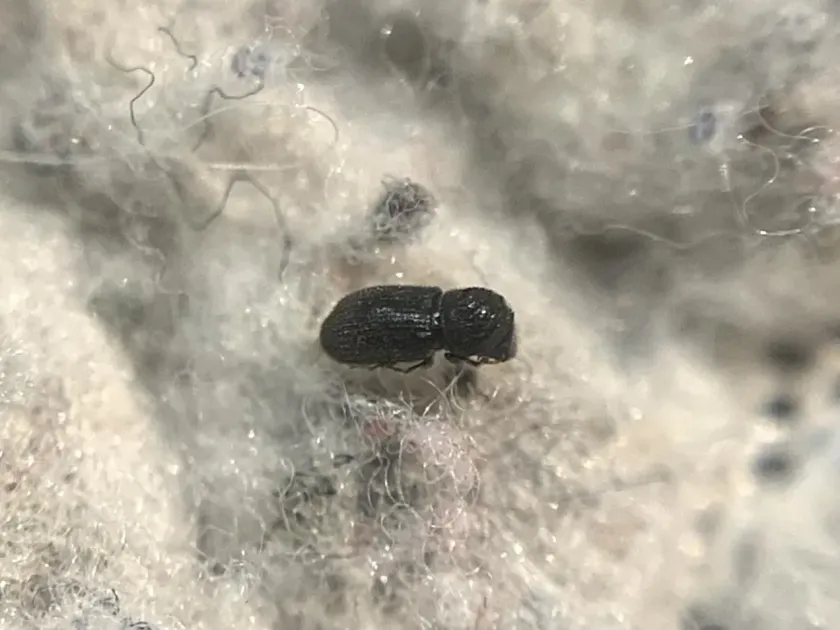
Trypophloeus is a genus of small bark beetles within the family Curculionidae and subfamily Scolytinae. These insects typically measure between 1.5 and 2.5 mm in length and possess a cylindrical body shape, often dark brown or black in color.
The morphology of these beetles is adapted for life under the bark of specific host trees. Unlike many other bark beetle genera, Trypophloeus species often lack pronounced longitudinal striations on their elytra, which is a key trait for accurate taxonomic identification.
The larvae are typically legless, cream-colored, and spend their entire developmental period feeding within the inner bark, specifically targeting the cambium layer. This hidden development makes early detection extremely challenging for foresters.
Adult beetles create entrance holes in the bark to initiate gallery formation. The patterns of these galleries are often characteristic of the specific species within the genus and can be used for diagnostic purposes during forest pathology surveys.
Due to their microscopic size and cryptic behavior, specialized equipment such as magnifiers and taxonomic keys are required to differentiate Trypophloeus from other common bark beetle pests found in similar environments.
What it damages
Trypophloeus primarily targets trees within the Salicaceae family, such as aspen, poplar, and willow. They are significant pests in both natural forests and commercial plantations where these species are cultivated for timber or pulp.
The feeding activity of the larvae disrupts the tree's vascular system, specifically the cambium and phloem. This damage impedes the transport of nutrients and water, eventually causing the tree to suffer from physiological stress and decline.
Trees that are already under stress due to drought, pollution, or poor soil conditions are particularly susceptible. However, high-density populations of the beetle can successfully attack and kill otherwise healthy trees.
Secondary colonization by fungal pathogens is a common consequence of bark beetle infestation. As the tree's defenses are breached, fungi enter the wood, accelerating decay and reducing the overall structural integrity of the timber.
The economic impact is significant, leading to reduced growth rates, degraded wood quality, and, in severe infestations, total tree mortality requiring premature harvest and site clearance.
When it appears
The activity period for Trypophloeus typically begins in the spring, once temperatures are consistently warm enough for flight, usually starting in late April or May depending on the local climate.
During the summer months, adult beetles actively seek out new host trees to mate and lay eggs. This is the period of peak infestation, as the beetles colonize new bark surfaces to establish their reproductive galleries.
Development from egg to adult usually takes one full season, with larvae often overwintering under the bark. The protection provided by the tree's outer bark layers allows them to survive harsh winter conditions successfully.
Field monitoring should be prioritized during the flight phase, which is generally concentrated in the late spring and early summer, to capture the timing for potential intervention strategies.
Climate factors significantly influence the life cycle. In warmer regions, there may be overlaps or second generations that extend the window of risk for the trees throughout the summer season.
Signs of infestation
The most visible sign of an infestation is the presence of small entrance holes on the bark surface. These are often accompanied by frass (fine wood dust) expelled by the beetles as they carve their galleries.
Visible changes in the canopy include yellowing leaves, early senescence, or the dieback of individual branches. These symptoms are clear indicators of systemic stress and vascular damage within the trunk.
Bark abnormalities, such as localized swelling or staining, may occur at the points of beetle entry. In some species, such as poplars, this is sometimes accompanied by sap or resin flow as a defensive response.
In advanced stages of infestation, the bark may begin to peel away from the wood. This stage indicates severe damage, and the cambium underneath will often appear discolored or necrotic due to larval feeding.
A simple test for infestation involves peeling back a small, non-critical section of bark. If galleries are found filled with wood dust and larvae, the tree is confirmed to be under active colonization.
Control measures
Sanitation cutting is the primary management strategy. Removing and destroying infested trees before the next generation of beetles emerges is crucial to containing the population spread within a stand.
Integrated Pest Management (IPM) protocols should include regular forest health inspections. Early detection allows for more diverse options, including biological controls and targeted insecticide applications.
Contact insecticides applied to the bark can be effective if timed perfectly with the adult flight period. However, this method is labor-intensive and is usually reserved for high-value ornamental trees or nursery stock.
Pheromone traps are useful for monitoring population densities and detecting the presence of Trypophloeus in an area before symptoms become visible in the canopy.
Long-term prevention relies on silvicultural practices that promote tree vigor. Ensuring proper water availability, soil nutrient management, and minimizing site disturbance are essential for preventing bark beetle outbreaks.
Taxonomy
- Latin name
- Trypophloeus
- Order
- Coleoptera (beetles)
- Family
- Curculionidae
- EPPO code
- TRYOSP
Discussion
No discussions yet — be the first.