
Trypodendron
Trypodendron
Description
How to identify
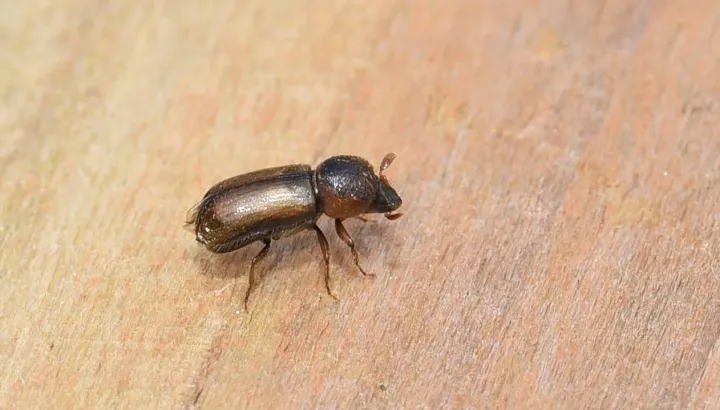
Trypodendron is a genus of beetles belonging to the Curculionidae family, subfamily Scolytinae. These small beetles, typically 3 to 4 millimeters in length, possess a characteristic cylindrical body shape and a dark brown or black coloration.
These insects are classified as ambrosia beetles, a specialized group of wood-boring insects. Unlike true bark beetles, they do not feed on the wood itself, but instead cultivate symbiotic fungi within their galleries, which serves as the primary food source for both larvae and adults.
What it damages
This pest primarily infests coniferous tree species, including spruce, fir, pine, and larch. While less common, they can also be found on broadleaf species such as birch or alder, particularly when the trees are weakened or stressed.
The damage is mostly inflicted upon freshly cut timber, dead wood, or fallen trunks. During periods of high population density, these beetles may attack physiologically weakened standing trees, contributing significantly to their decline and eventual death.
When it appears
The flight period of the adult beetles typically begins in early spring when air temperatures reach 10–12 degrees Celsius. Depending on the geographical region, this usually occurs between April and May.
The complete development cycle from egg to adult takes approximately 6 to 8 weeks. Under favorable conditions, the species typically produces one generation per year, although in warmer climates, a second partial generation may occur.
Signs of infestation
The primary indicator of a Trypodendron infestation is the presence of small entrance holes in the bark, surrounded by piles of light-colored wood flour. This distinguishes them from other bark beetles, which typically produce dark, bark-mixed frass.
Inside the tree trunk, the beetles construct a complex system of radial galleries that penetrate deep into the sapwood and heartwood. The walls of these tunnels turn black over time due to the growth of symbiotic fungi, resulting in distinctive dark staining known as wormholes in timber.
Control measures
The most effective management strategy is the timely removal and processing of harvested timber from the forest before the mass flight period begins. Logs left in the forest during the summer months are at a very high risk of colonization.
Preventive measures include the use of trap trees, which are set out before the flight season to distract the population. Furthermore, protective treatments using contact insecticides can be applied to log stacks to prevent successful colonization by the beetles.
Taxonomy
- Latin name
- Trypodendron
- Order
- Coleoptera (beetles)
- Family
- Curculionidae
- EPPO code
- TRYDSP
Discussion
No discussions yet — be the first.