
Truncatella subcylindrica
Truncatella subcylindrica
Description
How to identify
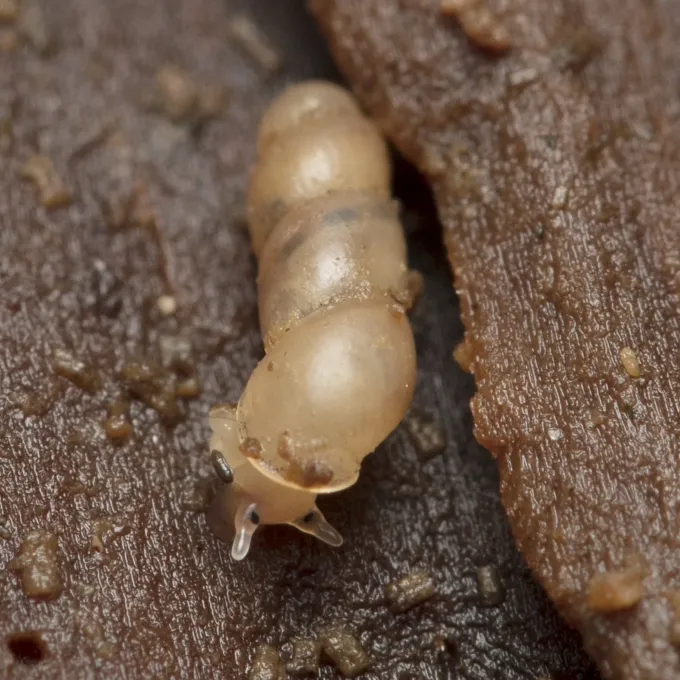
Truncatella subcylindrica belongs to the phylum Mollusca, class Gastropoda, and family Truncatellidae. It is a small land (often semi-aquatic) snail characterized by an elongated, cylindrical shell.
Adult specimens are identified by the specific structure of the shell aperture, which serves as a key diagnostic feature for the species. The shell length typically ranges from 5 to 7 millimeters.
The body of the snail displays a light gray or yellowish hue, allowing it to camouflage effectively within coastal vegetation or moist leaf litter.
The shell possesses a distinct sculpture featuring fine ribs across all whorls, providing it with a unique appearance compared to other small terrestrial snails.
An important identification trait is their capability to adapt to varying salinity levels, which frequently dictates their distribution along coastal and brackish zones.
What it damages
This mollusk species is most commonly found in coastal areas, where it may damage halophytic plants or crops cultivated near brackish water bodies.
In high-humidity environments, they may migrate to cultivated plants, damaging young shoots, leaves, and seedlings by leaving characteristic pitted or perforated injuries.
The primary damage involves the consumption of leaf epidermis, which weakens the plant's immune system and facilitates the entry of fungal infections and bacterial diseases.
Maximum damage is recorded in greenhouses and nurseries situated in low-lying areas with poor drainage, which provide ideal conditions for population proliferation.
Beyond direct consumption, the snails contaminate plant surfaces with mucus and waste products, reducing market quality and inhibiting photosynthesis.
When it appears
The activity of this mollusk depends directly on soil and air humidity levels, with the peak of their life cycle occurring during rainy seasons.
Spring is the period of most active reproduction and dispersal for young individuals as they begin to explore new foraging grounds.
During summer droughts, the snails enter a state of aestivation, burying themselves deep into the soil or hiding within dense organic debris to survive.
In autumn, with the arrival of rainfall, activity resumes, potentially leading to secondary population surges before the onset of winter dormancy.
The optimal temperature range for development is between 15 and 22 degrees Celsius, provided that the substrate moisture remains consistently high.
Signs of infestation
The primary indicator of the pest's presence is the characteristic slime trails that dry on leaf and stem surfaces as shiny, translucent streaks.
Distinctive signs include irregular, through-holes on leaf blades, which are often found along the edges of the foliage.
During evening and nighttime inspections, the snails themselves can be observed emerging from their shelters to feed on plant tissues.
Finding a large quantity of empty shells in the soil or ground cover around the plant stems indicates a high population density of the pest.
The appearance of secondary fungal infections on plants near the damaged sites is frequently an indirect indicator of gastropod mollusk activity.
Control measures
The most critical management strategy is the implementation of cultural practices aimed at reducing root-zone humidity and improving overall plot drainage.
Regular weeding is highly recommended, as weeds serve as intermediate daytime shelters for the pests to avoid dehydration and predators.
The use of chemical treatments (molluscicides) based on metaldehyde is effective when applied precisely to areas where mass aggregation of individuals occurs.
- Creating physical barriers of fine gravel or lime around garden beds.
- Manual collection and removal of individuals during evening hours.
- Promoting the presence of natural predators, such as hedgehogs or predatory insects.
In greenhouse settings, it is vital to maintain strict microclimate control, preventing air stagnation and excessive irrigation that encourages snail reproduction.
Taxonomy
- Latin name
- Truncatella subcylindrica
- Order
- Molluscs
- Family
- Truncatellidae
- EPPO code
- TRNLSU
Discussion
No discussions yet — be the first.