
Hide beetles
Trox
Description
How to identify
Hide beetles (Trox), belonging to the family Trogidae, are unique insects known for their rugged appearance and extreme resilience in dry environments.
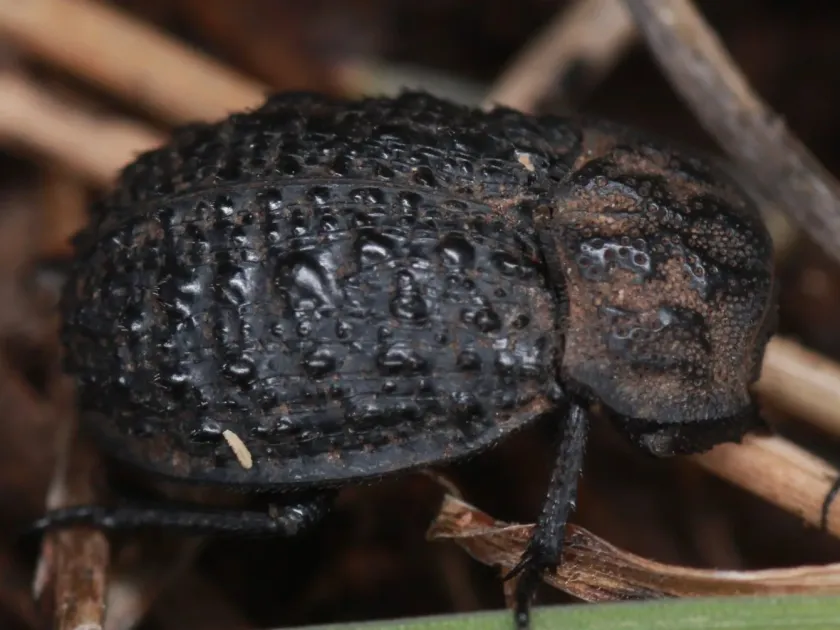
Their bodies are covered in dense, hardened chitin with tubercles and setae, which often become coated with dirt and dust, providing excellent camouflage.
Adult beetles typically measure between 5 and 20 millimeters in length, with coloration ranging from dull grey to dark brown or black.
A distinctive behavior of these beetles is their ability to roll into a tight ball when threatened, hiding their legs and antennae under the pronotum.
The larvae are specialized for consuming dry, tough organic materials and are generally less mobile than the adults, often living within their food source.
What it damages
While hide beetles do not consume growing crops, they are significant pests in agricultural settings that handle animal by-products or organic fertilizers.
They can cause structural damage to livestock facilities by boring into insulation materials, such as polystyrene, to create chambers for pupation.
Hide beetles act as potential mechanical vectors for various pathogens, including bacteria and parasites, which can threaten the health of livestock.
Their presence in storage areas is often an indicator of poor sanitation, attracting secondary pests that may damage other agricultural inputs.
In facilities processing bone meal or animal hides, large populations can cause significant damage to the stored raw materials, reducing their commercial value.
When it appears
Activity is most pronounced during the warm season, as development rates are highly dependent on ambient temperature and humidity levels.
In climate-controlled agricultural buildings, such as poultry houses, they can remain active and reproduce throughout the year.
Larval development typically peaks during the summer, requiring a steady supply of high-protein organic matter to reach maturity.
Overwintering occurs primarily in the adult stage, with beetles seeking refuge deep in soil, bedding, or structural crevices where temperatures remain stable.
The life cycle is generally slow, as the complex proteins they consume take longer to digest compared to the diet of other common insect pests.
Signs of infestation
Signs of an infestation include small, irregular holes in dried animal products, furs, or feathers, where larvae have been feeding.
The presence of exuviae (shed skins) and frass in corners or gaps indicates an active breeding population within the facility.
Structural damage, such as small boreholes in walls or floors, is a clear indicator that the beetles are utilizing the building for pupation.
- Adult beetles visible on the surface of organic debris or soil.
- A distinct musty or earthy odor in areas with high protein accumulation.
- Visible excavations within insulation panels or structural wooden elements.
Regular inspections of dark, undisturbed areas, especially those containing animal-derived waste, are essential for early detection.
Control measures
Effective control relies primarily on rigorous sanitation, including the prompt removal and disposal of all organic waste and animal by-products.
Maintaining dry and clean storage conditions is crucial, as high humidity and clean environments discourage larval establishment.
When chemical control is necessary, surface-acting insecticides should be applied after a thorough cleaning to ensure contact with the hiding pests.
Structural repairs, such as sealing cracks and using pest-resistant insulation materials, provide a long-term defense against building infestations.
Implementing regular monitoring programs helps identify potential hotspots before the population reaches a level that necessitates broad-spectrum treatment.
Taxonomy
- Latin name
- Trox
- Order
- Coleoptera (beetles)
- Family
- Trogidae
- EPPO code
- TRXXSP
Discussion
No discussions yet — be the first.