
Nut weevil
Triotemnus coryli
Description
How to identify
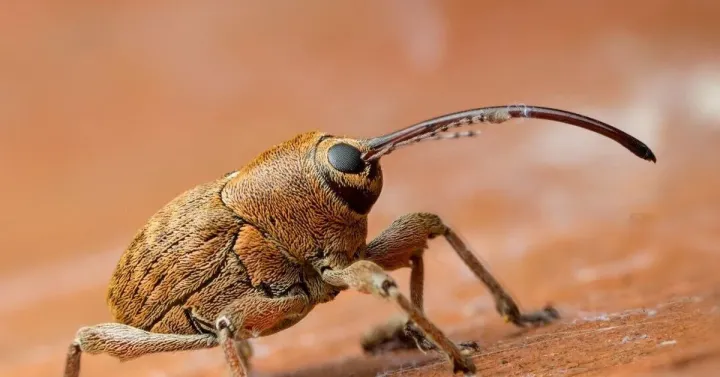
The nut weevil (Curculio nucum) is a member of the Curculionidae family, widely known as a destructive pest of hazelnut trees. Adult beetles are roughly 6–9 mm long, easily recognized by their extremely long rostrum, or snout, which is specifically adapted for boring into nuts.
The body is covered with dense yellowish-gray or brownish hairs, providing effective camouflage against tree bark. The larva is a cream-colored, legless grub with a distinct brown head, growing to approximately 10–12 mm in length.
The life cycle typically spans one year, though it can extend to two years in cooler climates. Adults and larvae overwinter in the soil at a depth of about 20 cm, residing in small earthen chambers until the following spring.
Adult emergence usually occurs when soil temperatures rise to 12–15 degrees Celsius. During this time, they supplement their diet by feeding on young leaves and buds before finding suitable fruit for oviposition.
Female weevils use their long snouts to drill a single hole through the soft shells of young nuts, depositing one egg inside each. This behavioral strategy ensures that each larva has enough food to complete its development.
What it damages
The nut weevil primarily targets Corylus avellana (hazelnut). It is considered a primary pest in both wild forests and commercial orchards, capable of causing devastating yield losses if left uncontrolled.
Once the egg hatches, the larva begins to feed on the kernel. As the larva grows, it entirely consumes the nut meat, leaving behind a mass of frass and rendering the nut completely unmarketable.
Premature fruit drop is a common symptom of larval infestation. Nuts attacked early in the season often abort and fall to the ground, while those attacked later may remain on the tree but appear stunted or deformed.
The beetle also causes minor damage to leaves and shoots during the adult stage, but this is usually negligible compared to the economic losses caused by larval infestation of the actual fruit.
A heavy infestation can compromise up to 90% of the total hazelnut crop, making the nut weevil one of the most significant economic threats to hazelnut production in temperate regions.
Signs of infestation
The most diagnostic sign of a nut weevil infestation is the presence of perfectly round exit holes, approximately 1–2 mm in diameter, on the surface of the shell. These holes indicate that the larva has completed its growth and exited the nut.
During the spring, adult weevils can be observed on the branches. They often exhibit thanatosis (playing dead) when disturbed, dropping to the ground, which makes them easy to detect by placing a sheet under the canopy.
Fallen nuts that show signs of early deterioration or are abnormally light in weight are key indicators of larval activity. If you crack these nuts open, you will likely find the white, C-shaped larva inside.
Damaged, withered buds or small holes in the foliage in early summer can indicate the presence of adult weevils preparing to breed. Monitoring these early signs is crucial for timing your pesticide applications.
The presence of mold inside the nut, introduced through the larval exit hole, often leads to further secondary decay of the remaining kernel fragments, which is another telltale sign of a past infestation.
Control measures
Cultural control is a cornerstone of nut weevil management. Regularly raking and removing fallen nuts from the orchard floor prevents larvae from escaping into the soil, significantly reducing the population for the next season.
Tilling the soil beneath the canopy during late summer or autumn is highly effective, as it exposes the overwintering larvae to predators and environmental stresses like desiccation or freezing.
Chemical control focuses on the adult stage. Insecticides should be applied during the period when adults emerge from the soil but before they lay their eggs. Monitoring with traps or beat sheets is essential to time this intervention correctly.
Biological alternatives, such as applying entomopathogenic nematodes to the soil in the spring, provide a sustainable way to target larvae while they are in the pupal stage within their soil chambers.
Integrated Pest Management (IPM) strategies, which combine proper orchard sanitation with selective chemical treatments, are the most reliable methods for maintaining long-term control over nut weevil populations.
Taxonomy
- Latin name
- Triotemnus coryli
- Order
- Coleoptera (beetles)
- Family
- Curculionidae
- EPPO code
- LYMTCO
Discussion
No discussions yet — be the first.