
Red-tailed millipede
Trigoniulus lumbricinus
Description
How to identify
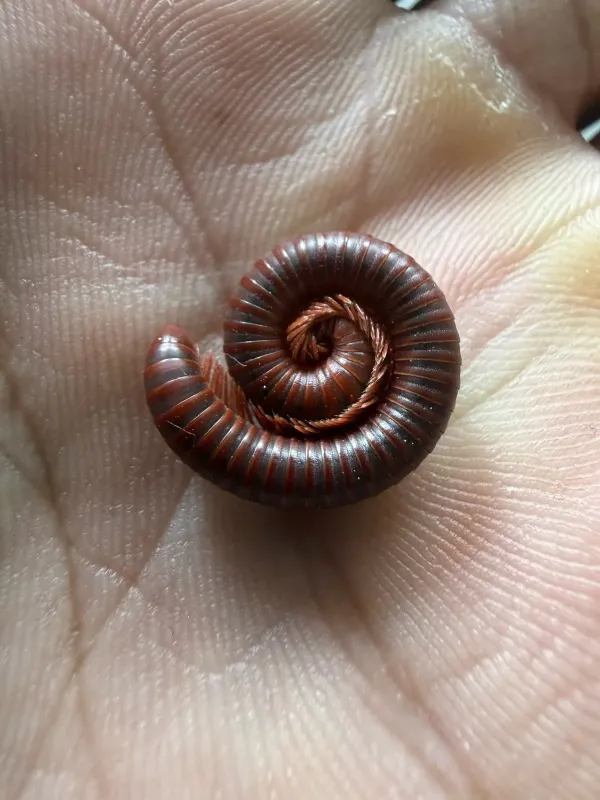
The red-tailed millipede (Trigoniulus lumbricinus) belongs to the order Spirobolida (or Polydesmida in some classifications) and the Pachybolidae family. It is a widespread invasive species known for its reddish-brown color.
The body is elongated, cylindrical, and composed of numerous segments, each bearing two pairs of legs, allowing the creature to burrow effectively in the soil.
These millipedes typically thrive in warm, humid tropical environments, where they play a role in soil decomposition but can become destructive pests in agriculture.
They are primarily nocturnal animals, spending their daytime hours deep in the soil or under organic debris to avoid dehydration and predators.
The life cycle involves multiple developmental stages, with the millipede increasing in size and segment count through successive molts throughout its lifespan.
What it damages
This pest is known to cause significant damage to the roots, tubers, and bulbs of various food crops, including sweet potatoes, potatoes, and ornamental plants.
The millipedes feed by gnawing on the soft tissues of roots and tubers, leaving large, unsightly cavities that ruin the market quality of the harvest.
Young seedlings are especially at risk, as the millipedes can sever the root system, causing the plant to wither and collapse within a few days.
The feeding activity creates wounds that serve as entry points for secondary pathogens, leading to fungal and bacterial soft rot infections.
High population densities can lead to substantial losses, particularly in greenhouses and fields with high soil moisture and abundant organic matter.
Signs of infestation
Symptoms of an infestation include the appearance of deep, irregular pits and tunnels on the skin of tubers or in the root zone of crops.
Plants affected by root damage often show signs of stunted growth, chlorosis, and sudden wilting even when soil moisture appears adequate.
Gardeners may observe the millipedes themselves during evening inspections or after irrigation, as they move towards the surface in search of food.
The presence of fine, granular frass (excrement) near the base of the plant or within the cavities of damaged roots is a clear diagnostic sign.
A foul, metallic-like odor near the affected area is often released by the millipede’s defensive glands when they are disturbed or crushed.
Control measures
Cultural control practices, such as proper field sanitation and the removal of decaying organic material, are crucial to reducing attractants for the pest.
Effective soil management, including deep cultivation and adequate drainage, helps to disrupt the millipede’s habitat and lifecycle in the soil.
Trapping techniques using damp baits like potato or carrot slices placed on the soil surface can help monitor and reduce the millipede population.
Chemical control involving soil insecticides should be used carefully, targeting the root zone according to local agricultural regulations for specific crops.
Biological control, such as the application of entomopathogenic nematodes or fungi, can provide a safer alternative for reducing millipede numbers in organic farming systems.
Taxonomy
- Latin name
- Trigoniulus lumbricinus
- Family
- Trigoniulidae
- EPPO code
- TRGULU
Discussion
No discussions yet — be the first.