
Orchid thrips
Trichromothrips xanthius
Description
How to identify
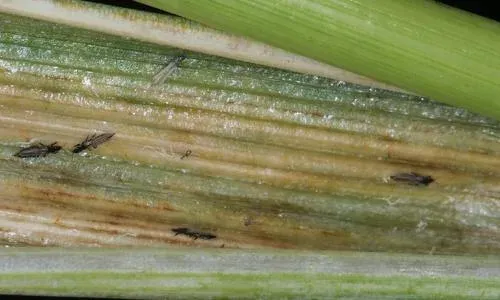
The Orchid thrips (Trichromothrips xanthius) is a small insect belonging to the order Thysanoptera and the family Thripidae. Adult insects are typically 1.5–2 mm long, featuring slender bodies and characteristic fringed wings folded flat over their backs.
The coloration of adults ranges from pale yellow to light brown, providing effective camouflage against orchid tissues. Larvae are similar in shape but smaller, wingless, and often translucent or creamy-white, making them difficult to spot without magnification.
The life cycle encompasses several distinct stages: egg, two larval instars, prepupa, pupa, and adult. This development typically occurs on the host plant, though some stages can be found in the substrate or nearby soil.
Under optimal conditions, such as warm temperatures and high humidity, the generation time can be as short as two to three weeks. Females deposit eggs directly into the leaf or petal tissue, ensuring the offspring have immediate access to food.
Effective identification relies on visual monitoring. Using blue sticky traps is a standard practice in greenhouses, as the color specifically attracts thrips species, allowing growers to detect the presence of the pest before significant damage occurs.
What it damages
As the common name suggests, the Orchid thrips primarily targets various orchid species. They are especially attracted to young, succulent tissues, including developing flower spikes, new leaf shoots, and unopened buds.
Damage is caused by both larvae and adults, which use their rasping-sucking mouthparts to pierce plant cells and extract sap. This process causes the cells to collapse, leading to visible tissue destruction.
The most severe damage occurs on floral organs. Infested buds often fail to open properly, or if they do, the flowers exhibit distortion, discoloration, and irregular spotting, drastically reducing the plant's aesthetic and commercial value.
On leaves, the injury manifests as chlorotic or silvery streaks. As the damage progresses, these areas may turn brown and necrotic. This weakens the plant overall, making it more susceptible to other stressors like drought or light deficiency.
Furthermore, the wounds created by the thrips' feeding activity serve as entry points for secondary pathogens, including bacteria and fungi, which can lead to localized rot and the eventual death of the affected parts.
Signs of infestation
Early symptoms include silvery or whitish patches on leaves, often described as a "silvering" effect. This is caused by air filling the empty cells where sap has been removed, creating a reflective surface under light.
Tiny black fecal spots are a reliable sign of an active infestation. These excrement dots are typically found on the underside of leaves or within the folds of the orchid plant's growth points.
Deformed, stunted, or "scorched-looking" buds are common indicators of a high pest population. Flowers may show brown, mottled blotches or irregular, jagged edges, indicating that the thrips fed on the bud before it expanded.
Sticky residues on the foliage may indicate the presence of honeydew-producing pests, but also often coincide with the secondary development of sooty mold, which creates a dark, dusty layer on the leaf surface.
A simple test to confirm their presence is to gently shake an orchid flower over a sheet of white paper. Any dislodged thrips will be visible as tiny, active slivers moving quickly across the paper surface.
Control measures
Management of Trichromothrips xanthius requires an integrated approach. The first step is to quarantine any infested plants to prevent the spread of the population to healthy members of the collection.
Chemical control is often necessary for significant infestations. Systemic insecticides, such as those containing acetamiprid or thiamethoxam, are highly effective as they circulate within the plant tissues, targeting the insects as they feed.
Because eggs are protected inside the leaf tissue and pupae may be present in the growing medium, a single application is rarely sufficient. A series of treatments, spaced roughly 7 days apart, is critical to eliminate emerging larvae.
Improving cultural conditions can help manage populations. Maintaining good airflow, avoiding overcrowded conditions, and ensuring plants are not nutrient-stressed can improve their natural resilience to pest attacks.
- Use blue sticky traps for early detection and monitoring.
- Apply systemic insecticides following a strict rotational schedule.
- Regularly wipe down leaves to reduce potential egg-laying sites.
- Sanitize tools and surfaces regularly to minimize re-infestation risks.
Taxonomy
- Latin name
- Trichromothrips xanthius
- Order
- Thrips
- Family
- Thripidae
- EPPO code
- TAETXA
Discussion
No discussions yet — be the first.