
Common brushtail possum
Trichosurus
Description
How to identify
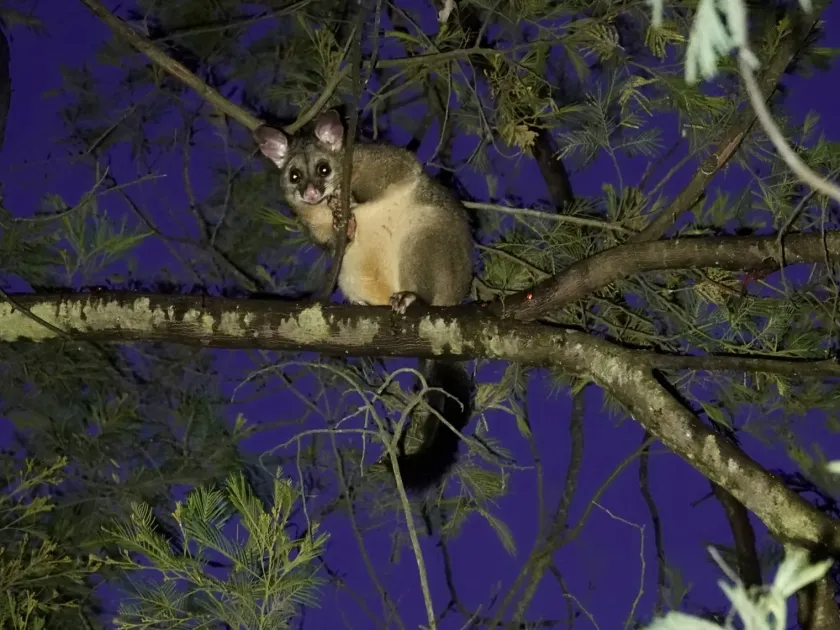
The common brushtail possum (Trichosurus vulpecula) belongs to the order Diprotodontia, family Phalangeridae. This nocturnal marsupial is known for its thick fur, prehensile tail, and fox-like face features.
Adult individuals weigh between 1.5 and 4 kg. Their coat color ranges from silvery-grey to dark brown or black. Equipped with sharp claws, they are highly capable climbers that move with ease through the canopy.
Their high level of adaptability allows them to thrive in human-modified landscapes, including agricultural zones and home gardens, especially near forest fringes where they can find daytime shelter.
Biological resilience and a high reproductive rate contribute to rapid population growth. In favorable conditions, this enables them to establish permanent colonies in residential and farming areas.
As opportunistic omnivores, they readily incorporate cultivated fruit, flowers, and vegetables into their diet, which often brings them into direct conflict with orchardists and gardeners.
What it damages
Orchard trees such as apples, pears, peaches, and citrus are primary targets. Possums consume both ripe fruit and developing buds, often causing significant reductions in total crop yield.
Damage to tree bark is another major concern. By stripping bark from young trunks and branches, they compromise the tree's health, stunt growth, and can potentially kill young saplings.
Vineyards face severe threats as well, with possums eating both grapes and the young, succulent shoots, which disrupts the vine's development and compromises the harvest quality.
Vegetable patches, particularly those with tomatoes, pumpkins, or beans, are frequently raided. The animals trample the vegetation and consume the produce, often destroying large areas in a single night.
Furthermore, the physical weight of the possum often causes branches to snap, creating structural damage that invites secondary infections, pests, and fungal diseases into the weakened trees.
When it appears
Activity remains year-round, but pressure on gardens increases significantly during the fruit-ripening season when the orchard becomes a primary food source for local populations.
In spring, the emergence of fresh buds and tender foliage provides a nutritional boost for possums, leading to widespread consumption that impacts the tree's overall vigor and floral display.
During the summer months, the need for moisture and high-energy sugars drives possums to visit gardens regularly, making this the peak period for fruit damage in most regions.
Autumn remains a critical time for monitoring, as the animals intensify their foraging behavior to accumulate energy reserves before the cooler winter period sets in.
Winter food scarcity often forces possums to shift their focus to woody materials, including tree bark, which can result in long-term, hidden damage to ornamental and fruit-bearing trees.
Signs of infestation
The most reliable sign of possum presence is partially eaten fruit discarded on the ground or left hanging in the canopy, characterized by large, distinct tooth marks.
The presence of droppings near tree bases, on fences, or roof spaces is a clear indicator that a colony is utilizing the immediate area as a foraging or nesting site.
Nocturnal activity is often marked by audible signals, such as loud hissing, clicking, and the sound of heavy movement across roof surfaces or through tree branches at night.
Visible bark stripping in vertical strips or patches on main trunks indicates that the animals are using these trees as regular transit routes or as supplemental food sources.
A sudden decline in harvest volume, coupled with the absence of common insect or avian pests, strongly suggests systematic raids by one or more adult possums visiting the garden.
Control measures
Installing smooth metal bands or collars around tree trunks is one of the most effective ways to prevent possums from climbing and reaching the fruit canopy.
Utilizing protective netting over fruit trees and berry bushes acts as a physical barrier; however, it is crucial to secure the bottom edges to prevent possums from crawling underneath.
Pruning branches back to at least 2–3 meters away from roofs, fences, and walls is essential to disrupt the animals' access routes and prevent them from reaching protected plants.
Repellents, including sprays containing garlic, capsaicin, or commercial animal-deterrent formulations, can be applied to foliage to discourage possums from feeding in specific garden zones.
Proper waste management is vital; keeping trash bins tightly sealed and avoiding the accumulation of food scraps around the property reduces the garden's overall appeal to opportunistic foragers.
Taxonomy
- Latin name
- Trichosurus
- Family
- Phalangeridae
- EPPO code
- TRQSSP
Discussion
No discussions yet — be the first.