
Armored mite Trichoribates
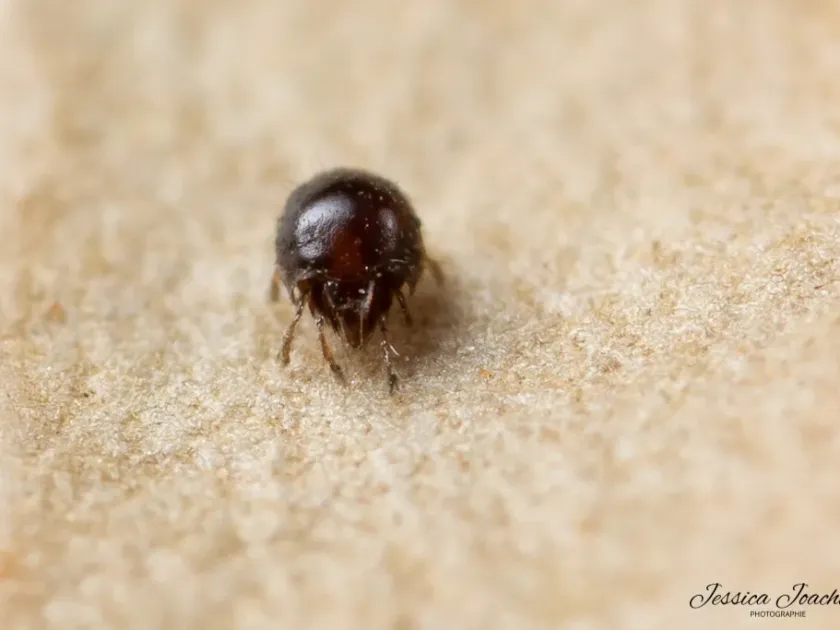
Trichoribates trimaculatus
Description
How to identify
The armored mite Trichoribates trimaculatus belongs to the order Oribatida, family Ceratozetidae, known for its heavy, protective chitinous exoskeleton that covers its entire body.
Adult mites are typically dark brown or nearly black, characterized by a highly sclerotized cuticle that makes them resistant to environmental stressors and physical damage.
Their life cycle includes several developmental stages: eggs, larvae, three nymphal stages (protonymph, deutonymph, tritonymph), and finally the adult stage, each requiring specific moisture levels.
These mites are commonly found in soil litter, but they frequently migrate to the surfaces of leaves and bark of woody plants to feed during warmer, humid periods.
Their respiratory system, consisting of specialized tracheae, allows them to thrive in diverse environments, from moist forest floors to managed agricultural landscapes.
What it damages
This pest primarily affects fruit trees, berries, and various ornamental plants, feeding on the epidermal cells of leaves and the outer layers of young shoots.
By piercing plant tissues to extract cellular sap, the mites disrupt photosynthesis and weaken the plant's overall structural integrity and defense mechanisms.
Persistent feeding by large colonies leads to physiological stress, which manifests as reduced vegetative growth and potential yield losses in commercial fruit production.
The wounds left behind by Trichoribates trimaculatus serve as entry points for secondary fungal and bacterial pathogens, leading to further tissue decay.
Damage is most severe in poorly ventilated or shaded areas where high humidity facilitates the rapid reproduction and spread of these armored mites.
Signs of infestation
Early symptoms of infestation include the appearance of tiny chlorotic spots or mottled white patches on the leaf surface, indicating where the mites have fed.
Leaves may gradually yellow, curl, or drop prematurely, particularly when the infestation coincides with dry, hot weather that adds further stress to the plant.
On the underside of leaves, one might observe the presence of fine debris, including cast-off skins from molting and dark excrement spots left by the mites.
Reduced vigor of young shoots and stunted development of buds are common indicators that the population of armored mites has reached a damaging threshold.
- Development of chlorotic spots on leaves.
- Premature leaf drop or yellowing.
- Presence of shed skins on the underside of foliage.
Control measures
Cultural management is the first line of defense; removing leaf litter and pruning dense branches helps reduce the humidity and shelter available for the mites.
Promoting good airflow and ensuring adequate sunlight penetration through the plant canopy significantly decreases the suitability of the habitat for mite colonization.
Biological control using predatory mites or natural insect enemies can be highly effective in suppressing mite populations without the need for harsh chemicals.
In cases of severe infestation, targeted applications of safe, soft-chemistry acaricides can effectively reduce populations while protecting beneficial pollinators.
Constant monitoring using a hand lens during the growing season allows for early detection and localized intervention before the infestation becomes widespread.
Taxonomy
- Latin name
- Trichoribates trimaculatus
- Order
- Mites
- Family
- Ceratozetidae
- EPPO code
- TCHITR
Discussion
No discussions yet — be the first.