
Common pygmy woodlouse
Trichoniscus pusillus
Description
How to identify
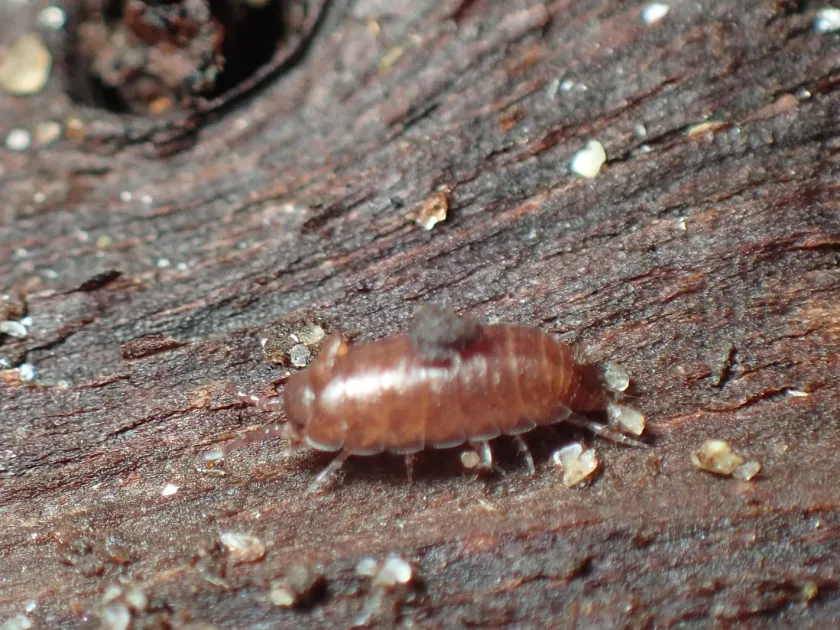
The common pygmy woodlouse (Trichoniscus pusillus) is a small terrestrial crustacean belonging to the order Isopoda and the family Trichoniscidae. Adults are typically 3–5 mm long and possess a reddish-brown coloration.
The body is dorsoventrally flattened and segmented, allowing the woodlouse to navigate narrow cracks and crevices. Due to their respiration system, they are highly dependent on high humidity and tend to avoid light.
These creatures thrive in habitats rich in organic matter, such as leaf litter, decaying wood, and damp soil. In agricultural settings, they are commonly found under containers or near moist foundations.
Their biological development includes multiple molting stages, with population density increasing significantly in environments with high moisture and stable temperatures.
They are primarily nocturnal, which often leads growers to overlook their presence until significant plant damage becomes visible during morning inspections.
What it damages
The woodlouse primarily affects young seedlings in greenhouses and indoor growing setups. They feed on tender tissues, including roots, stems, and lower foliage.
Plants in high-humidity nursery environments are at greatest risk. The woodlouse gnaws on the outer layers of the stem, often causing structural weakness or even total girdling of the seedling.
Vulnerable crops include various vegetables and ornamental species. Damage to the root system significantly impairs water and nutrient uptake, leading to yellowing and wilting.
In addition to direct feeding, the wounds inflicted by woodlice serve as entry points for various soil-borne pathogens, including fungi that cause damping-off disease.
High infestations in seed trays can result in substantial losses, as the pests can destroy delicate sprouts before they have a chance to establish a robust root system.
Signs of infestation
The most common sign of infestation is irregular holes or chewed edges on the lower leaves of young plants, close to the soil line.
Sudden wilting of seedlings despite adequate soil moisture indicates potential root or stem damage caused by feeding activity.
Observation of the pests themselves, which are often found huddled together under pots or damp cloths during the day, confirms their presence.
The accumulation of small, dark, granular frass (excrement) on the surface of the soil or container trays is a clear indicator of a thriving woodlouse population.
The absence of typical chewing marks on upper foliage helps distinguish woodlouse damage from that of slugs or caterpillars, which usually affect higher plant parts.
Control measures
Managing moisture levels is the most critical control strategy. Improving ventilation and ensuring proper drainage helps reduce the humidity to levels unfavorable for the woodlouse.
Strict sanitation practices, such as clearing debris, dead leaves, and weeds from the greenhouse floor, remove essential refuges for the pest.
Physical barriers, such as placing seedling trays on raised benches or mesh supports, effectively isolate plants from soil-dwelling populations.
Biological control agents, including entomopathogenic nematodes or specialized fungi, can be applied to the soil to suppress population numbers safely.
Trapping can be employed by placing wet cardboard or wooden boards on the ground overnight; the woodlice aggregate under these items, allowing for easy collection and destruction in the morning.
Taxonomy
- Latin name
- Trichoniscus pusillus
- Family
- Trichoniscidae
- EPPO code
- TRNIPU
Discussion
No discussions yet — be the first.