
Trichogramma semifumatum
Trichogramma semifumatum
Description
How to identify
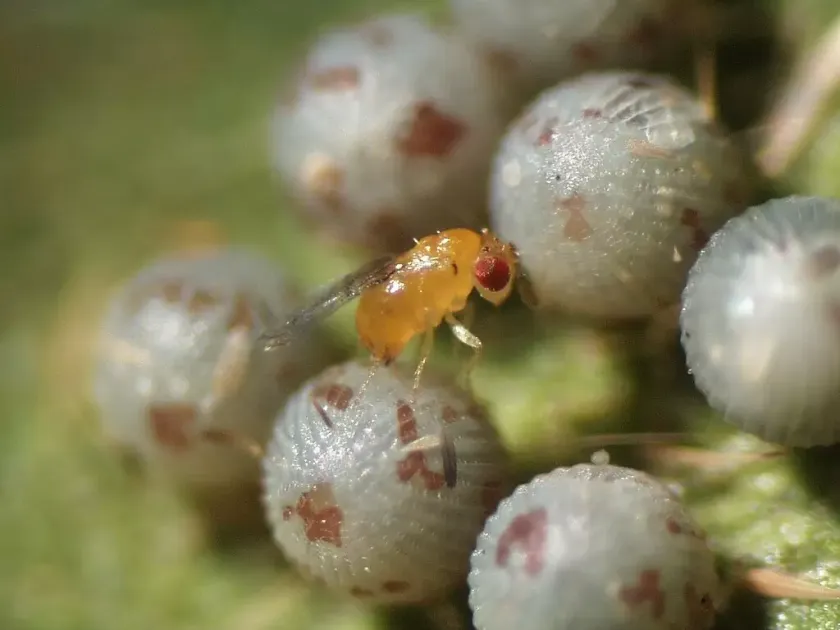
Trichogramma semifumatum is a minute insect species within the Hymenoptera order, belonging to the Trichogrammatidae family. It is widely recognized in agronomy as a beneficial parasitoid.
Adults are extremely small, measuring approximately 0.5–1.0 mm in length. They typically exhibit yellowish-brown or dark brown coloration, which helps them blend in with host eggs.
A distinctive feature of this genus is their wings, which are characterized by fine, hair-like fringes along the edges, often visible under moderate magnification.
They possess strong searching capabilities, allowing females to navigate through dense crop foliage to locate the eggs of their target hosts with high precision.
Precise species identification requires microscopic examination of the male genitalia, as external morphology is very similar across many species within the genus.
What it damages
Trichogramma semifumatum acts as an egg parasitoid that targets the eggs of various Lepidopteran pests, effectively preventing the damage these pests would otherwise cause.
The host species include various moths and butterflies that attack crops such as cotton, maize, vegetables, and fruit trees. By parasitizing these eggs, the wasp prevents larval infestation.
During the biological process, a female wasp deposits her egg inside the pest's egg. The developing wasp larva consumes the internal contents of the host egg, causing the pest embryo to die.
This action significantly reduces the population of harmful caterpillars before they can damage crops, making it a critical tool in preventative agricultural management.
The economic impact of utilizing this species is substantial, as it minimizes the need for synthetic insecticide applications while providing reliable control of major crop pests.
When it appears
The activity of Trichogramma semifumatum is primarily driven by environmental temperature, humidity, and the synchronized availability of target host eggs.
The emergence of adults in the spring coincides with the initial laying of eggs by common agricultural pests. Multiple generations can be produced throughout the growing season.
Optimal population growth typically occurs under mild to warm temperatures. Extreme weather fluctuations can influence their development cycle and limit their mobility in the field.
As the season progresses, the population density of the wasp often correlates with the population density of the pest hosts available in the ecosystem.
In colder regions or during late autumn, the wasps enter a state of dormancy or diapause to survive the winter conditions, ending their seasonal cycle.
Signs of infestation
The most reliable sign of Trichogramma semifumatum activity is the distinct discoloration of parasitized pest eggs, which turn dark grey or black.
Unparasitized eggs typically retain their natural light or pale coloration. Once the wasp successfully parasitizes an egg, the darkening process occurs within a few days.
Upon careful inspection, tiny exit holes may be visible on the shell of the parasitized egg, indicating that the adult wasp has emerged after completing its development.
Field agronomists conduct scouting and count the percentage of blackened eggs to evaluate the effectiveness of the biological control in their specific crops.
This visible indicator is the standard for monitoring the success of field releases and assessing the natural population dynamics of the entomophage.
Control measures
As Trichogramma semifumatum is a beneficial organism, "control" in this context refers to conservation strategies that support its population in the field.
Minimizing the use of broad-spectrum chemical insecticides is essential, as these substances are often lethal to beneficial parasitoids like the Trichogramma wasp.
Promoting a diverse landscape with nectar-producing flowers provides the necessary food sources for adult wasps, which helps sustain higher populations throughout the season.
When chemical intervention is necessary, selecting pesticides with low toxicity to beneficial insects is a core practice of Integrated Pest Management (IPM).
Augmentative biological control, involving the systematic release of laboratory-reared wasps, remains one of the most effective ways to manage pest populations in modern agriculture.
Taxonomy
- Latin name
- Trichogramma semifumatum
- Order
- Hymenoptera
- Family
- Trichogrammatidae
- EPPO code
- TRIGSM
Discussion
No discussions yet — be the first.