
Trichogramma pretiosum
Trichogramma pretiosum
Description
How to identify
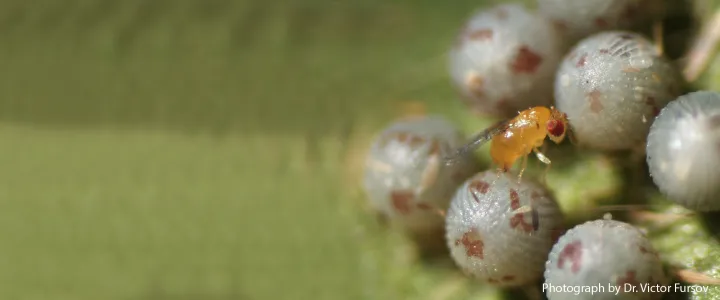
Trichogramma pretiosum is a minute parasitoid wasp belonging to the family Trichogrammatidae, order Hymenoptera. With an adult body length of approximately 0.5 mm, these insects are barely visible to the naked eye, making them challenging to identify in field conditions without specialized tools.
The adults typically exhibit a yellowish-brown coloration and possess characteristic fan-shaped antennae in males. This species is highly specialized as an egg parasitoid, meaning it targets and develops exclusively inside the eggs of various lepidopteran insects.
The life cycle of this insect is remarkably fast, being heavily influenced by ambient temperature. Under optimal conditions, a single generation can complete its development in as little as 7 to 10 days, allowing the population to multiply rapidly during the growing season.
Females are highly efficient at locating hosts by detecting chemical cues (kairomones) released by pests when they lay their eggs. This sophisticated sensory capability makes them exceptional agents for natural biological regulation of pest populations.
It is essential to clarify that this species is not a crop pest but a beneficial entomophage. While they are often discussed in the context of pest management, their role is to protect crops by significantly reducing the population of harmful moth species.
What it damages
This entomophage does not cause any direct damage to agricultural crops, as it does not consume plant tissues. Instead, it serves as a critical natural predator for a wide range of harmful pests that would otherwise cause significant economic losses to farmers.
The larvae of Trichogramma pretiosum parasitize the eggs of various lepidopteran species (Lepidoptera), including harmful cutworms, fruitworms, and various types of borers. By colonizing the pest egg, the parasitoid destroys the developing embryo, effectively stopping the cycle of crop destruction.
Due to its polyphagous nature, this species adapts well to various agricultural ecosystems, including corn, cotton, tomatoes, and many vegetable crops. This flexibility allows it to provide broad-spectrum protection during the critical egg-laying stages of pests.
The natural presence of this wasp in agricultural fields significantly reduces the reliance on synthetic broad-spectrum insecticides. Conserving these beneficial populations is a fundamental component of integrated pest management (IPM) strategies.
Potential losses to agricultural productivity are generally caused by the misuse of chemical pesticides that eliminate these beneficial wasps, thereby triggering secondary outbreaks of caterpillar populations that are no longer kept in check by their natural enemies.
When it appears
The activity period of Trichogramma pretiosum is closely synchronized with the temperature profile and the seasonal emergence of their lepidopteran hosts. Typically, their peak activity occurs during the height of the growing season when environmental conditions support host egg-laying.
While the minimum temperature required for development is around +15°C, their highest efficiency in parasitism is achieved within the temperature range of +22°C to +28°C. Stable weather conditions within this range ensure maximum parasitism rates.
In open-field conditions, activity typically begins in the spring as soon as consistent warmth is established. The rapid generation turnover allows the species to maintain a constant presence in the field throughout the summer months.
As autumn approaches and average temperatures decline, their activity decreases, and the wasps either enter a diapause phase or experience a sharp population decline. Overwintering success depends on local climate conditions and the availability of refuge sites in plant debris.
Agronomists use these seasonal data to schedule the release of lab-reared wasps. Precise synchronization with the peak egg-laying phase of target pests is the most critical factor for achieving high efficacy in biological control programs.
Control measures
Conserving Trichogramma pretiosum requires a significant reduction or complete elimination of high-toxicity insecticide applications during periods of pest egg-laying. Preference should always be given to selective biological products that do not harm the parasitoid.
If chemical intervention is unavoidable, producers must select selective pesticides with the lowest possible impact on beneficial insects. Strict adherence to application timing and dosage is necessary to prevent unnecessary mortality among the parasitoid population.
Agrotechnical practices are also vital, such as maintaining strips of nectar-producing plants around field margins. These refuges provide essential supplemental nutrition for adult wasps, extending their lifespan and enhancing their search efficiency.
In commercial agriculture, the systematic release of mass-reared individuals is a common practice. This involves specialized insectaries where the wasps are produced under controlled conditions and then dispersed into fields using ground-based equipment or aerial application.
The efficacy of this biological control method is ensured by following these key practices:
- Continuous monitoring of moth flight patterns using pheromone traps.
- Strict synchronization of wasp release dates with the onset of pest egg-laying.
- Implementation of multiple release intervals to maintain an effective density of the parasitoid.
- Avoidance of prophylactic broad-spectrum insecticide sprays that disrupt natural biological control.
Taxonomy
- Latin name
- Trichogramma pretiosum
- Order
- Hymenoptera
- Family
- Trichogrammatidae
- EPPO code
- TRIGPR
Discussion
No discussions yet — be the first.