
Trichogramma platneri
Trichogramma platneri
Description
How to identify
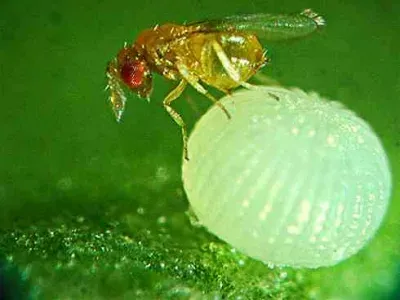
Trichogramma platneri is a minute wasp belonging to the family Trichogrammatidae and the order Hymenoptera. These insects are exceptionally small, often measuring less than 1 mm in length, which makes identification in the field extremely challenging.
The adults are typically yellow-brown in color. They are primarily known for their parasitic behavior, where females lay their eggs inside the eggs of various host insects, effectively preventing the pest from developing into its larval stage.
The biological cycle of this species is highly temperature-dependent, allowing for rapid generation turnover during the peak of the growing season. This quick reproduction rate is a defining characteristic of the species.
In professional settings, identification is usually confirmed through microscopic examination of parasitized egg masses collected from host plants. The presence of these wasps can significantly alter the composition of the local insect population.
Taxonomically, they are recognized as important agents in the ecosystem, although their role can vary depending on the specific agricultural environment and the presence of other competitor species.
What it damages
The damage associated with Trichogramma platneri is primarily indirect, stemming from its potential to displace other beneficial parasitoid species in agricultural ecosystems. By outcompeting more efficient predators, it can reduce the overall stability of biological pest control.
Crops most affected by shifts in insect populations include fruit trees, particularly walnuts and citrus orchards. In these environments, the disruption of natural control mechanisms against moths and other pests can lead to increased infestation risks.
When the species dominates an area, it may kill host eggs that would have otherwise been parasitized by more effective native entomophagous insects, thereby weakening the natural defense system of the orchard.
Increased monitoring costs are often required when the balance of beneficial insects is disrupted by an overpopulation of this species. This requires farmers to be vigilant about the specific species present in their fields.
Agronomists suggest that the impact is particularly noticeable in high-intensity farming areas where the ecological balance is already fragile and prone to frequent shifts due to human activity.
Control measures
Control strategies for managing Trichogramma platneri focus on maintaining a balanced ecosystem within the orchard. Integrated Pest Management (IPM) is the gold standard for handling such populations effectively.
Chemical control must be executed with extreme caution. Utilizing selective insecticides that do not harm native beneficial insects is crucial for maintaining the necessary ecological balance for sustainable farming.
Monitoring the population through the use of pheromone traps and regular visual inspections of foliage and egg clusters helps in making informed decisions about whether intervention is necessary.
Habitat management is a vital component of the control plan. By providing refuge areas for other beneficial predators, farmers can prevent a single species from becoming overly dominant in the crop environment.
- Deployment of selective biological controls.
- Use of pheromone monitoring systems.
- Implementation of diverse buffer zones.
- Avoidance of broad-spectrum chemical pesticides.
- Seasonal population density assessment.
Taxonomy
- Latin name
- Trichogramma platneri
- Order
- Hymenoptera
- Family
- Trichogrammatidae
- EPPO code
- TRIGPL
Discussion
No discussions yet — be the first.