
Trichogramma japonicum
Trichogramma japonicum
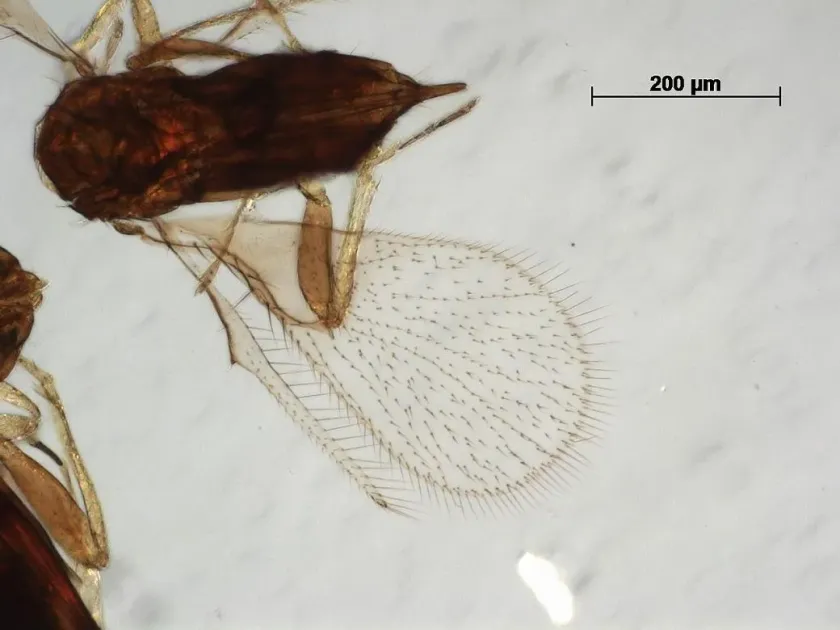
Description
How to identify
Trichogramma japonicum is a microscopic parasitic insect belonging to the family Trichogrammatidae. While many members of this genus are beneficial, this specific species is recognized for its significant role in agricultural ecology, particularly concerning rice cultivation in Asian regions.
The adult insect is extremely small, typically measuring less than 1 mm in length. Its body is yellowish or brownish, and it possesses transparent wings with distinctive fringed edges. Due to their minute size, identification usually requires specialized laboratory equipment and microscopic observation of infested eggs.
Systematically, this insect is categorized as an egg parasitoid. Its entire larval development occurs within the host's eggs. This reproductive strategy makes it a highly efficient species at colonizing agricultural fields where suitable host eggs are abundant.
The life cycle undergoes complete metamorphosis, including egg, larva, pupa, and adult stages. Depending on environmental conditions, particularly temperature and humidity, a generation can be completed in about 7 to 12 days, allowing for multiple generations per growing season.
Biological activity is closely linked to rice ecosystems. The adults prefer secluded, humid microclimates where they search for the egg masses of various lepidopteran rice pests to deposit their own eggs, effectively hijacking the host's reproductive efforts.
What it damages
The primary hosts for this species are the eggs of moths that infest cereal crops, most notably rice stem borers. By parasitizing these eggs, Trichogramma japonicum influences the population dynamics of these major crop pests within the agroecosystem.
The damage, in an agronomic sense, refers to the disruption of natural pest management balances. While it targets pests, its uncontrolled spread can interfere with other beneficial biocontrol programs, requiring careful management by agronomists to maintain ecosystem stability.
Signs of infestation are visible on the host's eggs, which change color to dark brown or black as the parasitoid larva develops inside. Upon emergence, the adult leaves a tiny, circular exit hole, which is the most reliable indicator of recent parasitic activity.
The intensity of infestation is highly dependent on climate. High humidity and moderate temperatures provide ideal conditions for the rapid multiplication of the insect, leading to significant colonization rates in rice fields during the peak of the growing season.
Economic impact is monitored through the assessment of egg parasitism rates. If the balance shifts significantly, the efficacy of natural pest control may be reduced, requiring additional integrated pest management (IPM) interventions to protect the yield.
Control measures
Effective control measures focus on cultural practices, such as proper field sanitation. Deep plowing and the destruction of rice stubble after harvest are crucial steps to eliminate overwintering sites for host species, thereby reducing the population of Trichogramma japonicum.
Chemical control is implemented selectively, utilizing insecticides with minimal impact on the broader beneficial insect community. Applications are typically timed based on monitoring data to target peak activity periods of the insect.
Pheromone traps serve as a vital tool for monitoring the flight activity of adults. By tracking the population fluctuations, farmers can determine if and when protective measures are necessary, ensuring a more targeted and less resource-intensive approach.
Planting resistant rice cultivars can create less favorable environments for the host insects, naturally limiting the reproductive opportunities for the parasitoid. This proactive approach supports long-term sustainability in rice farming.
- Regular monitoring of egg masses in the field.
- Implementation of crop rotation strategies.
- Targeted use of bio-rational pesticides.
Taxonomy
- Latin name
- Trichogramma japonicum
- Order
- Hymenoptera
- Family
- Trichogrammatidae
- EPPO code
- TRIGJA
Discussion
No discussions yet — be the first.