
Trichogramma
Trichogramma funiculatum
Description
How to identify
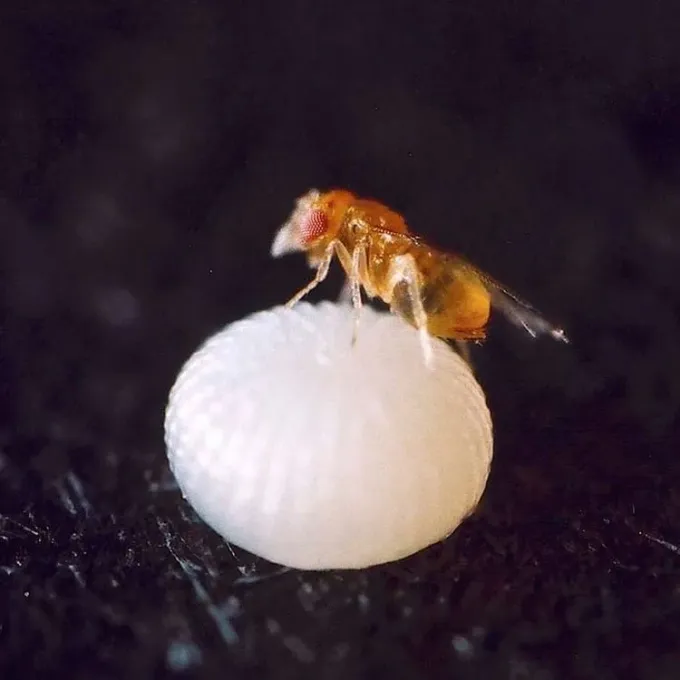
Trichogramma funiculatum is a minute parasitic wasp belonging to the order Hymenoptera and the family Trichogrammatidae.
These insects are exceptionally small, often measuring less than one millimeter in length, making them nearly invisible during field inspections.
They possess specialized wings with distinct venation and sensitive antennae, which are essential for locating the eggs of their host species.
It is crucial to categorize this species as a beneficial parasitoid rather than a plant pest, as its primary role is to suppress the population of harmful insects.
Their high mobility and searching capability allow them to effectively find host eggs even in complex agricultural environments.
What it damages
Trichogramma funiculatum does not damage crops; instead, it serves as a critical natural regulator that prevents damage by feeding on pest eggs.
The species targets the eggs of various lepidopteran pests that are notorious for destroying vegetables, grains, and industrial crops.
By parasitizing the eggs of moths, such as loopers and leafrollers, the wasp prevents the development of larvae that would otherwise consume plant foliage.
The presence of this parasitoid is a sign of a balanced agroecosystem capable of minimizing reliance on synthetic chemical interventions.
Agricultural damage to plants is exclusively caused by the target pests, while the Trichogramma species acts to mitigate the extent of this destruction.
When it appears
The activity period of the adult Trichogramma begins when temperatures rise above the minimum biological threshold in early spring.
Multiple generations of the parasite occur within a single growing season, allowing for continuous suppression of pest populations throughout the crop's development.
The peak activity of the wasp coincides precisely with the egg-laying cycles of the target pests, ensuring maximum efficiency of the biological control method.
Developmental rates are heavily influenced by temperature, leading to shorter life cycles during the hotter months of the summer.
Stable climatic conditions and the availability of host eggs are vital for maintaining high levels of parasitoid activity in the field.
Signs of infestation
The primary sign of Trichogramma activity is the darkening of host eggs, indicating that the parasite has successfully completed its development inside.
Under magnification, one can observe small exit holes in the chorion of the host egg, created by the emerging adult wasp.
Monitoring effectiveness involves collecting field samples and assessing the percentage of parasitized versus non-parasitized pest eggs.
A noticeable decrease in the population of early-instar larvae on the crop is a secondary indicator of the wasp's successful performance.
Agronomists often use these field observations to determine the need for further biological releases or to evaluate the success of natural suppression.
Control measures
Protection measures for this species involve creating an environment that supports the survival and reproduction of the beneficial wasp.
The use of broad-spectrum insecticides must be strictly avoided during periods of high wasp activity to prevent non-target mortality.
Integrated pest management strategies should prioritize selective pesticides that are compatible with the presence of natural enemies.
Cultivating flowering borders around fields provides nectar sources, which are essential for sustaining the longevity of adult wasps.
- Preservation of natural habitats for beneficial insects.
- Strict adherence to IPM protocols in pesticide application.
- Continuous monitoring of parasitism rates in the field.
- Strategic planting of companion crops to support biodiversity.
Taxonomy
- Latin name
- Trichogramma funiculatum
- Order
- Hymenoptera
- Family
- Trichogrammatidae
- EPPO code
- TRIGFU
Discussion
No discussions yet — be the first.