
Trichogramma californicum
Trichogramma californicum
Description
How to identify
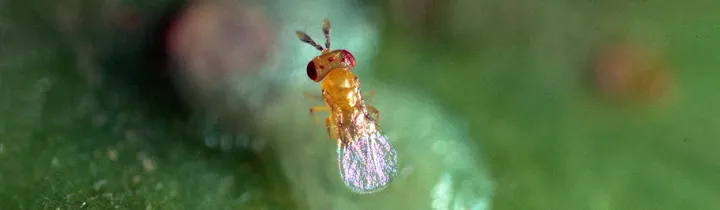
Trichogramma californicum is a minute parasitoid wasp belonging to the family Trichogrammatidae. These insects are critical components of natural pest control systems in various agricultural landscapes, primarily targeting the eggs of Lepidoptera species.
Adult wasps are extremely small, usually measuring less than 1 mm in length. Their coloration ranges from light yellow to brownish tones, and they possess distinctive antennae that play a crucial role in locating hosts through chemical cues emitted by the target pests.
The life cycle is holometabolous, occurring entirely within the egg of the host insect. The development from egg to adult is rapid, often completed within 10 to 14 days, depending on environmental temperature and humidity levels in the field.
For research and precise identification, entomologists analyze the male genitalia, as external morphology is often similar across different species within the Trichogramma genus. Accurate species identification is vital for successful augmentation programs.
The reproductive strategy of T. californicum involves the female ovipositing directly into the eggs of its host. Each female can parasitize numerous eggs, effectively preventing the development of pest larvae and reducing future population pressure.
What it damages
Trichogramma californicum is not considered a pest of plants; rather, it is a highly valued natural enemy used in integrated pest management. It acts as a biological regulator, significantly reducing the impact of lepidopteran pests on crops.
Crops such as vineyards, orchards, and field vegetables benefit greatly from the presence of this parasitoid. By destroying pest eggs before they hatch, the wasp prevents the typical feeding damage caused by caterpillars to foliage and fruit.
The concept of "damage" in this context refers to the economic losses incurred when populations of beneficial wasps are decimated by synthetic pesticides. Without these parasitoids, pest populations often surge, requiring more intense chemical interventions.
In cases where natural populations are insufficient, agricultural producers may release laboratory-reared wasps. This strategy minimizes the need for broad-spectrum chemical sprays, fostering a more sustainable agricultural ecosystem.
Understanding the interaction between T. californicum and its specific hosts is essential for growers. Successful pest suppression relies on the synchronization between the release of the parasitoid and the egg-laying period of the target pest.
Control measures
Effective management of T. californicum focuses on habitat preservation and the minimization of chemical disruption. Growers are encouraged to adopt selective pesticides that do not harm beneficial insect populations during critical windows of activity.
Augmentative biological control is a common technique, where mass-reared wasps are released into fields. This ensures that a sufficient number of parasitoids are present to cover the area during the peak activity of crop-damaging insects.
Improving field biodiversity by planting nectar-rich borders provides supplemental food for adult wasps. This simple practice has been shown to increase the longevity and searching efficiency of T. californicum in commercial agricultural settings.
- Monitor pest egg counts using pheromone traps to time wasp releases.
- Avoid broad-spectrum insecticide applications during the early season.
- Use selective biorational products if pest control thresholds are exceeded.
Sustainable agricultural practices, such as cover cropping and reduced tillage, create a more stable environment for beneficial insects to overwinter and thrive. Integrating these practices with biological controls provides the most robust protection against crop pests.
Taxonomy
- Latin name
- Trichogramma californicum
- Order
- Hymenoptera
- Family
- Trichogrammatidae
- EPPO code
- TRIGCF
Discussion
No discussions yet — be the first.