
Trichogramma cacoeciae
Trichogramma cacoeciae
Description
How to identify
Trichogramma cacoeciae is a minute parasitic wasp belonging to the family Trichogrammatidae. These insects are highly specialized parasitoids that play a significant role in natural pest control.
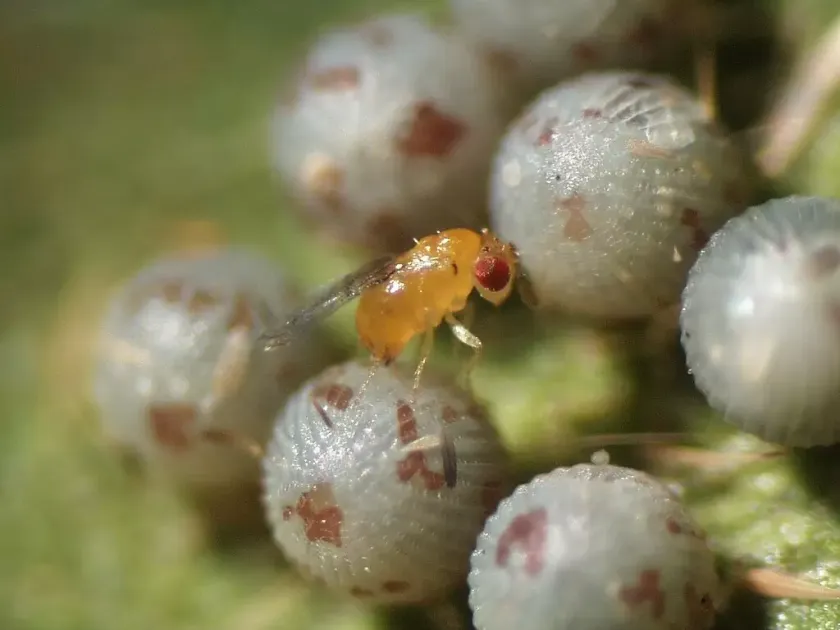
Adult wasps are extremely small, typically measuring less than 1 mm in length, which makes them difficult to identify in the field without using magnification tools.
The body coloration is generally yellowish-brown or dark, and the wings are characterized by sparse hair cover and specific venation patterns typical for this genus.
They possess highly developed sensory organs, including antennae that help them detect the chemical signals (pheromones) released by host moths during egg-laying.
Their morphological adaptation is perfectly suited for movement within the complex architecture of tree canopies, allowing them to locate host eggs hidden on leaves and fruits.
What it damages
In an agricultural context, Trichogramma cacoeciae is considered a beneficial insect rather than a pest, as it helps suppress populations of harmful lepidopteran insects.
These wasps target eggs of leafrollers, fruit moths, and other related pests, preventing the hatching of larvae that cause direct physical damage to orchard crops.
The "damage" in this context is often perceived only when the population of these wasps is disrupted by human activity, leading to a surge in pest damage caused by caterpillars.
By parasitizing host eggs, the wasp effectively kills the embryo inside, thereby reducing the need for chemical intervention to save fruits and foliage.
Proper management of this species is essential, as its absence can lead to total crop failure caused by unchecked infestations of orchard pests like the codling moth.
When it appears
The active season for Trichogramma cacoeciae begins in the spring as temperatures rise, typically coinciding with the early flight and egg-laying period of primary moth pests.
Throughout the growing season, these wasps produce multiple generations, with development speed being highly dependent on ambient temperature and host availability.
Peak activity is usually observed during the spring and summer months when host eggs are most abundant on the leaves and fruits of apple, pear, and stone fruit trees.
As the season progresses toward autumn, the population transitions into a diapause stage to survive the winter temperatures, often sheltering in bark or leaf litter.
Spring emergence is triggered by warming weather, and the wasps immediately begin searching for the first available egg batches to continue their life cycle.
Signs of infestation
The most reliable sign of successful Trichogramma activity is the change in the appearance of pest eggs, which turn dark or black due to the development of the wasp larva inside.
Exit holes in the shell of the host egg indicate that an adult wasp has successfully completed its development and emerged to continue the cycle.
A reduction in the number of damaged fruits or rolled leaves in an orchard, despite the presence of moth pests, is a clear indicator of active parasitoid suppression.
Microscopic analysis of egg batches is the standard method for determining parasitism rates in professional agronomic monitoring programs.
In cases of low parasitism, larvae will hatch and begin feeding, leaving behind visible signs of damage such as skin scarring and interior fruit tunneling.
Control measures
To conserve Trichogramma populations, it is vital to avoid broad-spectrum insecticides, especially during peak egg-laying windows for moths.
Integrated Pest Management (IPM) strategies emphasize the use of selective, biorational insecticides that do not harm beneficial parasitoid wasps.
Maintaining floral resources, such as nectar-producing plants near orchards, can significantly increase the longevity and searching efficiency of adult wasps.
- Regular pheromone monitoring to detect pest activity and time releases correctly.
- Supplemental releases of laboratory-reared wasps if natural population levels are insufficient.
- Preserving natural habitat structures like hedgerows for overwintering success.
By balancing biological control with minimal chemical exposure, growers can effectively manage pests while preserving the essential ecosystem services provided by Trichogramma species.
Taxonomy
- Latin name
- Trichogramma cacoeciae
- Order
- Hymenoptera
- Family
- Trichogrammatidae
- EPPO code
- TRIGCC
Discussion
No discussions yet — be the first.