
Trichogramma
Trichogramma brassicae
Description
How to identify
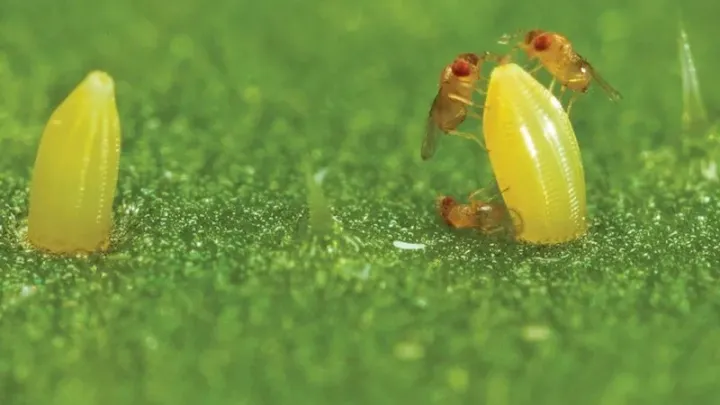
Trichogramma brassicae is a tiny parasitic wasp belonging to the family Trichogrammatidae and the order Hymenoptera.
The insect is extremely small, with adults typically measuring less than one millimeter in length, making them difficult to spot in the field without magnification.
Adults possess clear wings and a body colour that ranges from pale yellow to dark brown, adapted for a life cycle spent searching for host eggs.
The biological development of this species occurs entirely within the eggs of various lepidopteran insects, which serve as the sole host.
Their rapid generation time allows for a high population increase, making them a cornerstone of biological pest control programs globally.
What it damages
It is crucial to clarify that Trichogramma brassicae is a highly beneficial insect and not a plant pest by any means.
The wasp does not consume plant tissues; instead, it provides a vital service by parasitizing the eggs of agricultural pests such as the cabbage moth.
By killing the eggs of harmful insects before they hatch into larvae, the wasp prevents crop damage and reduces the need for synthetic chemicals.
These wasps are essential for sustainable agricultural practices, particularly in cabbage, tomato, and corn production where lepidopteran pests are prevalent.
Farmers who encounter these wasps should encourage their presence as they provide free, natural protection for their crops throughout the growing season.
When it appears
Trichogramma activity generally begins when ambient temperatures rise above 15 degrees Celsius in the spring, signaling the start of the pest breeding season.
The wasps are most active during the summer months, coinciding with the peak flight and egg-laying periods of target moth populations.
Multiple generations of the wasp can be produced during a single growing season, providing sustained protection against recurring waves of pest infestation.
Optimal effectiveness is achieved under warm, humid conditions where the wasps can effectively navigate and locate host clusters on leaves.
As autumn approaches and temperatures drop, the wasp population gradually declines, often overwintering in protected environments.
Signs of infestation
The most reliable sign of Trichogramma activity is the darkening of host eggs, which turn black or dark grey as the parasitoid larva develops inside.
Careful examination of crop leaves during the egg-laying stage of pests will reveal these discolored, parasitized eggs if the biological control is working.
Successful parasitism results in a significant reduction in larvae hatch rates, which is the primary metric for measuring the efficacy of the treatment.
In addition to egg discoloration, the presence of tiny exit holes on the surface of the host egg shell indicates that an adult wasp has emerged.
Professional monitoring involves tracking the host moth flight using pheromone traps to time the release of the Trichogramma wasps effectively.
Control measures
Effective management involves the mass release of laboratory-reared Trichogramma at the precise beginning of the pest egg-laying phase.
Multiple releases are typically recommended, spaced 5 to 7 days apart, to ensure continuous protection against overlapping generations of pests.
It is essential to avoid the use of broad-spectrum insecticides, as these chemicals are highly toxic to the wasps and will neutralize biological control efforts.
Integrating floral strips or nectar sources near crop fields can help support the survival and longevity of the wasp population.
Regular field scouting and pheromone trap data are necessary to optimize the timing and density of the Trichogramma release programs for maximum results.
Taxonomy
- Latin name
- Trichogramma brassicae
- Order
- Hymenoptera
- Family
- Trichogrammatidae
- EPPO code
- TRIGBR
Discussion
No discussions yet — be the first.