
Trichogramma brasiliensis
Trichogramma brasiliensis
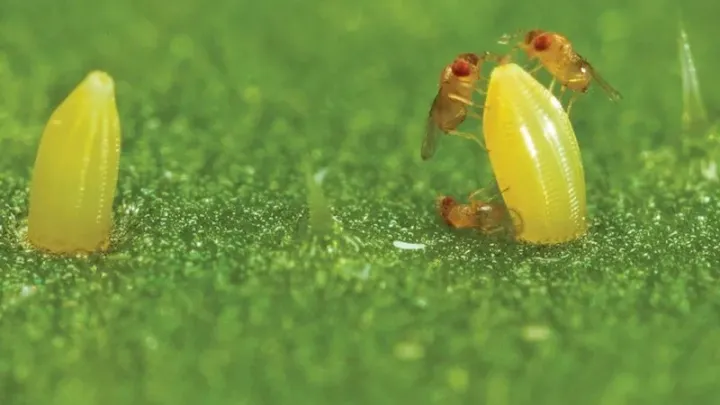
Description
How to identify
Trichogramma brasiliensis is a microscopic species of parasitic wasp belonging to the family Trichogrammatidae. These insects are critical components of agricultural ecosystems.
Adult specimens are extremely small, requiring professional expertise and laboratory equipment for accurate identification based on morphological characteristics.
The biology of this species involves egg parasitism, where the female lays her eggs inside the eggs of various host species, primarily Lepidoptera.
Developmental stages occur rapidly, making the population highly responsive to environmental changes and host availability in the field.
Identification remains a specialized task, as many Trichogramma species share similar external appearances and ecological traits in various regions.
What it damages
While often utilized as a biological control agent, Trichogramma brasiliensis can cause negative impacts if it targets the eggs of beneficial insects or natural predators.
The damage is caused by the larval stage consuming the internal content of the host egg, effectively killing the host embryo before it can hatch.
It affects a variety of crops, including corn, cotton, and vegetables, where numerous moth species deposit their eggs on foliage or stems.
Economic damage occurs when the parasite disrupts the population dynamics of beneficial arthropods that are essential for long-term pest management.
In cases where the host species is a pest, the parasite is considered beneficial, but this balance must be monitored to avoid ecological imbalance in intensive farming.
When it appears
The activity of these wasps is strictly temperature-dependent, usually beginning in late spring as temperatures rise above 15 degrees Celsius.
Multiple generations occur within a single growing season, with the total duration of the lifecycle shortening significantly during hot summer months.
As temperatures drop in autumn, the population growth slows, and the wasps typically enter a resting stage within the host egg to survive winter.
In controlled environments such as greenhouses, the biological cycle can continue year-round, unconstrained by external seasonal shifts.
The peak population levels are observed during periods when host moths are actively depositing eggs on susceptible crops in the field.
Signs of infestation
The most reliable sign of parasitization is the change in coloration of the host egg, which shifts to dark grey or black as the wasp larva matures inside.
Small, perfectly circular exit holes appear on the surface of the host egg once the adult wasp has successfully emerged after its transformation.
Reduced hatching rates of pest larvae in monitored fields often serve as a key indicator that an egg parasitoid is actively working in the area.
Field inspection involves examining the undersides of leaves and stems where host moths congregate to lay their clusters of eggs.
Microscopic analysis of collected samples confirms whether the eggs were successfully parasitized or if other factors caused the lack of larval emergence.
Control measures
Management involves an integrated strategy that prioritizes the health of the entire beneficial arthropod complex within the agroecosystem.
The use of broad-spectrum insecticides should be minimized, especially during critical periods when parasitoid populations are at their maximum.
Agronomic practices, such as optimizing planting dates, help misalign the lifecycle of pests and parasites, reducing the risk of unintended damage.
- Monitoring field populations using specialized pheromone traps.
- Creating field margins with floral resources to support adult parasitoids.
- Targeted use of selective pesticides that spare beneficial insect populations.
Proper field management requires a balance between controlling target pests and preserving the natural enemy community that contributes to sustainable yield protection.
Taxonomy
- Latin name
- Trichogramma brasiliensis
- Order
- Hymenoptera
- Family
- Trichogrammatidae
- EPPO code
- TRIGBS
Discussion
No discussions yet — be the first.