
Trichogramma beckeri
Trichogramma beckeri
Description
How to identify
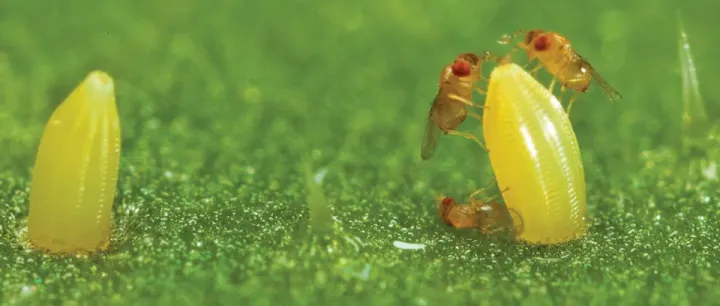
Trichogramma beckeri is a minute parasitic wasp belonging to the family Trichogrammatidae. These insects are essential components of agricultural ecosystems, often serving as natural regulators of lepidopteran populations in various crop fields.
Adults are extremely small, typically measuring less than one millimeter in length. They are characterized by a yellowish-brown coloration and wings that feature a distinct fringe of long hairs, which is a diagnostic trait for the genus.
The life cycle of this species is strictly tied to the eggs of host insects. The female deposits her eggs inside the host egg, where the larvae complete their development, effectively consuming the host and preventing the emergence of the pest.
The developmental rate is significantly influenced by ambient temperature and relative humidity. In optimal conditions, multiple generations can occur within a single growing season, allowing for rapid population fluctuations.
Correct identification is crucial for effective biological control programs. Agronomists often use microscopic analysis to differentiate Trichogramma beckeri from other closely related parasitoids present in the same habitat.
What it damages
The damage caused by these insects is primarily ecological rather than direct feeding damage to the crops themselves. Mismanagement of these populations through the excessive use of broad-spectrum insecticides disrupts the natural balance of the field.
The host range includes various species of moths that attack grains, oilseeds, and vegetables. Their presence is generally beneficial as they act as natural enemies to economically significant lepidopteran pests.
Agricultural damage occurs when the natural regulatory service provided by these parasitoids is eliminated by chemical intervention. This allows pest populations to rebound quickly, leading to greater crop yield losses.
Crops commonly associated with this species include maize, wheat, and sunflower. The presence of the insect in these fields is a strong indicator of an active biological control system that should be preserved.
Agronomic assessments must prioritize the monitoring of parasitism rates to determine whether natural control is sufficient or if supplemental biological releases are required to suppress pest pressure.
Control measures
Management strategies focus on the principle of Integrated Pest Management (IPM). The goal is to minimize chemical disturbance while maximizing the efficacy of naturally occurring or introduced populations of beneficial insects.
Monitoring is the cornerstone of control. Using pheromone traps and regular field scouting helps agronomists understand the timing of pest egg-laying and the activity levels of the parasitoids.
When chemical control is unavoidable, selecting selective insecticides that have minimal impact on non-target beneficial species is essential. This preserves the internal biological control capacity of the agroecosystem.
Field sanitation and the management of crop residues contribute to maintaining stable environmental conditions. Sustainable practices ensure that the ecosystem remains resilient against outbreaks of lepidopteran pests.
- Regular field monitoring for parasitism rates.
- Selective use of environmentally friendly insecticides.
- Promotion of biodiversity within the field margins.
Taxonomy
- Latin name
- Trichogramma beckeri
- Order
- Hymenoptera
- Family
- Trichogrammatidae
- EPPO code
- TRIGBE
Discussion
No discussions yet — be the first.