
Trichogramma achaeae
Trichogramma achaeae
Description
How to identify
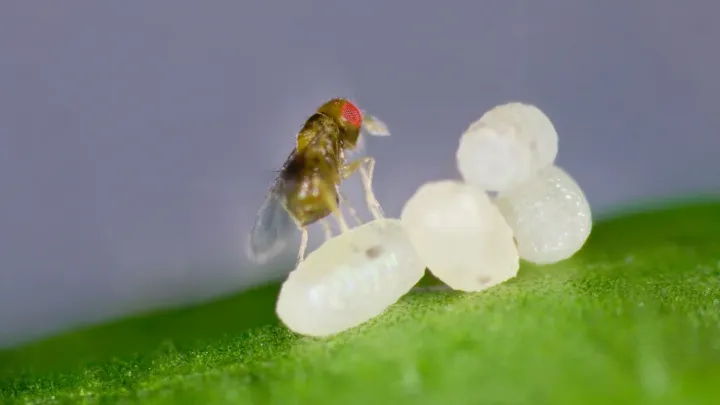
Trichogramma achaeae is a minute wasp belonging to the family Trichogrammatidae, widely studied for its role in biological pest control.
The adult insect is extremely small, typically measuring less than 1 millimeter in length, with a body coloration that ranges from pale yellow to dark brown.
Its life cycle is entirely internal to the host's eggs, where the larva consumes the content of the host egg, completing its development within a few days.
The species thrives in warm conditions, with an optimal temperature range of 25–30 degrees Celsius, which is critical for its metabolic rate and reproductive success.
These insects are highly efficient at locating egg masses of various lepidopteran pests, utilizing chemical cues emitted by both the host and the host plant.
What it damages
While often categorized as a beneficial organism, the species can disrupt local ecosystems if introduced in areas where it might compete with or displace native entomophages.
The primary crops affected by the lepidopteran hosts it targets include tomatoes, cotton, corn, and various greenhouse vegetable species.
Excessive or improper reliance on mass releases can lead to an imbalance in local biocenosis, potentially causing unintended consequences for agricultural stability.
If not managed correctly, the population growth can suppress other beneficial insects, leading to secondary outbreaks of other pests that were previously under control.
Effective management focuses on integrating this species into a balanced system where it serves as a supplement rather than a total replacement for natural biodiversity.
When it appears
The activity of Trichogramma achaeae is largely determined by seasonal temperature patterns, typically peaking during the warmer months of the year.
In temperate climates, activity begins as temperatures rise in the spring and continues until the onset of the autumn cooling period.
In favorable conditions, the species can complete multiple generations within a single season, leading to rapid population surges in agricultural fields.
Diapause occurs during colder months or unfavorable environmental conditions, allowing the species to survive until the next growing season.
Monitoring for the presence of this insect involves checking for parasitized egg masses in the field during the peak oviposition times of target pest species.
Signs of infestation
The most reliable sign of its presence is the transformation of host eggs into a dark or black color, which indicates successful parasitism by the wasp.
Tiny circular exit holes on the surface of the host egg shell provide clear evidence that an adult wasp has emerged successfully.
A decline in the density of larvae emerging from pest egg masses is a definitive field observation that the biological control agent is functioning.
Direct visual inspection of the underside of leaves is necessary to observe adult wasps during periods of active egg-laying behavior.
Laboratory analysis of collected egg samples is the standard procedure to verify the percentage of parasitism and the effectiveness of the control strategy.
Control measures
Management strategies emphasize the cautious use of chemical inputs to protect the fragile populations of these beneficial insects in the field.
The use of selective biorational pesticides is highly encouraged to minimize mortality among the wasp populations while still controlling the primary pests.
Agricultural practices such as planting hedges and floral borders can provide nectar sources that increase the longevity and searching efficiency of the wasps.
Proper scheduling of releases must coincide with the peak egg-laying periods of target pests to ensure maximum effectiveness of the biological control.
- Avoid using broad-spectrum insecticides during peak activity.
- Integrate biological control with careful monitoring.
- Maintain stable conditions to support established populations.
Taxonomy
- Latin name
- Trichogramma achaeae
- Order
- Hymenoptera
- Family
- Trichogrammatidae
- EPPO code
- TRIGAC
Discussion
No discussions yet — be the first.