
Potato stalk weevil
Trichobaris
Description
How to identify
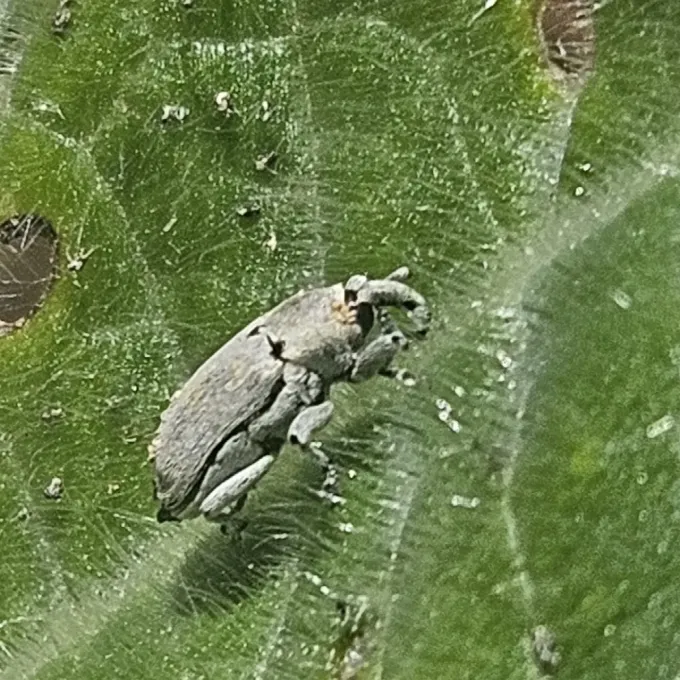
The genus Trichobaris belongs to the Curculionidae family, order Coleoptera. Adult weevils are small beetles, typically ranging from 4 to 7 mm in length, with bodies covered in dense, fine hairs that give them an ash-gray or brownish appearance.
A distinctive feature of the adults is the long, slender snout characteristic of all weevils. The larvae are legless, cream-colored, and possess a well-defined dark brown head capsule, usually reaching about 8–10 mm in length.
The life cycle of the insect is closely linked to nightshade plants. Adult weevils overwinter in crop residues or the top layer of soil, becoming active in the spring when temperatures rise to about +15...+18 degrees Celsius.
Reproduction occurs when females lay eggs inside the stems of host plants. Optimal conditions for population development include moderate humidity and warm weather, which accelerate the larval development stages.
Pupation takes place directly inside the damaged stem. After metamorphosis is complete, young adults often remain in the dry stems to overwinter or emerge to feed on green plant parts before entering a resting phase.
What it damages
The primary crops affected by Trichobaris include potatoes, tomatoes, eggplants, peppers, and various wild species of the nightshade family, such as black nightshade and henbane.
The pest primarily targets the stems of plants. Larvae bore tunnels inside the stem, which disrupts water and nutrient flow, causing the plants to wilt gradually and eventually die back partially or entirely.
Damaged stems become hollow, significantly reducing the mechanical strength of the plant. Under windy conditions or heavy fruit weight, these weakened stems break easily, leading to substantial yield losses.
Adult weevils also cause damage by eating small holes in leaves and young shoots. While this type of damage is less critical than that caused by larvae, mass feeding by adults can weaken the plant's overall health and immunity.
The economic impact of Trichobaris is manifested in a direct reduction of potato and vegetable yields. In cases of severe infestation, crop losses can reach 20–40% of the total production volume in a field.
Signs of infestation
The first visual sign of pest presence is the appearance of small holes in the stems where females have laid their eggs, accompanied by evidence of adult feeding on the leaf blades.
As the larvae develop within the stem, one can observe stunted plant growth, yellowing, and persistent wilting during the hottest hours of the day, which does not recover after irrigation due to the destroyed vascular system.
Inspecting the base of the stem may reveal softening or structural collapse. A longitudinal cut through a damaged stem will show larvae or characteristic winding tunnels filled with frass (insect excrement).
At the end of the season, the presence of dry, hollowed-out stems containing pupae or emerged adults is a clear indicator of a Trichobaris infestation, signaling the need for soil sanitation.
Early lodging of potato plants can also serve as an indirect sign, as the larvae have eaten out the core of the lower stem, depriving the plant of necessary structural support.
Control measures
Cultural and agrotechnical practices form the foundation of protection. The most crucial step is the thorough removal and destruction of all plant debris, especially dry stems, which serve as overwintering sites for the pest.
Crop rotation is essential to break the pest's life cycle. Planting nightshade crops in the same area for more than two consecutive years is discouraged, as it encourages the establishment of local pest populations.
Deep autumn plowing of the soil after harvest helps bring overwintering stages to the surface, where they are exposed to low temperatures, desiccation, and natural predators like birds and insects.
If mass infestation is detected, systemic insecticides can be applied. Treatments should be timed during the egg-laying and early larval stages to prevent them from boring into the stems, where they become protected from surface contact.
Using resistant cultivars and balanced fertilization helps plants recover more quickly from potential damage, thereby increasing their tolerance to various biotic stressors.
Taxonomy
- Latin name
- Trichobaris
- Order
- Coleoptera (beetles)
- Family
- Curculionidae
- EPPO code
- TRICSP
Discussion
No discussions yet — be the first.